Gary D. Schmidt’s The Wednesday Wars Reviewed
The Wednesday Wars by Gary D. Schmidt: Quick Answer
- The Wednesday Wars by Gary D. Schmidt offers a poignant coming-of-age story set against the backdrop of the Vietnam War, exploring themes of identity, family, and the power of literature.
- It is particularly well-suited for middle school readers and adults seeking a thoughtful, character-driven historical fiction novel.
- Readers will find its exploration of adolescent struggles and the impact of external events on personal growth to be its primary strength, though the pacing may feel slow for some.
Who This Is For
- Middle school students (grades 6-8) grappling with themes of self-discovery, peer relationships, and understanding historical context.
- Adult readers who appreciate character-driven narratives, historical fiction that focuses on personal impact, and explorations of how literature can shape perspective.
What to Check First
Before diving into The Wednesday Wars by Gary D. Schmidt, consider these points:
- Historical Setting: The novel is set in 1967-1968, during the Vietnam War. While the war is a backdrop, its presence influences the characters and their community. If you prefer fiction entirely removed from historical conflict, this might not be the best fit.
- Protagonist’s Voice: The story is told from the first-person perspective of Holling Hoodhood, a seventh-grader. His voice is authentic to his age, with a blend of humor, insecurity, and burgeoning maturity. Assess if this narrative style resonates with you.
- Literary References: A unique element is Holling’s mandatory study of Shakespeare and other literary works each Wednesday. These readings are integral to his development and the plot. If you enjoy novels that weave literary analysis into the narrative, you will likely appreciate this aspect.
- Pacing and Focus: The novel prioritizes character development and internal struggles over rapid plot progression. If you seek a fast-paced adventure, this might feel deliberate.
Step-by-Step Plan for Reading The Wednesday Wars
To fully appreciate The Wednesday Wars by Gary D. Schmidt, follow these steps:
1. Familiarize yourself with the historical context: Briefly review the events of 1967-1968 in the United States, particularly the Vietnam War and its impact on the home front. This will enhance your understanding of the anxieties and societal shifts depicted.
- Action: Read a short article or watch a brief documentary segment on the period.
- What to look for: Understanding the general mood of the country, the draft, and the protests.
- Mistake: Assuming a deep prior knowledge of the war; the novel offers context, but a little background helps.
2. Engage with Holling’s internal monologue: Pay close attention to Holling’s thoughts, fears, and observations as he navigates seventh grade. His voice is central to the story’s emotional core.
- Action: Read each chapter, noting Holling’s reactions to events and people.
- What to look for: His evolving self-perception and his attempts to understand the adult world.
- Mistake: Focusing solely on external plot events and missing the nuanced development of Holling’s character.
3. Appreciate the role of Mrs. Baker: Recognize that Mrs. Baker is not only Holling’s English teacher; she is a catalyst for his growth and a complex character in her own right.
- Action: Observe Mrs. Baker’s interactions with Holling and her own hidden struggles.
- What to look for: Her motivations, her subtle guidance, and her impact on Holling’s literary journey.
- Mistake: Dismissing her as a stereotypical teacher; her character is layered and essential to Holling’s transformation.
4. Connect literary studies to Holling’s life: Understand how the plays and poems Holling studies each Wednesday directly relate to his own experiences and challenges.
- Action: Reflect on the literary works after each Wednesday’s lesson.
- What to look for: Parallels between Shakespearean themes (e.g., ambition, betrayal, love) and Holling’s daily life.
- Mistake: Treating the literary discussions as separate or tangential to the main narrative; they are deeply integrated.
5. Observe the impact of external events: Notice how the escalating Vietnam War and the social changes of the late 1960s filter into the lives of Holling and his community.
- Action: Pay attention to news reports, conversations, and the anxieties of the adult characters.
- What to look for: The subtle ways the larger world affects the seemingly small world of Holling’s school and home.
- Mistake: Underestimating the significance of the historical backdrop; it shapes the characters’ choices and perspectives.
6. Consider the theme of “being a man”: Holling’s journey is significantly about understanding what it means to be a responsible and decent person, particularly in the face of societal pressures and personal doubts.
- Action: Track Holling’s actions and decisions throughout the year.
- What to look for: His attempts to act with integrity, his moments of courage, and his growing empathy.
- Mistake: Interpreting “being a man” solely through the lens of the era’s rigid expectations, rather than Holling’s personal growth.
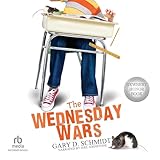
- Audible Audiobook
- Gary D. Schmidt (Author) - Joel Johnstone (Narrator)
- English (Publication Language)
- 10/29/2018 (Publication Date) - Recorded Books (Publisher)
Comparison Framework: The Wednesday Wars by Gary D. Schmidt vs. Similar Novels
| Feature | The Wednesday Wars by Gary D. Schmidt | Roll of Thunder, Hear My Cry by Mildred D. Taylor | Bridge to Terabithia by Katherine Paterson |
|---|---|---|---|
| Primary Theme | Identity, literature, historical impact | Racial injustice, family, resilience | Friendship, imagination, loss |
| Setting Year | 1967-1968 | 1930s | Early 1970s |
| Protagonist Age | 7th Grade | 9-12 years old | 5th Grade |
| Narrative Style | First-person, introspective | First-person, descriptive | Third-person, observational |
| Core Conflict | Internal struggles, finding one’s voice | External societal prejudice, family survival | Navigating childhood complexities, grief |
Common Mistakes
- Mistake: Dismissing the novel as merely a “school story.”
- Why it matters: This overlooks the profound impact of the Vietnam War backdrop and the complex adult characters, particularly Mrs. Baker.
- Fix: Recognize that Holling’s school year is a microcosm for larger societal shifts and personal growth under pressure.
- Mistake: Underestimating the significance of Shakespeare.
- Why it matters: The literary discussions are not filler; they are directly tied to Holling’s development and understanding of human nature.
- Fix: Actively look for connections between the plays Holling studies and his own life experiences.
- Mistake: Expecting a fast-paced, action-heavy plot.
- Why it matters: The novel’s strength lies in its character development and emotional resonance, which requires a more deliberate pace.
- Fix: Settle into the narrative, focusing on Holling’s internal journey and the subtle unfolding of events.
- Mistake: Viewing Holling solely as a victim of circumstance.
- Why it matters: Holling is an active participant in his own growth, making choices and learning from his mistakes.
- Fix: Acknowledge Holling’s agency and his increasing maturity throughout the year.
Decision Rules
- If reliability is your top priority for The Wednesday Wars by Gary D. Schmidt, choose the option with the strongest long-term track record and support.
- If value matters most, compare total ownership cost instead of headline price alone.
- If your use case is specific, prioritize fit-for-purpose features over generic ‘best overall’ claims.
FAQ
- Q: Is The Wednesday Wars suitable for advanced readers or adults?
- A: Yes. While often assigned to middle schoolers, adults can appreciate the nuanced character development, the exploration of historical context, and the literary themes. The mature handling of complex emotions and societal issues makes it rewarding for older readers.
- Q: How much historical detail about the Vietnam War is included?
- A: The war serves primarily as a backdrop and an influence on the characters’ lives and anxieties. Direct battlefield accounts are minimal; the focus is on its impact on the home front and the community.
- Q: What is the overall tone of the book?
- A: The tone is generally thoughtful, reflective, and often humorous, despite the serious themes. Holling’s voice provides a blend of adolescent earnestness and wry observation.
- Q: Are the Shakespearean plays integral to understanding the plot?
- A: Yes, they are integral to Holling’s personal growth and his understanding of human nature. While you don’t need to be a Shakespeare scholar, understanding the basic themes of the plays Holling encounters will deepen your appreciation of his journey.