Lord of the Flies: Golding’s Allegory of Society
This analysis examines William Golding’s Lord of the Flies, a seminal work exploring human nature through the lens of societal breakdown. It is intended for readers interested in literary allegory, the psychological impact of isolation, and the inherent complexities of civilization.
Lord of the Flies by William Golding: Quick Answer
- Thematic Depth: Lord of the Flies offers a profound, albeit bleak, exploration of the conflict between civilization and primal instincts.
- Enduring Relevance: The novel’s examination of societal collapse remains a potent commentary on human behavior under duress.
- Challenging Read: The graphic depiction of savagery and loss of innocence requires a mature audience prepared for discomfort.
Who This Is For
- Readers seeking literary works that delve into philosophical questions about human nature and societal structures.
- Students and educators analyzing classic allegorical novels and their cultural impact.
What to Check First
- Author’s Intent: William Golding stated his intention was to trace the decline of a society and the emergence of savagery, not to present a simple adventure story.
- Allegorical Nature: Recognize that characters and events represent broader concepts: Ralph (order, civilization), Piggy (intellect, reason), Jack (savagery, primal urges), the island (a microcosm of the world).
- Symbolism: Understand key symbols like the conch (authority, democracy), Piggy’s glasses (science, reason, vulnerability), and the signal fire (hope, connection to civilization).
- Narrative Perspective: The third-person omniscient narration shifts focus, often emphasizing the boys’ descent into irrationality and violence.
For those looking to delve into the profound, albeit bleak, exploration of human nature and societal breakdown, William Golding’s Lord of the Flies is an essential read. This classic novel masterfully dissects the conflict between civilization and primal instincts.
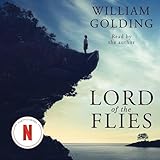
- Audible Audiobook
- William Golding (Author) - William Golding (Narrator)
- English (Publication Language)
- 10/03/2003 (Publication Date) - Listening Library (Publisher)
Step-by-Step Plan for Understanding the Allegory
1. Initial Setup: The Crash and Hope. Observe Ralph’s election and the establishment of rules around the conch. What to look for: The boys’ initial attempts to mimic adult society and their reliance on democratic process. Mistake: Assuming their order is stable or inherent; it is a learned behavior.
2. Emergence of Conflict: Order vs. Instinct. Track the growing tension between Ralph’s focus on rescue (signal fire) and Jack’s pursuit of hunting and immediate gratification. What to look for: The gradual erosion of Ralph’s authority and the increasing appeal of Jack’s primal leadership. Mistake: Underestimating the power of fear and basic needs over abstract ideals.
3. The “Beast”: Manifestation of Fear. Analyze how the boys’ fear of an external “beast” becomes a catalyst for their internal savagery. What to look for: The projection of their own inner darkness onto an imaginary entity. Mistake: Believing the beast is an external threat; Golding presents it as an internal one.
4. Loss of Reason: Piggy’s Demise. Witness the destruction of Piggy and his glasses, symbolizing the triumph of brute force over intellect and foresight. What to look for: The final shattering of rational thought and the complete embrace of savagery. Mistake: Viewing Piggy’s death as an isolated incident rather than the symbolic death of reason on the island.
5. The Hunt: Descent into Savagery. Examine the transformation of the boys into hunters, painting their faces and engaging in ritualistic violence. What to look for: The complete abandonment of civilized behavior and the embrace of primal instincts. Mistake: Seeing their actions as mere play; they are acts of true barbarism.
6. Rescue and Revelation: The Adult World. Consider the arrival of the naval officer and the irony of the boys being rescued from their “savage” game by adults engaged in a global war. What to look for: The stark contrast between the boys’ breakdown and the adult world’s own capacity for destruction. Mistake: Interpreting the rescue as a true return to order; the underlying savagery persists.
Common Myths About Lord of the Flies
- Myth: The novel is simply an adventure story about boys stranded on an island.
- Why it matters: This overlooks Golding’s explicit allegorical intent to explore the darker aspects of human nature.
- Fix: Read the novel with an awareness of its symbolic layers, focusing on the characters’ psychological transformations and the breakdown of social order.
- Myth: The boys are inherently evil from the start.
- Why it matters: Golding suggests that civilization is a fragile veneer that can be stripped away, rather than that evil is an innate, unchangeable quality.
- Fix: Observe the gradual nature of their descent, noting how societal structures, rules, and the presence of adults maintain order, and their absence allows savagery to flourish.
- Myth: Ralph is a perfect hero and Jack is a pure villain.
- Why it matters: This simplifies the complex psychological portrait Golding paints. Ralph struggles with leadership and his own impulses, while Jack’s appeal stems from tapping into primal desires that exist in all humans.
- Fix: Analyze the motivations and internal conflicts of both characters, recognizing their roles as representatives of different facets of human nature.
Decision Rules
- If reliability is your top priority for Lord of the Flies by William Golding, choose the option with the strongest long-term track record and support.
- If value matters most, compare total ownership cost instead of headline price alone.
- If your use case is specific, prioritize fit-for-purpose features over generic ‘best overall’ claims.
FAQ
- Q: Is Lord of the Flies suitable for young teenagers?
- A: While often read in schools, the novel contains graphic violence and disturbing themes of savagery and loss of innocence. It is best suited for mature readers who can engage with its complex allegorical and psychological content.
- Q: What is the primary message Golding intended to convey?
- A: Golding aimed to demonstrate that without the constraints of civilization and societal rules, humans are prone to devolve into barbarism and violence. He believed that the “darkness of man’s heart” is a fundamental aspect of human nature.
- Q: How does the ending of Lord of the Flies by William Golding contribute to its themes?
- A: The ending provides a stark ironic contrast. The boys’ descent into savagery is juxtaposed with the adult world’s own large-scale warfare, suggesting that the “savagery” is not unique to the isolated children but a pervasive element of humanity. The rescue does not signify a true return to order, but rather a temporary interruption.
Understanding Lord of the Flies by William Golding
The core of Lord of the Flies lies in its allegorical representation of societal collapse. Golding uses the isolated island setting to strip away the constructs of civilization, revealing what he believed to be the inherent savagery within human nature. The narrative meticulously charts the boys’ transition from a semblance of order, characterized by Ralph’s leadership and the democratic use of the conch, to a brutal, instinct-driven existence dominated by Jack. This descent is not sudden but gradual, fueled by fear, the allure of primal urges like hunting, and the erosion of reason symbolized by Piggy. The novel challenges the optimistic view of human perfectibility, suggesting that civilization is a thin, easily broken veneer.
| Character/Symbol | Representation | Initial State | Transformation |
|---|---|---|---|
| Ralph | Order, Civilization | Leader | Overwhelmed |
| Piggy | Intellect, Reason | Rational | Destroyed |
| Jack | Savagery, Primal Urge | Hunter | Dominant |
| Conch | Authority, Democracy | Symbolized | Shattered |
| Signal Fire | Hope, Rescue | Maintained | Neglected |
Expert Tips for Literary Analysis
- Tip: Focus on the symbolism of the “beast.”
- Actionable Step: Identify every instance where the “beast” is discussed or feared. Analyze how the boys’ perception of the beast shifts from an external threat to an internal manifestation of their own fears and violent tendencies.
- Common Mistake to Avoid: Treating the beast as a literal, external monster; Golding explicitly states, “the beast was our fear.”
- Tip: Examine the evolution of language and ritual.
- Actionable Step: Note how the boys’ speech devolves from articulate discussion to grunts and chants. Observe the development of hunting rituals and face painting as a means of dehumanization and tribal bonding.
- Common Mistake to Avoid: Overlooking these linguistic and ritualistic changes as mere narrative detail; they are crucial indicators of the boys’ psychological regression.
- Tip: Consider the novel’s historical context.
- Actionable Step: Research the period in which Golding wrote Lord of the Flies (published in 1954), particularly the aftermath of World War II and the anxieties surrounding human capacity for violence and totalitarianism.
- Common Mistake to Avoid: Reading the novel in isolation, without appreciating how its themes resonated with the geopolitical and social concerns of its time.
BLOCKQUOTE_0
This quote highlights the critical tension between innate humanity and imposed societal identity. The boys initially cling to their Englishness as a marker of civilization, but as their behavior deteriorates, the distinction blurs, suggesting that the “English” veneer is insufficient to contain underlying human impulses. The fragility of this identity under pressure is a central cautionary element of the novel.