Joseph Conrad’s Victory: A Tale of Isolation and Redemption
Quick Answer
- Victory by Joseph Conrad is a profound psychological novel examining the themes of isolation, idealism, and the corrupting influence of human connection.
- It is best suited for readers who appreciate intricate prose, philosophical depth, and character studies over fast-paced plots.
- The novel challenges conventional notions of victory and success, offering a nuanced exploration of morality in extreme circumstances.
Who This Is For
- Readers interested in late 19th and early 20th-century literature that delves into deep psychological states and moral ambiguity.
- Those who appreciate Conrad’s distinctive prose and his exploration of human behavior, particularly through characters grappling with isolation and societal pressures.
What to Check First
- Conrad’s Literary Style: Joseph Conrad’s writing is characterized by its complex sentence structures, philosophical undertones, and often non-linear narrative. If you find this style challenging, approaching Victory may require increased patience.
- Thematic Core: The novel’s central focus is Axel Heyst, a detached observer who attempts to live a life free from societal entanglements. His philosophical experiment in isolation is the narrative’s engine.
- Narrative Pacing: Victory is not a plot-driven thriller. Its primary strengths lie in character development and thematic exploration, which contribute to a deliberate narrative pace.
- Existential and Moral Questions: The novel grapples with themes of meaning, purpose, and the inherent loneliness of existence, offering a lens through which modern readers can contemplate similar questions.
Step-by-Step Plan for Understanding Victory by Joseph Conrad
1. Grasp Axel Heyst’s Initial Philosophy: Begin by understanding Heyst’s fundamental motivation: to observe life without direct participation, believing that detachment offers a form of purity and safety.
- What to look for: Pay attention to Heyst’s early pronouncements and his inherited cynicism regarding worldly endeavors, particularly his father’s philosophical legacy.
- Mistake: Interpreting Heyst’s detachment as mere apathy or laziness, rather than a deliberate, albeit flawed, philosophical stance.
2. Analyze Lena’s Arrival as a Catalyst: Recognize Lena’s entrance into Heyst’s life as the critical event that disrupts his carefully constructed isolation and forces him to confront his principles.
- What to look for: Observe the stark contrast between Lena’s vulnerability and Heyst’s initial aloofness, and meticulously track the development of their relationship.
- Mistake: Dismissing Lena as a mere plot device; her presence is central to the novel’s thematic conflict and Heyst’s eventual transformation.
3. Examine the Nature of the Antagonists: Study the characters of Mr. Jones and Ricardo, understanding their motivations and how they represent the external forces Heyst sought to escape.
- What to look for: Note their predatory nature and how they exploit the vulnerabilities of others, including Heyst and Lena, to achieve their ends.
- Mistake: Underestimating the threat posed by Jones and Ricardo; they are not simple villains but embody the destructive, corrupting elements of society that Conrad critiques.
For those seeking a profound psychological novel that delves into isolation and the complexities of human connection, Victory by Joseph Conrad is an excellent choice. It’s a must-read for fans of intricate prose and philosophical depth.
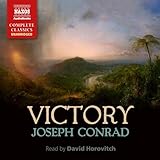
- Audible Audiobook
- Joseph Conrad (Author) - David Horovitch (Narrator)
- English (Publication Language)
- 12/21/2023 (Publication Date) - Naxos AudioBooks (Publisher)
4. Trace Heyst’s Moral Compromises: Follow Heyst’s gradual descent from a detached observer to an active participant, noting the specific compromises he makes and their psychological toll.
- What to look for: Identify instances where Heyst acts against his initial philosophy, driven by his growing connection to Lena or his perceived responsibilities.
- Mistake: Assuming Heyst remains purely an observer throughout the novel; his active involvement is the core of his tragedy and the subversion of his original intent.
5. Evaluate the Ambiguity of “Victory”: Consider what the title “Victory” truly signifies within the context of the novel’s events and Heyst’s ultimate fate.
- What to look for: Analyze the ambiguous nature of Heyst’s final outcome and whether it represents a triumph, a profound loss, or a complex mixture of both.
- Mistake: Taking the title at face value as a simple win; Conrad frequently employs irony and subverts reader expectations to provoke deeper thought.
6. Consider the Role of Setting: Understand how the isolated island setting in Victory by Joseph Conrad amplifies the themes of isolation and the difficulty of escaping one’s past or societal influences.
- What to look for: Analyze the island as both a sanctuary and a prison, reflecting Heyst’s internal state and the inescapable nature of his predicament.
- Mistake: Viewing the island as mere backdrop; it is a crucial element that shapes the characters’ experiences and intensifies the novel’s thematic resonance.
Victory by Joseph Conrad: A Study in Isolation and Consequence
Joseph Conrad’s Victory stands as a profound exploration of the human psyche, particularly concerning the universal desire for isolation and the inevitable consequences of engaging with the world. Set against the evocative backdrop of the Dutch East Indies, the novel centers on Axel Heyst, a man who attempts to live a life of detached observation, believing he can thereby escape the moral entanglements and inherent corruptions of society. This deliberate withdrawal, however, proves to be a fragile defense against the complexities of human connection and the darker aspects of human nature.
Heyst’s philosophical stance is deeply rooted in a pervasive disillusionment, a legacy inherited from his father, a man who dedicated his life to a seemingly futile quest for a universal “truth.” This inheritance imbues Heyst with a profound sense of futility regarding human endeavors, leading him to seek refuge in detachment. He views society as a stage for delusion and self-deception, and his island retreat is a calculated attempt to transcend this perceived falsehood. The narrative meticulously details his efforts to remain an impartial observer, a stance that is ultimately tested by the unexpected arrival of Lena, a vulnerable woman escaping an abusive situation.
BLOCKQUOTE_0
The introduction of Lena marks a critical turning point in Heyst’s carefully ordered existence. Heyst, initially reluctant to engage, finds himself drawn into her plight, a decision that irrevocably unravels his meticulously constructed isolation. This entanglement exposes him directly to the predatory nature of Mr. Jones and his companion Ricardo, characters who embody the very corruption and moral decay Heyst sought to escape. Their arrival forces Heyst out of his passive role, compelling him to act and, in doing so, confront the profound limitations of his detached philosophy. The island, once a symbol of his freedom from society, transforms into a stage for a tragic confrontation, highlighting the near impossibility of true detachment from the human behavior. The narrative serves as a testament to Conrad’s unparalleled skill in dissecting the human behavior, demonstrating that engagement, however painful, is often an inescapable aspect of existence.
Common Myths and Expert Corrections
- Myth: Axel Heyst is simply a misanthrope seeking solitude.
- Correction: Heyst’s withdrawal is not born of simple misanthropy but from a deep-seated philosophical disillusionment. He attempts a conscious experiment in detached observation, believing it to be a superior mode of existence, a nuanced position distinct from mere social aversion.
- Myth: Lena is a passive victim who needs saving.
- Correction: While Lena is initially vulnerable, she possesses significant agency and resilience. Her actions and her complex relationship with Heyst are pivotal to the novel’s development, challenging Heyst’s detachment and contributing actively to the narrative’s tragic conclusion.
- Myth: The title “Victory” refers to a straightforward triumph for Heyst.
- Correction: Conrad’s titles are often ironic. The “victory” in Victory is deeply ambiguous, potentially referring to a tragic realization, a moral compromise, or a profound acceptance of life’s inherent difficulties, rather than a conventional success.
Expert Tips for Engaging with Victory by Joseph Conrad
- Tip 1: Embrace the Language. Conrad’s prose is rich and layered.
- Actionable Step: Read passages aloud to appreciate the rhythm and intricate sentence construction. Focus on understanding the nuances of his vocabulary.
- Mistake to Avoid: Skimming complex sentences or getting bogged down by unfamiliar words. Treat the language itself as a key element of the novel’s texture and meaning.
- Tip 2: Track Heyst’s Internal Conflict. The core of the novel lies in Heyst’s philosophical struggle.
- Actionable Step: Keep a running mental or written note of Heyst’s evolving thoughts and justifications for his actions, particularly as they diverge from his initial principles.
- Mistake to Avoid: Focusing solely on external events and dialogue. The true drama unfolds within Heyst’s mind as his detachment is tested.
- Tip 3: Contextualize the Themes. Victory engages with universal philosophical questions.
- Actionable Step: Consider how themes of isolation, the nature of good and evil, and the role of fate resonate with contemporary discussions or your own experiences.
- Mistake to Avoid: Reading the novel as a mere period piece. Its exploration of human nature and morality remains remarkably relevant.
Quick Comparison
| Option | Best for | Pros | Watch out |
|---|---|---|---|
| Quick Answer | General use | Victory by Joseph Conrad is a profound psychological novel examining the them… | Mistake: Interpreting Heyst’s detachment as mere apathy or laziness, rather t… |
| Who This Is For | General use | It is best suited for readers who appreciate intricate prose, philosophical d… | Mistake: Dismissing Lena as a mere plot device; her presence is central to th… |
| What to Check First | General use | The novel challenges conventional notions of victory and success, offering a… | Mistake: Underestimating the threat posed by Jones and Ricardo; they are not… |
| Step-by-Step Plan for Understanding Victory by Joseph Conrad | General use | Readers interested in late 19th and early 20th-century literature that delves… | Mistake: Assuming Heyst remains purely an observer throughout the novel; his… |
Decision Rules
- If reliability is your top priority for Victory by Joseph Conrad, choose the option with the strongest long-term track record and support.
- If value matters most, compare total ownership cost instead of headline price alone.
- If your use case is specific, prioritize fit-for-purpose features over generic ‘best overall’ claims.
FAQ
- Q: Is Victory by Joseph Conrad a difficult book to read?
- A: Victory can present a challenge due to Conrad’s complex prose, philosophical depth, and deliberate pacing. Readers accustomed to more direct narratives may require greater patience and focused attention.
- Q: What is the central theme of Victory?
- A: The primary theme revolves around the tension between isolation and connection. The novel explores whether a life of complete detachment is feasible or desirable, and examines the multifaceted consequences of engaging with the world.
- Q: Who is Axel Heyst?
- A: Axel Heyst is the protagonist, a man disillusioned with humanity who attempts to live a life of isolation and objective observation on a remote island. His philosophical experiment forms the core of the novel’s