Little House In The Big Woods: A Pioneer Story
Quick Answer
- Verdict: A foundational historical fiction for young readers (ages 6-10) and families, offering an authentic, unsentimental view of pioneer life with a focus on resourcefulness and family bonds.
- Key Strength: Its detailed and realistic portrayal of 19th-century frontier existence, highlighting daily labor and self-sufficiency.
- Primary Consideration: The narrative’s deliberate pacing and emphasis on chores may test the patience of readers accustomed to faster-paced stories.
Who This Is For
- Young Readers (Ages 6-10): Children developing reading comprehension who are interested in historical narratives and learning about different ways of life.
- Families and Educators: This book provides a valuable resource for discussing themes of resilience, hard work, historical context, and the realities of American pioneer settlement.
For an authentic glimpse into pioneer life, the original ‘Little House In The Big Woods’ by Laura Ingalls Wilder is a must-read. It vividly captures the resourcefulness and daily challenges faced by the Ingalls family.
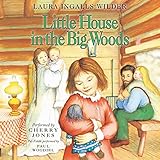
- Audible Audiobook
- Laura Ingalls Wilder (Author) - Cherry Jones (Narrator)
- English (Publication Language)
- 02/07/2017 (Publication Date) - HarperCollins (Publisher)
What to Check First
- Reader’s Age and Maturity: Confirm if the intended reader is prepared for detailed descriptions of manual labor and the historical context of frontier survival.
- Interest in Historical Fiction: Assess if the reader is receptive to learning about the past through narrative rather than seeking purely action-driven plots.
- Patience for Descriptive Detail: Gauge the reader’s capacity for engaging with extensive descriptions of daily tasks, such as food preparation, shelter maintenance, and resource gathering.
- Tolerance for Unsentimental Realism: Determine if the reader can appreciate the historical accuracy of depicting hardship and challenges without expecting constant comfort or overt sentimentality.
Step-by-Step Plan for Engaging with Little House In The Big Woods
1. Introduce the Historical Setting:
- Action: Provide a brief overview of the late 19th century and the concept of pioneer life in America’s frontier regions.
- What to Look For: Ensure the reader understands the absence of modern conveniences and the reliance on manual labor for survival.
- Mistake: Assuming prior knowledge of the historical period, which can lead to a disconnect with the narrative’s context.
2. Set Reading Objectives:
- Action: Discuss what the reader hopes to gain from the book, perhaps focusing on the Ingalls family’s daily routines and problem-solving.
- What to Look For: Identify specific aspects of pioneer life that spark the reader’s curiosity, such as food preservation or shelter construction.
- Mistake: Treating the book as mere entertainment without establishing specific learning goals, which can diminish its educational impact.
3. Emphasize Sensory Immersion:
- Action: Encourage the reader to actively visualize and “feel” the environment by paying close attention to the sensory details provided, like the scent of pine or the texture of deerskin.
- What to Look For: Note how these descriptive passages contribute to the authenticity and atmosphere of the story.
- Mistake: Skimming over descriptive passages, thereby missing the rich historical texture the author meticulously crafted.
4. Analyze Themes of Self-Reliance and Kinship:
- Action: Pause to discuss instances where the Ingalls family demonstrates cooperation and relies on their collective skills for survival and well-being.
- What to Look For: Identify specific examples of ingenuity, shared responsibility, and mutual support among family members.
- Mistake: Focusing solely on plot events and overlooking the underlying messages about hard work, interdependence, and familial strength.
5. Facilitate Historical Comparison:
- Action: After reading, engage in a discussion comparing the Ingalls family’s lifestyle with the reader’s own contemporary experiences.
- What to Look For: Highlight the stark differences in technology, resource availability, and daily routines.
- Mistake: Failing to draw explicit connections between the past and present, which limits the book’s capacity to illuminate historical change.
Little House In The Big Woods by Laura Ingalls Wilder: A Realistic Portrayal
The enduring significance of Little House In The Big Woods by Laura Ingalls Wilder stems from its unvarnished depiction of pioneer existence. Unlike many modern narratives that might romanticize historical periods, Wilder, drawing directly from her childhood experiences, presents the rigorous daily routine, the isolation, and the constant labor inherent in survival. The narrative follows the Ingalls family’s relocation from their Wisconsin home to a remote cabin deep within the forest. Central themes of self-sufficiency, the vital importance of family bonds, and the cyclical rhythm of the seasons are intricately woven into the text. The book’s primary strength lies in its authenticity; it does not shy away from the physical demands placed upon young Laura and her sister Mary, nor the ever-present challenges posed by the elements and the need for vigilance. This grounded approach offers a crucial counterpoint to potentially idealized perceptions of the past.
However, this very commitment to realism can present a hurdle for some readers. The detailed descriptions of domestic chores—churning butter, splitting firewood, preserving food—while essential for historical accuracy, can feel slow-paced for those accustomed to more dynamic plot progression. The absence of modern comforts and the stark realities of frontier life, including potential health concerns and the constant need for resourcefulness, might prove challenging for some younger readers or those seeking purely escapist fiction. The narrative’s impact is directly proportional to its fidelity to historical detail, which necessitates a degree of reader patience and a willingness to engage with the minutiae of a bygone era.
Common Myths About Pioneer Life
- Myth: Pioneer life was primarily an epic adventure filled with constant excitement and discovery.
- Why it Matters: This misconception can lead to reader disappointment if the expectation is for non-stop action and dramatic events.
- Fix: Emphasize that the reality of pioneer life, as depicted in Little House In The Big Woods, was largely defined by routine, diligent labor, and the daily challenges of survival. The “adventure” lay in overcoming these persistent obstacles.
- Myth: Pioneers generally had ample leisure time for play and relaxation.
- Why it Matters: This overlooks the significant physical effort required to meet basic survival needs.
- Fix: Highlight the specific chores undertaken by the Ingalls children, such as gathering fuel, processing food, and assisting with agricultural tasks, illustrating that their “play” was often integrated with work or occurred only during brief, designated periods.
- Myth: All pioneer dwellings were inherently crude and unsophisticated.
- Why it Matters: The term “crude” is subjective and does not account for the variations in skill, available materials, and the functional design of pioneer homes.
- Fix: Note that while the cabin in Little House In The Big Woods was simple, it was a product of skilled construction by Pa Ingalls and equipped with necessary furnishings. The book demonstrates a functional, albeit basic, dwelling built through practical expertise.
Expert Tips for Reading Little House In The Big Woods
- Tip: Analyze the underlying motivations for daily actions.
- Actionable Step: When encountering descriptions of chores, encourage the reader to ask: “Why was this task necessary for their survival?” For instance, understanding the process of making salt pork.
- Common Mistake to Avoid: Simply reading the description of a chore without grasping its critical role in the family’s sustenance.
- Tip: Leverage descriptive language for imaginative reconstruction.
- Actionable Step: Prompt the reader to actively visualize the setting. When the text mentions the “deep woods,” ask them to imagine the scale of the trees, the ambient sounds, and the feeling of being immersed in nature.
- Common Mistake to Avoid: Treating descriptive passages as mere filler, rather than as integral components that construct the historical world and atmosphere.
- Tip: Draw parallels between historical hardship and modern conveniences.
- Actionable Step: After reading about a demanding task, such as hauling water from a frozen creek, discuss how modern infrastructure and technology (e.g., indoor plumbing) have transformed such necessities.
- Common Mistake to Avoid: Reading the book in isolation without making explicit connections to the reader’s own life, which limits the educational and comparative value.
Little House In The Big Woods by Laura Ingalls Wilder: A Decision Criterion
A pivotal decision criterion for evaluating Little House In The Big Woods by Laura Ingalls Wilder is the reader’s inclination towards detailed, process-oriented narratives versus plot-driven action.
- Recommendation: If the reader (or the child being read to) demonstrates a strong interest in the intricate details of how things were done, the practicalities of survival, and the quiet, predictable rhythms of a self-sufficient existence, this book is an excellent fit. Its narrative power is derived precisely from these methodical, unhurried descriptions.
- Counter-Case: Conversely, if the reader tends to become disengaged by descriptions of chores, food preparation, or the general monotony of survival tasks, and strongly prefers narratives propelled by rapid plot development and overt conflict, then Little House In The Big Woods may prove to be a challenging read. In such scenarios, exploring other historical fiction titles that prioritize action or character dialogue might be more appropriate.
This specific criterion—tolerance for descriptive detail and a focus on process over plot—significantly influences the suitability of the book for different reader profiles.
Comparison of Reading Experiences
| Reading Focus | Strengths | Limitations | Best Suited For |
|---|---|---|---|
| <strong>Detailed Daily Life</strong> | Authentic portrayal of chores, resourcefulness, and seasonal cycles. | May feel slow for readers preferring action. | Readers interested in historical accuracy and practical skills. |
| <strong>Family Dynamics</strong> | Emphasis on kinship, cooperation, and mutual support. | Less focus on external conflict or grand adventures. | Readers who value stories about family relationships and interdependence. |
| <strong>Historical Immersion</strong> | Rich sensory details create a vivid sense of the 19th-century frontier. | Requires reader engagement with descriptive passages. | Those seeking to deeply understand a historical period through narrative. |
Decision Rules
- If reliability is your top priority for Little House In The Big Woods by Laura Ingalls Wilder, choose the option with the strongest long-term track record and support.
- If value matters most, compare total ownership cost instead of headline price alone.
- If your use case is specific, prioritize fit-for-purpose features over generic ‘best overall’ claims.
FAQ
- Q: Is Little House In The Big Woods appropriate for preschoolers?