Cheon Myeong-kwan’s Whale: A Unique Novel
Quick Answer:
- Whale by Cheon Myeong-kwan is an experimental novel that blends myth, folklore, and social commentary with a surreal, fable-like quality.
- Its strength lies in its audacious imagination and distinctive voice, offering a challenging but rewarding experience for readers open to unconventional narratives.
- Those who prefer linear plots and conventional character development may find it disorienting; readers seeking literary innovation will find it compelling.
Who This Is For:
- Readers interested in contemporary Korean literature that pushes artistic boundaries and explores themes through allegory and symbolism.
- Individuals who appreciate surrealism, dark humor, and narratives that prioritize atmosphere and thematic depth over traditional plot structures.
Understanding Whale by Cheon Myeong-kwan
Whale by Cheon Myeong-kwan is a novel that defies easy categorization, presenting itself as a tapestry woven from myth, folklore, and sharp social observation. Set in a Korean coastal town, the narrative unfolds through a series of interconnected, often bizarre, events and eccentric characters. The titular “Whale” is a woman whose presence imbues the story with a sense of mythic significance, while other characters, such as Ui-gang, become entangled in a series of strange occurrences. The novel operates on a symbolic, almost dreamlike level, drawing on archetypes to explore profound themes of fate, memory, and the inherent absurdity of existence. Its primary strength lies in its uninhibited imagination and its departure from conventional Western literary structures, offering a uniquely Korean perspective on universal human experiences.
What to Check First:
- Narrative Approach: Be prepared for a non-linear, episodic structure. The story progresses through thematic resonance and symbolic connections rather than a strict chronological cause-and-effect.
- Character Portrayal: Characters often function as archetypes or symbolic figures rather than deeply developed psychological portraits. Their motivations may be driven by fate or narrative necessity.
- Tone and Atmosphere: The novel consistently blends dark humor, melancholy, and surrealism. An openness to its often bleak yet darkly comic worldview is essential.
- Thematic Richness: While the plot may appear fragmented, the novel is dense with underlying themes concerning societal pressures, the search for meaning, and the cyclical nature of history and human behavior.
Navigating the Literary Landscape of Whale by Cheon Myeong-kwan
This novel is best approached as an immersive experience rather than a straightforward story to be followed. Cheon Myeong-kwan constructs a world that feels simultaneously ancient and contemporary, where the mundane frequently intersects with the fantastical. The character of Whale serves as a potent symbol, representing the vastness and mystery of nature, and her influence permeates the lives of those around her. The narrative weaves together disparate threads—a young woman’s quest, a father’s obsession, and the lingering impact of historical trauma—into a tapestry that is both bewildering and deeply resonant.
One of Whale’s most significant strengths is its fearless embrace of the absurd. Cheon Myeong-kwan does not shy away from the bizarre or the grotesque, employing them to underscore the inherent strangeness of human existence. This is where the novel’s distinctiveness is most apparent, offering a perspective that is uniquely Korean yet universally relevant in its exploration of societal anxieties and human behavior.
BLOCKQUOTE_0
This quote encapsulates the novel’s approach to character and plot; the sequence of events is less critical than the underlying existential context or the sheer peculiarity of the journey.
For those seeking a truly unique literary experience, Cheon Myeong-kwan’s Whale is an exceptional choice. This novel masterfully blends myth, folklore, and social commentary with a surreal, fable-like quality that is both challenging and deeply rewarding.
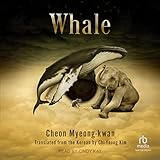
- Audible Audiobook
- Cheon Myeong-kwan (Author) - Cindy Kay (Narrator)
- English (Publication Language)
- 03/28/2023 (Publication Date) - Tantor Audio (Publisher)
The Decision Criterion for Enjoying Whale
Understanding the intended reading experience for Whale by Cheon Myeong-kwan is paramount to appreciating its artistic merit. The novel demands a reader willing to relinquish expectations of traditional storytelling. Instead of focusing on plot progression, readers are encouraged to engage with the novel’s evocative imagery, its unique voice, and its exploration of recurring motifs. The characters, while often peculiar, serve as conduits for the author’s thematic concerns, their actions and destinies reflecting broader societal patterns and the inescapable pull of fate.
A critical decision criterion for enjoying this book hinges on the reader’s tolerance for ambiguity. If a clear cause-and-effect narrative is essential for your reading pleasure, Whale may present significant challenges. Conversely, if you find satisfaction in unraveling symbolic meanings and immersing yourself in a richly imagined, albeit unconventional, world, then this novel offers a deeply rewarding experience. The narrative’s dreamlike quality, where logic often bends to emotional or symbolic truth, is its defining characteristic.
Step-by-Step Plan for Reading:
1. Acknowledge the Unconventional Structure: Before starting, understand that Whale does not follow a typical linear plot.
- Action: Prepare for a narrative that progresses through thematic connections and associative leaps.
- What to look for: Observe how events and characters are introduced and linked through recurring symbols or thematic resonance, rather than chronological order.
- Mistake: Expecting a straightforward beginning, middle, and end will lead to frustration.
2. Embrace the Surreal Tone: Allow yourself to be drawn into the novel’s dreamlike and often bizarre atmosphere.
- Action: Do not resist the strangeness; engage with it as a fundamental aspect of the novel’s world.
- What to look for: Pay attention to sensory details, unexpected juxtapositions, and darkly humorous observations about life.
- Mistake: Trying to rationalize every strange event will detract from the immersive experience.
3. Focus on Archetypes and Symbols: Recognize that characters often represent broader ideas or human behaviors.
- Action: Shift your focus from individual psychology to symbolic representation.
- What to look for: Identify recurring symbols (like the sea, the whale, or specific objects) and consider their potential meanings within the narrative.
- Mistake: Getting bogged down in the psychological realism of individual characters, as this is not the novel’s primary focus.
4. Read in Focused Sessions: Due to its dense and often fragmented nature, short, focused reading sessions can be more effective.
- Action: Break down the reading into manageable segments to maintain concentration.
- What to look for: Revisit passages that struck you as particularly evocative or confusing; sometimes a second read clarifies a connection.
- Mistake: Rushing through the text to reach a conclusion, which can lead to missing subtle thematic links.
5. Engage with the Author’s Voice: Appreciate Cheon Myeong-kwan’s distinctive narrative style and its translation.
- Action: Pay close attention to the prose itself, its rhythm and its unique phrasing.
- What to look for: Notice the rhythm of the sentences, the unique phrasing, and the often deadpan delivery of absurd situations.
- Mistake: Overlooking the artistry of the prose in favor of solely focusing on plot events.
6. Consider the Cultural Context: While universal themes are present, understanding its Korean origins can add layers of appreciation.
- Action: Be open to potential cultural allusions and their significance.
- What to look for: Be aware of potential allusions to Korean folklore, history, or social dynamics, even if not explicitly explained.
- Mistake: Reading the novel in a cultural vacuum, potentially missing subtle nuances or references.
7. Allow for Interpretation: The novel is designed to provoke thought and personal interpretation rather than provide definitive answers.
- Action: Embrace the ambiguity and allow the novel to resonate with your own experiences and perspectives.
- What to look for: Reflect on what the novel makes you feel or think about, even if you cannot articulate a precise meaning for every element.
- Mistake: Seeking a single, correct interpretation of the novel’s events or themes.
Common Mistakes:
- Seeking Conventional Plotting — Why it matters: This leads to frustration and an inability to appreciate the novel’s strengths. The narrative is deliberately non-linear and associative. — Fix: Adjust expectations; read for atmosphere, theme, and unique voice.
- Over-rationalizing Surreal Events — Why it matters: The novel operates on a mythic and symbolic level, where logic often takes a backseat to evocative imagery and thematic resonance. — Fix: Embrace the absurdity and surrealism as integral to the author’s vision.
- Focusing Solely on Character Psychology — Why it matters: Characters in Whale often function as archetypes or symbolic figures rather than deeply developed individuals with conventional motivations. — Fix: Concentrate on their symbolic roles and how they contribute to the novel’s broader themes.
- Ignoring the Author’s Unique Voice — Why it matters: Cheon Myeong-kwan’s prose style is a significant part of the novel’s appeal, blending dark humor, lyricism, and a fable-like quality. — Fix: Pay attention to the language, rhythm, and tone of the narrative.
Expert Tips for Reading Whale
- Tip 1: Approach with an Open Mind:
- Actionable Step: Read the first 50 pages without trying to ‘figure it out.’ Instead, focus on absorbing the atmosphere, the imagery, and the initial character introductions.
- Common Mistake to Avoid: Immediately trying to map out character relationships and plot points, which can lead to early dismissal of the novel’s unconventional structure.
- Tip 2: Highlight Recurring Motifs:
- Actionable Step: Keep a running list or make notes of recurring symbols, phrases, or images that appear throughout the book (e.g., the sea, the scent of the ocean, specific animal imagery).
- Common Mistake to Avoid: Underestimating the significance of seemingly minor recurring elements, which often serve as thematic anchors.
- Tip 3: Discuss or Journal After Reading Sections:
- Actionable Step: After finishing a chapter or a
Quick Comparison
| Option | Best for | Pros | Watch out |
|---|---|---|---|
| Understanding Whale by Cheon Myeong-kwan | General use | Whale by Cheon Myeong-kwan is an experimental novel that blends myth, folkl… | Mistake: Expecting a straightforward beginning, middle, and end will lead to… |
| Navigating the Literary Landscape of Whale by Cheon Myeong-kwan | All-around balance | Its strength lies in its audacious imagination and distinctive voice, offerin… | Mistake: Trying to rationalize every strange event will detract from the imme… |
| Expert Tips for Reading Whale | General use | Those who prefer linear plots and conventional character development may find… | Mistake: Getting bogged down in the psychological realism of individual chara… |
Decision Rules
- If reliability is your top priority for Whale by Cheon Myeong-kwan, choose the option with the strongest long-term track record and support.
- If value matters most, compare total ownership cost instead of headline price alone.
- If your use case is specific, prioritize fit-for-purpose features over generic ‘best overall’ claims.