Lewis Grassic Gibbon’s Sunset Song: A Scottish Classic
Sunset Song by Lewis Grassic Gibbon: A Concise Overview
- Sunset Song by Lewis Grassic Gibbon is a seminal work of Scottish literature, renowned for its authentic portrayal of rural life and the profound impact of World War I.
- The novel’s literary merit lies in its masterful use of Scots dialect, its evocative depiction of the Mearns landscape, and its complex protagonist, Chris Guthrie.
- Readers seeking a deeply immersive, linguistically rich, and thematically resonant experience will find this novel rewarding, though it requires attentive engagement.
Who This Is For
- Readers interested in 20th-century Modernist literature and its exploration of societal change.
- Individuals who appreciate novels with a strong sense of place and a focus on character interiority.
What to Check First
- Linguistic Authenticity: Be prepared for Gibbon’s extensive use of Scots dialect, which is integral to the novel’s voice and setting. A glossary or familiarity with Scots will be beneficial.
- Historical Context: Understanding the socio-economic conditions of early 20th-century Scottish crofting communities and the looming presence of World War I will enhance comprehension of the characters’ struggles.
- Thematic Depth: The novel explores themes of tradition versus modernity, humanity’s relationship with nature, and the devastating consequences of war. Recognizing these will enrich the reading experience.
- Protagonist’s Journey: The narrative is deeply centered on Chris Guthrie’s internal development and her evolving perspective on her world.
Step-by-Step Plan to Reading Sunset Song
1. Obtain a Glossary or Companion Resource: Secure a version of Sunset Song that includes a glossary of Scots terms, or have an online resource readily available.
- What to Look For: Clear definitions for dialect words and phrases, particularly those that recur.
- Mistake to Avoid: Attempting to infer the meaning of every dialect word solely from context, which can lead to misinterpretations and a fragmented reading experience.
2. Familiarize Yourself with the Mearns: Research the geographical and cultural landscape of the Mearns region in Scotland during the early 1900s, focusing on agricultural practices and community structures.
- What to Look For: Details on crofting, the influence of the church, and the societal norms of the period.
- Mistake to Avoid: Assuming that rural life in this era was uniform and overlooking the specific historical and economic pressures that shaped the characters’ lives.
3. Engage Actively with the Opening: Pay close attention to the initial descriptions of the landscape and Chris Guthrie’s early life. Gibbon establishes the novel’s atmosphere and Chris’s foundational connection to her environment here.
- What to Look For: Sensory details of the land, the depiction of family dynamics, and subtle foreshadowing of future events.
- Mistake to Avoid: Skimming these descriptive passages, as they are crucial for understanding the novel’s deep sense of place and Chris’s initial worldview.
4. Track Chris Guthrie’s Psychological Arc: Recognize that the novel’s primary momentum comes from Chris’s internal experiences—her thoughts, feelings, and evolving understanding of her circumstances.
- What to Look For: Her reactions to events, her internal conflicts, and her philosophical reflections on life, love, and duty.
- Mistake to Avoid: Focusing solely on external plot points and dialogue, thereby missing the profound psychological depth that defines Chris as a character.
5. Appreciate Gibbon’s Linguistic Synthesis: Observe how Gibbon artfully combines Scots vernacular with standard English. Note how this fusion creates a unique narrative voice that is both authentic and artistically innovative.
- What to Look For: Passages where the dialect feels particularly evocative or where the interplay between Scots and English creates specific emotional effects.
- Mistake to Avoid: Dismissing dialect-heavy passages as merely difficult, rather than recognizing them as deliberate artistic choices contributing to the novel’s power and authenticity.
6. Analyze the Impact of World War I: Understand that the war is not merely a historical backdrop but a destructive force that fundamentally alters the lives and landscape depicted.
- What to Look For: The direct and indirect effects of the war on the community, the characters’ emotional responses, and the disruption of traditional ways of life.
- Mistake to Avoid: Underestimating the profound, personal impact of the war on individuals and families, or treating it as a distant event rather than a central catalyst for change.
7. Reflect on Thematic Resonance: Consider how themes of nature, tradition, love, loss, and resilience are interwoven throughout Chris’s journey and the broader narrative.
- What to Look For: Recurring motifs and symbols that illuminate the novel’s deeper meanings.
- Mistake to Avoid: Reading the novel as a linear plot without appreciating the complex thematic tapestry that Gibbon weaves.
For those looking to dive into a foundational piece of Scottish literature, Lewis Grassic Gibbon’s Sunset Song is an essential read. It masterfully captures the spirit of rural Scotland and the profound impact of historical events.
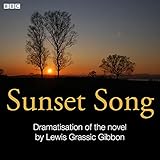
- Audible Audiobook
- Lewis Grassic Gibbon (Author) - Full Cast, Lesley Hart (Narrators)
- English (Publication Language)
- 05/09/2013 (Publication Date) - BBC Digital Audio (Publisher)
Understanding Sunset Song by Lewis Grassic Gibbon
Lewis Grassic Gibbon’s Sunset Song stands as a monumental achievement in 20th-century Scottish literature, offering a deeply felt and unflinchingly honest portrayal of rural life in the Mearns during the early 1900s. At its core is Chris Guthrie, a young woman whose existence is shaped by the harsh realities of agricultural labor, the deep-rooted traditions of her community, and the cataclysmic arrival of World War I. Gibbon’s groundbreaking use of the Scots language, skillfully interwoven with standard English, creates a unique vernacular that imbues the novel with an unparalleled sense of place and authenticity. This linguistic innovation is not merely stylistic; it is fundamental to the novel’s power, allowing readers to experience the world through Chris’s perspective with visceral immediacy. The novel’s enduring relevance lies in its profound exploration of human resilience in the face of overwhelming societal change and personal tragedy. It matters now as a testament to the power of literature to capture a specific time and place while speaking to universal human experiences of love, loss, and the relentless search for meaning.
The primary strength of Sunset Song resides in its evocative prose and its complex, deeply human protagonist. Chris Guthrie is not a passive figure; she is a character grappling with her desires, her responsibilities, and the profound constraints of her environment. Gibbon masterfully depicts the beauty and brutality of the natural world, which serves as both a source of solace and a stark reminder of life’s unforgiving cycles. The novel’s structural arc, moving from the idyllic, if challenging, rural beginnings to the devastating impact of the Great War, mirrors the shattering of innocence and the forced maturation of its characters. This transition is rendered with a raw honesty that avoids sentimentality, making the emotional impact all the more profound. For readers who value literary artistry and a deep dive into character psychology, Sunset Song offers a rich and unforgettable experience, though its linguistic distinctiveness and somber themes necessitate a committed reader.
Failure Mode: The “Lost in Translation” Trap
A common failure mode for readers encountering Sunset Song by Lewis Grassic Gibbon is getting bogged down by the Scots dialect. This isn’t just a matter of unfamiliar words; it’s about the rhythm, cadence, and idiomatic expressions that form the very texture of the narrative. When readers fixate solely on understanding every single word, they can miss the broader emotional arc and thematic resonance. The novel’s power isn’t just in its plot points, but in the way the language feels – the connection it fosters to the land and its people.
- Detection: You’ll notice yourself frequently stopping to look up words, feeling disconnected from the flow of the story, or finding passages dense and unrewarding rather than evocative. The emotional weight of scenes might feel muted.
- Mitigation: Embrace the dialect as part of the experience. Use a glossary or online resources as needed, but don’t let the pursuit of perfect comprehension paralyze your reading. Focus on understanding the gist and the emotional tone. Accept that some nuances will be clearer on rereading. The beauty of Gibbon’s prose often lies in its overall effect, not just the precise definition of each word.
Common Myths
- Myth 1: Sunset Song is a simple, straightforward story about farming life.
- Correction: While set in a rural environment, the novel is deeply layered, exploring complex themes of social change, the disruption of tradition by war, and the psychological impact of loss. Its narrative is driven as much by internal character development as by external events.
- Myth 2: The Scots dialect makes the book inaccessible to non-Scottish readers.
- Correction: While the dialect presents a learning curve, Gibbon masterfully integrates it with standard English. With the aid of a glossary or a willingness to engage with the language’s musicality and context, readers can fully appreciate its richness and its role in grounding the narrative. Many readers find the dialect adds to the novel’s unique charm and authenticity.
Expert Tips
- Tip 1: Embrace the Linguistic Landscape.
- Actionable Step: Read aloud passages that feel particularly rich or challenging. Listening to the rhythm and sound of the Scots dialect can unlock meaning and emotional resonance that visual reading alone might miss.
- Common Mistake to Avoid: Reading silently and exclusively, treating the dialect as an obstacle to be deciphered rather than an integral part of the novel’s sensory experience.
- Tip 2: Focus on Chris’s Internal World.
- Actionable Step: Dedicate specific attention to Chris Guthrie’s thoughts, feelings, and reactions. Make note of her evolving perspective on her life, her relationships, and the world around her.
- Common Mistake to Avoid: Prioritizing the external plot developments over Chris’s internal journey, which is the true engine of the novel’s emotional impact.
- Tip 3: Understand the Role of Place.
- Actionable Step: Visualize the Mearns landscape as Gibbon describes it, paying attention to how the land influences the characters’ lives
Quick Comparison
| Option | Best for | Pros | Watch out |
|---|---|---|---|
| Sunset Song by Lewis Grassic Gibbon A Concise Overview | General use | Sunset Song by Lewis Grassic Gibbon is a seminal work of Scottish literature,… | Mistake to Avoid: Attempting to infer the meaning of every dialect word solel… |
| Who This Is For | General use | The novel’s literary merit lies in its masterful use of Scots dialect, its ev… | Mistake to Avoid: Assuming that rural life in this era was uniform and overlo… |
| What to Check First | General use | Readers seeking a deeply immersive, linguistically rich, and thematically res… | Mistake to Avoid: Skimming these descriptive passages, as they are crucial fo… |
| Step-by-Step Plan to Reading Sunset Song | General use | Readers interested in 20th-century Modernist literature and its exploration o… | Mistake to Avoid: Focusing solely on external plot points and dialogue, there… |
Decision Rules
- If reliability is your top priority for Sunset Song by Lewis Grassic Gibbon, choose the option with the strongest long-term track record and support.
- If value matters most, compare total ownership cost instead of headline price alone.
- If your use case is specific, prioritize fit-for-purpose features over generic ‘best overall’ claims.