Leigh Bardugo’s ‘Six Of Crows’ World
Six of Crows by Leigh Bardugo is a young adult fantasy novel celebrated for its intricate heist plot, morally complex characters, and immersive world-building within the Grishaverse. It is best suited for readers who appreciate detailed narratives, character-driven stories, and high-stakes challenges. A common pitfall for readers is underestimating the narrative’s complexity and the characters’ morally ambiguous nature, which can lead to confusion.
Who This Is For
- Readers seeking a mature, character-focused young adult fantasy that prioritizes intricate plotting and detailed world-building.
- Fans of the Grishaverse looking to explore a new facet of its established world, or newcomers interested in a compelling entry point with a unique narrative structure.
What to Check First
- Narrative Structure: The novel utilizes multiple character perspectives and a non-linear approach. Confirm your comfort level with this style of storytelling.
- Moral Ambiguity: The protagonists are criminals and anti-heroes. Assess your preference for stories with clearly defined heroes versus morally grey characters.
- Heist Tropes: The central plot revolves around a complex heist. Ensure an appreciation for the planning, execution, and inherent risks associated with this genre.
- World-Building Depth: While a standalone, understanding the basic context of the Grishaverse (magic system, political factions) can enhance comprehension. The book provides context, but prior knowledge is beneficial.
Step-by-Step Plan for Engaging with Six Of Crows
1. Establish the Setting: Begin by immersing yourself in Ketterdam, the primary location. Observe the descriptions of the Crow Club, the Ice Court, and the general atmosphere of the Barrel. What to look for: Details that illustrate the city’s underbelly, its rigid social hierarchy, and the pervasive sense of danger. Mistake: Skimming descriptive passages, which can lead to missing crucial context about the world’s harsh realities and social structures.
2. Identify the Crew: As each character’s perspective is introduced, note their individual skills, motivations, and backstories. Pay attention to their interactions and the evolving dynamics within the group. What to look for: Clues about their past traumas, their current loyalties, and their unique contributions to the impending heist. Mistake: Failing to track multiple character arcs, which can result in confusion about who is performing which action and why.
3. Unravel the Heist Objective: Comprehend the central goal of the mission: to infiltrate the seemingly impenetrable Ice Court and retrieve a highly valuable asset. Note the immense stakes involved for each character and the severe consequences of failure. What to look for: The specific item being sought, the reasons for its paramount importance, and the overwhelming odds presented by the task. Mistake: Underestimating the inherent difficulty of the heist, assuming a straightforward infiltration process.
4. Track Plot Twists and Misdirection: The narrative is intentionally designed to surprise the reader. Be alert for subtle misdirection, hidden agendas, and unexpected betrayals that subvert initial assumptions. What to look for: Inconsistencies in character behavior or plot details that appear too convenient or easily resolved. Mistake: Accepting initial explanations or character intentions at face value, thereby missing subtle foreshadowing or underlying manipulations.
5. Analyze Character Motivations: Beyond the immediate objective of the heist, delve into the deeper drivers behind each character’s actions. Their personal goals and past experiences significantly influence their present choices. What to look for: Flashbacks and internal monologues that reveal their deepest desires, fears, and unresolved conflicts. Mistake: Focusing exclusively on the external plot progression, neglecting the internal character development that fundamentally fuels the narrative.
6. Evaluate the World-Building Integration: Pay close attention to how the magic system (Grisha abilities), the political tensions between nations, and the cultural nuances of various locations are woven into the story. What to look for: How magic is practically integrated into the plot and character abilities, and how broader political conflicts directly impact the characters’ immediate lives and decisions. Mistake: Treating the Grisha elements as mere decorative background, missing their functional role in shaping the plot and character capabilities.
7. Synthesize Individual Narratives: As the story progresses, actively connect the individual character arcs and the various plot threads. The resolution of the heist should also ideally bring closure or significant change to the characters’ personal journeys. What to look for: The culmination of the heist and the immediate aftermath, observing how it impacts the crew both collectively and individually. Mistake: Reaching the story’s conclusion without a clear understanding of how the individual storylines were resolved or how they mutually influenced one another.
Six Of Crows by Leigh Bardugo: Navigating Complexity and Character Depth
The intricate plotting and multiple perspectives in Six of Crows are a significant strength, offering substantial depth and encouraging re-reads. However, for readers unaccustomed to such narrative complexity, it can present a significant barrier. This is a common failure mode: becoming disoriented within the narrative due to insufficient attention to detail or an underestimation of the author’s layered approach to character and plot.
Failure Mode: Reader disorientation arising from a complex, multi-perspective plot structure and morally ambiguous characters.
Detection: Early signs include confusion regarding character motivations, difficulty tracking plot progression across different viewpoints, or uncertainty about the significance of certain events. A recurring feeling of “what just happened?” after reading a chapter or a sequence of events is another indicator. Difficulty recalling specific details from previous chapters or character viewpoints also suggests this issue.
Dive into the thrilling world of Ketterdam with Leigh Bardugo’s ‘Six of Crows.’ This novel is a must-read for fans of intricate heist plots and morally complex characters.
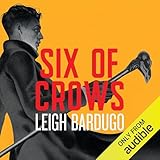
- Audible Audiobook
- Leigh Bardugo (Author) - Jay Snyder, Brandon Rubin, Fred Berman (Narrators)
- English (Publication Language)
- 09/29/2015 (Publication Date) - Audible Studios (Publisher)
Mitigation: Implement the step-by-step plan outlined above, with a strong emphasis on active tracking of characters, plot points, and world details. Consider taking brief notes or rereading challenging passages to solidify understanding.
Common Myths
- Myth: Six of Crows is a straightforward fantasy adventure with a clear good-versus-evil narrative.
- Correction: The novel is characterized by its morally ambiguous protagonists, who are criminals operating in a harsh world. Their actions are often driven by self-preservation and personal gain, not altruism. The “good” and “evil” are far from distinct.
- Myth: The Grisha magic system is merely a background element in Six of Crows.
- Correction: The Grisha abilities are integral to the plot and character capabilities. They are directly utilized in the heist planning and execution, and understanding their limitations and applications is crucial to appreciating the narrative’s challenges and solutions.
Common Mistakes
- Mistake: Assuming Six of Crows is a standard YA fantasy adventure.
- Why it matters: This leads to a mismatch in expectations regarding tone, character morality, and overall plot complexity, potentially causing disappointment.
- Fix: Approach the book recognizing its darker themes, morally grey characters, and intricate heist structure, which deviates from typical YA fantasy tropes.
- Mistake: Reading too quickly without fully absorbing the details of each character’s perspective.
- Why it matters: The multi-POV structure is essential for understanding character motivations and plot developments. Skipping details can lead to significant confusion.
- Fix: Pace yourself and dedicate close attention to the distinct voice, internal thoughts, and specific circumstances of each narrator.
- Mistake: Underestimating the antagonist’s capabilities or the heist’s inherent difficulty.
- Why it matters: The narrative builds tension by emphasizing the extreme challenges the crew faces. Dismissing these obstacles can diminish the impact of their struggles and eventual successes.
- Fix: Acknowledge and appreciate the significant obstacles and high stakes involved throughout the planning and execution phases of the heist.
- Mistake: Forgetting that the characters are primarily criminals with self-serving motivations.
- Why it matters: Their actions are often driven by personal gain and survival rather than altruism. Misinterpreting this can lead to disappointment with their choices and actions.
- Fix: Consistently remember that each character possesses their own agenda, and their loyalty is often conditional and subject to their immediate needs.
Expert Tips for Engaging with Six Of Crows
- Tip: Actively map character relationships and motivations.
- Action: Keep a running list of characters, their primary skills, and their stated or implied motivations as they are introduced. Note any shifts or contradictions in these.
- Common Mistake to Avoid: Relying solely on memory to track the complex web of relationships and shifting alliances, which can lead to confusion during key plot developments.
- Tip: Pay attention to foreshadowing and subtle world-building details.
- Action: Highlight or make notes of seemingly minor details, unusual phrases, or brief flashbacks, as these often contain crucial clues for later plot points or character revelations.
- Common Mistake to Avoid: Dismissing early narrative elements as inconsequential or purely decorative, thereby missing vital foreshadowing that explains later events.
- Tip: Embrace the moral ambiguity of the characters.
- Action: Accept that the protagonists are not inherently good and will make questionable decisions. Judge their actions based on their established motivations and circumstances rather than traditional heroic standards.
- Common Mistake to Avoid: Expecting the characters to behave with unwavering morality or to consistently make selfless choices, leading to frustration when they act according to their criminal nature.
Six Of Crows by Leigh Bardugo: Decision Framework
When considering Six of Crows by Leigh Bardugo, readers should evaluate their personal preferences against the book’s core attributes.
| Reader Preference | Alignment with Six of Crows | Potential Conflict |
|---|---|---|
| Complex Plotting | High alignment; the novel is structured around an intricate heist with multiple layers and twists. | May be overwhelming for readers who prefer straightforward, linear narratives. |
| **Morally Grey Characters |
Decision Rules
- If reliability is your top priority for Six Of Crows by Leigh Bardugo, choose the option with the strongest long-term track record and support.
- If value matters most, compare total ownership cost instead of headline price alone.
- If your use case is specific, prioritize fit-for-purpose features over generic ‘best overall’ claims.