Lauren Groff’s Matrix: A Historical Fiction Novel
Quick Answer
- Matrix by Lauren Groff is a meticulously researched historical novel that reimagines the life of Marie de France, a poet and abbess in 12th-century England.
- It offers a powerful, albeit often bleak, exploration of female ambition, faith, and community within restrictive patriarchal structures.
- Readers seeking lyrical prose and a deep dive into a specific historical period will find it rewarding; those expecting a fast-paced plot may be disappointed.
Who This Is For
- Readers interested in medieval history, particularly the lives of women and the role of religious communities.
- Fans of Lauren Groff’s previous works, such as Fates and Furies and Arcadia, who appreciate her distinctive, evocative prose and thematic depth.
What to Check First
- Historical Context: Familiarize yourself with 12th-century England and the concept of abbeys as centers of power and refuge for women. Understanding the limited options available to women of noble birth provides crucial context for Marie’s choices and struggles.
- Lauren Groff’s Style: Groff’s writing is known for its rich, sensory detail and introspective focus. If you prefer plot-driven narratives, this might not be the best fit.
- Themes of Power and Faith: The novel delves into how faith can be both a source of strength and a tool of control. Consider if you are prepared for a nuanced, sometimes challenging, examination of these concepts.
- Pacing: Matrix is a character-driven novel with a deliberate pace. It focuses on the internal lives of its characters and the slow evolution of their community rather than external action.
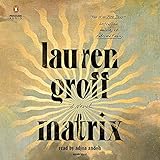
- Audible Audiobook
- Lauren Groff (Author) - Adjoa Andoh (Narrator)
- English (Publication Language)
- 09/07/2021 (Publication Date) - Penguin Audio (Publisher)
Step-by-Step Plan for Understanding Matrix by Lauren Groff
1. Engage with the Prologue: Read the opening pages carefully to establish the initial setting and Marie’s desperate circumstances. What to look for: Marie’s expulsion from court and her immediate, stark reality. Mistake to avoid: Underestimating the urgency of Marie’s situation; this sets the foundation for her entire journey.
2. Observe the Abbey’s Establishment: Pay attention to how Marie transforms the rough, undeveloped land into a functional, self-sustaining community. What to look for: The physical labor, the communal efforts, and the emerging hierarchy. Mistake to avoid: Dismissing the practicalities of survival; Groff grounds the spiritual in the tangible.
3. Analyze the Sisterhood Dynamics: Track the relationships between Marie and her nuns, noting the development of loyalty, dissent, and dependence. What to look for: Specific interactions that reveal power plays, moments of genuine connection, and instances of spiritual doubt. Mistake to avoid: Viewing the nuns as a monolithic entity; each character, even minor ones, has distinct motivations.
4. Examine Marie’s Vision: Consider the source and nature of Marie’s visions and how they guide her actions and influence her followers. What to look for: The ambiguity of her divine connection and its practical impact on the abbey’s governance. Mistake to avoid: Accepting her visions at face value without questioning their origin or effect on Marie’s leadership.
5. Track the Influence of the Outside World: Note how external pressures—from royalty, the church hierarchy, and societal expectations—interact with the abbey’s internal life. What to look for: The subtle and overt ways the world intrudes upon their sanctuary. Mistake to avoid: Believing the abbey exists in a vacuum; its isolation is constantly tested.
6. Appreciate the Prose: Immerse yourself in Groff’s descriptive language and lyrical sentences. What to look for: Evocative imagery and the emotional resonance of her descriptions. Mistake to avoid: Rushing through passages; Groff’s style is integral to the novel’s atmosphere and thematic impact.
7. Consider the Ending: Reflect on the conclusion and its implications for Marie and the abbey’s legacy. What to look for: The sense of completion, or lack thereof, and the lasting impression of Marie’s life. Mistake to avoid: Expecting a neatly tied-up resolution; the novel’s power lies in its enduring questions.
Matrix by Lauren Groff: Strengths and Limitations
Strengths
- Lyrical Prose: Groff’s writing is exceptionally beautiful, creating vivid sensory experiences of the medieval world. For example, the descriptions of the natural landscape and the physical labor of the nuns are rendered with exquisite detail, immersing the reader in their environment.
- Exploration of Female Agency: The novel compellingly portrays women carving out space and power in a world designed to deny them both. The way Marie establishes and governs the abbey, despite her initial precarious position, is a testament to her will and intellect.
- Thematic Depth: Matrix offers a profound examination of faith, ambition, community, and the nature of divine inspiration. It doesn’t shy away from the complexities and contradictions inherent in these themes.
Limitations
- Deliberate Pacing: For readers accustomed to faster narratives, the novel’s slow, introspective pace may feel challenging. The focus is on internal experience and gradual development, rather than plot twists.
- Bleak Undertones: While depicting resilience, the novel often underscores the harsh realities of medieval life and the limitations placed upon women. This can create a sense of melancholy that might not appeal to all readers.
- Ambiguity of Vision: While central to Marie’s character, the sometimes-unsettling nature of her visions and their perceived divine origin can be a point of contention for readers seeking more concrete spiritual narratives.
Common Myths About Matrix by Lauren Groff
- Myth: The novel is a straightforward biography of Marie de France.
- Why it matters: This misconception can lead to disappointment if readers expect strict historical accuracy in every detail.
- Correction: While inspired by the historical figure, Matrix is a work of historical fiction. Groff takes significant creative license to explore themes and character motivations, weaving a narrative that is both historically plausible and imaginatively constructed. The focus is on the spirit of the era and the potential inner life of such a figure, rather than a factual recounting.
- Myth: The abbey is depicted as a utopian sanctuary.
- Why it matters: This can lead to an incomplete understanding of the challenges and internal conflicts within the community.
- Correction: The abbey is portrayed as a refuge and a place of female power, but it is not without its struggles. Groff details the harshness of their existence, the constant need for labor, and the internal tensions that arise among the women. It is a space forged through hardship, not one of inherent ease.
Expert Tips for Reading Matrix
- Tip: Approach the novel with an appreciation for atmospheric detail and character interiority.
- Actionable Step: Dedicate time to savoring Groff’s descriptive passages, allowing the sensory details to build the world around you.
- Common Mistake to Avoid: Skimming descriptive sections in pursuit of plot progression. These passages are crucial for understanding the characters’ emotional landscapes and the novel’s overall tone.
- Tip: Consider the historical context of female religious orders.
- Actionable Step: Briefly research the role of abbeys in 12th-century England as centers for women, particularly those of noble birth, to understand the societal constraints and opportunities they represented.
- Common Mistake to Avoid: Judging Marie’s choices and the abbey’s structure solely through a modern lens. Understanding the limited alternatives available to women of that era is key to appreciating the novel’s narrative.
- Tip: Pay close attention to the subtle shifts in power dynamics within the abbey.
- Actionable Step: Note the interactions between Marie and her nuns, observing how authority is asserted, challenged, and maintained through various means, not just formal decree.
- Common Mistake to Avoid: Overlooking the complex relationships and internal politics that exist beneath the surface of communal devotion. The novel excels at portraying these nuanced social structures.
Decision Rules
- If reliability is your top priority for Matrix by Lauren Groff, choose the option with the strongest long-term track record and support.
- If value matters most, compare total ownership cost instead of headline price alone.
- If your use case is specific, prioritize fit-for-purpose features over generic ‘best overall’ claims.
FAQ
- Q: Is Matrix a difficult read?
A: Matrix is not difficult in terms of plot complexity, but its deliberate pacing and introspective nature require patience. Readers who appreciate lyrical prose and thematic depth will find it rewarding.
- Q: How much historical accuracy should I expect?
A: The novel is inspired by historical figures and settings, but it is a work of fiction. Groff prioritizes thematic exploration and character development over strict adherence to every historical detail.
- Q: What is the primary theme of Matrix?
A: The primary themes revolve around female ambition, the creation of community, the complex relationship between faith and power, and the struggle for agency within restrictive societal structures.
- Q: Who is the protagonist of Matrix?
A: The protagonist is Marie de France, a poet and visionary who is sent to a remote abbey and transforms it into a thriving, self-sufficient community.
BLOCKQUOTE_0
This quote encapsulates the underlying drive of many characters in Matrix, highlighting the fundamental human need for sustenance beyond the physical, a need that the abbey, in its own way, attempts to fulfill.
| Aspect | Strength | Limitation | Recommendation |
|---|---|---|---|
| Prose Style | Lyrical, evocative, rich sensory detail. | Can be dense for readers preferring directness. | Savor the language; read passages aloud to appreciate the rhythm and imagery. |
| Character Arc | Compelling portrayal of Marie’s transformation and leadership. | Some secondary characters may feel less developed. | Focus on Marie’s internal journey and her impact on those around her |