Langston Hughes’ The Weary Blues: Capturing the Jazz Age
Langston Hughes’s 1926 poetry collection, The Weary Blues, stands as a cornerstone of the Harlem Renaissance. This analysis focuses on its groundbreaking fusion of blues and jazz rhythms with poetic form, its authentic portrayal of African American identity, and its lasting literary significance. The aim is to provide readers with a clear understanding of its context, strengths, and impact.
Quick Answer
- The Weary Blues by Langston Hughes is a foundational poetry collection that authentically captures the spirit and rhythms of Black America during the Harlem Renaissance.
- Its primary strength lies in Hughes’s innovative integration of blues and jazz musicality into verse, offering a powerful voice to themes of hardship, resilience, and cultural pride.
- While its experimental style may challenge readers accustomed to traditional forms, it is essential for understanding the evolution of modern American poetry and African American literary traditions.
Who This Is For
- Readers seeking to understand the literary and cultural landscape of the Harlem Renaissance.
- Individuals interested in the intersection of music, language, and social commentary in poetry.
What to Check First
- Publication Context: Published in 1926, placing it at the heart of the Harlem Renaissance, a period of significant cultural and artistic flourishing for African Americans.
- Authorial Intent: Langston Hughes aimed to capture the authentic voice and spirit of Black America, moving away from Eurocentric poetic conventions.
- Musical Influence: The collection is deeply influenced by blues and jazz music, evident in its rhythms, themes, and language.
- Thematic Scope: Themes include poverty, racial injustice, dreams, music, and the everyday lives of Black Americans, presented with both melancholy and resilience.
- Stylistic Innovation: Hughes’s use of vernacular, dialect, and musical structures was groundbreaking for its time.
Step-by-Step Plan: Engaging with The Weary Blues by Langston Hughes
This structured approach will help you analyze and appreciate the nuances of The Weary Blues.
1. Read the title poem, “The Weary Blues.”
- Action: Read the poem aloud, paying close attention to its cadence and repetition.
- What to look for: Identify how the poem mimics the structure and emotional arc of a blues song, noting the melancholic subject and the musical phrasing.
- Mistake to avoid: Reading silently without engaging its inherent musicality can lead to missing its core innovation and emotional impact.
2. Analyze “The Negro Speaks of Rivers.”
- Action: Consider the historical scope and the assertion of identity within this poem.
- What to look for: Observe the contrast between the ancient, enduring nature of the rivers and the speaker’s connection to this lineage, which provides a sense of deep historical grounding.
- Mistake to avoid: Overlooking this poem’s broader historical and cultural statement in favor of focusing solely on the blues-structured pieces.
3. Examine poems depicting urban life and struggle.
- Action: Read poems such as “Worn Path” or “Harlem (Dream Deferred).”
- What to look for: Note the specific imagery and metaphors Hughes uses to convey the realities of poverty, labor, and the challenges faced by Black individuals in urban settings.
- Mistake to avoid: Making broad generalizations about hardship without attending to the concrete, specific details of daily life presented in individual poems.
For a concise overview, Langston Hughes’s The Weary Blues is a foundational poetry collection that authentically captures the spirit and rhythms of Black America during the Harlem Renaissance. Its primary strength lies in Hughes’s innovative integration of blues and jazz musicality into verse, offering a powerful voice to themes of hardship, resilience, and cultural pride.
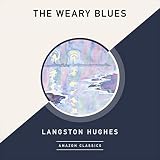
- Audible Audiobook
- Langston Hughes (Author) - Dion Graham (Narrator)
- English (Publication Language)
- 01/11/2022 (Publication Date) - Brilliance Audio (Publisher)
4. Investigate the use of vernacular and dialect.
- Action: Pay close attention to the language choices in poems like “Jazzonia” or “Sunday Morning in Virginia.”
- What to look for: Assess how Hughes employs everyday speech patterns, slang, and rhythmic phrasing to achieve authenticity and evoke a specific cultural context.
- Mistake to avoid: Dismissing the vernacular as grammatically incorrect rather than recognizing it as a deliberate artistic choice to represent lived experience and cultural voice.
5. Consider the collection’s overall emotional arc and thematic balance.
- Action: Reflect on the prevailing moods and sentiments across the poems in the collection.
- What to look for: Note the interplay between melancholy, resilience, and moments of celebration or defiance. The collection is not uniformly bleak.
- Mistake to avoid: Perceiving the collection solely as a testament to suffering without acknowledging the underlying strength, cultural vibrancy, and inherent dignity it celebrates.
The Weary Blues by Langston Hughes: A Literary Examination
This section delves into the specific literary techniques and thematic concerns that define The Weary Blues.
Musicality and Vernacular in Hughes’s Poetry
A defining characteristic of The Weary Blues is its pioneering integration of blues and jazz rhythms into poetic form. Langston Hughes masterfully translated the sonic qualities of Black American music—its call-and-response patterns, improvisational feel, and emotional directness—into verse. He understood that this music was not merely entertainment but a profound expression of history, pain, and resilience.
Consider the title poem, “The Weary Blues.” Its structure, with repeating refrains and a bluesy cadence, directly mirrors the musical form. The poem’s subject, a blues singer in a bar, becomes a conduit for conveying deep sorrow and weariness. Hughes doesn’t just describe the music; he embodies its spirit within the verse. This approach was revolutionary, challenging the prevailing poetic conventions of the era, which often favored formal structures and elevated language. By incorporating vernacular speech and the rhythms of everyday Black life, Hughes made poetry more accessible and, crucially, more representative of the experiences he aimed to capture.
Themes of Identity and Resilience
Beyond its musical innovation, The Weary Blues offers a profound exploration of Black identity in America. Hughes confronts the harsh realities of racism, poverty, and discrimination with unflinching honesty. Poems like “Worn Path” depict the grinding nature of labor and the systemic disadvantages faced by Black individuals. However, the collection is not solely a chronicle of suffering; it is also a testament to the enduring spirit and resilience of the people it portrays.
In “The Negro Speaks of Rivers,” Hughes connects the present struggles of Black Americans to a deep, ancient heritage, imbuing his subjects with a sense of historical continuity and inherent dignity. This juxtaposition of hardship and resilience is a recurring motif. Even amidst weariness, there is an underlying strength, a capacity for endurance, and a persistent hope, often expressed through the cathartic power of music and art. This duality provides the collection with its profound emotional resonance and lasting significance.
Common Myths About The Weary Blues
- Myth: The Weary Blues is exclusively about sadness and despair.
- Why it matters: This interpretation overlooks the collection’s nuanced portrayal of resilience, cultural pride, and the vibrant energy of Black life, which are intrinsically linked to the music and experiences depicted.
- Correction: While blues music often expresses sorrow, it also functions as catharsis, celebration, and communal expression. Hughes’s poems reflect this duality, showcasing not only hardship but also the strength, humor, and spirit of his subjects.
- Myth: Langston Hughes simply transcribed existing blues songs into poetry.
- Why it matters: This diminishes Hughes’s creative artistry and his role as an innovator in poetic form.
- Correction: Hughes masterfully adapted the spirit and rhythms of blues and jazz. He used these musical forms as inspiration and structural models, but the poems are original creations that explore specific themes and narratives, blending musicality with lyrical depth.
Expert Tips for Reading The Weary Blues
- Embrace the Musicality: Read poems aloud to feel their rhythm and flow.
- Actionable Step: When reading “Jazzonia,” try tapping out a steady beat with your foot to feel the syncopation Hughes employs.
- Common Mistake to Avoid: Reading all poems with the same monotonous, flat tone, which fails to capture their intended musicality.
- Focus on Specific Imagery: Pay attention to the concrete details Hughes uses to evoke emotion and setting.
- Actionable Step: In “Worn Path,” list the specific objects or actions described that illustrate the character’s labor and environment.
- Common Mistake to Avoid: Generalizing the themes without grounding them in the specific images and metaphors Hughes provides.
- Recognize Vernacular as Art: Understand that Hughes’s use of dialect and everyday language is a deliberate artistic choice.
- Actionable Step: When encountering phrases like “ain’t got nobody,” consider how this colloquialism conveys a specific emotional state or cultural context more effectively than formal language might.
- Common Mistake to Avoid: Judging the language based on standard grammatical rules, thereby missing its expressive power and authenticity.
Decision Criteria for The Weary Blues
- Constraint: Reader’s tolerance for experimental poetic structure.
- Criterion: If a reader prefers strictly traditional rhyme schemes and narrative linearity, The Weary Blues may present a challenge. However, if the reader is open to poetry that breaks conventional forms to capture a specific voice and rhythm, then this collection is highly recommended. The decision hinges on the reader’s openness to linguistic and structural innovation as a means of thematic expression.
Comparison Table: Key Aspects of The Weary Blues
| Feature | Description | Strengths | Limitations | Reader Takeaway |
|---|---|---|---|---|
| <strong>Musicality</strong> | Integration of blues and jazz rhythms and structures. | Captures authentic voice and emotion; innovative poetic technique. | May require active reading (aloud) to fully appreciate. | Experience the poems as musical performances. |
| <strong>Thematic Depth</strong> | Exploration of Black identity, hardship, resilience, and dreams. | Offers profound social commentary and humanistic insight. | Some themes are direct and unflinching, which may be intense for some readers. | Understand the complex realities of Black life in |
Decision Rules
- If reliability is your top priority for The Weary Blues by Langston Hughes, choose the option with the strongest long-term track record and support.
- If value matters most, compare total ownership cost instead of headline price alone.
- If your use case is specific, prioritize fit-for-purpose features over generic ‘best overall’ claims.