Ken Kesey’s ‘Sometimes a Great Notion’: A Deep Dive
Ken Kesey’s Sometimes a Great Notion is a monumental work of American literature, renowned for its ambitious scope, complex narrative, and unflinching exploration of human stubbornness and familial legacy. This guide offers a precise breakdown for readers approaching this challenging novel, emphasizing its structural demands, thematic density, and the unique reader experience it provides. It is designed for those who appreciate literature that pushes boundaries and demands active intellectual engagement.
Sometimes a Great Notion by Ken Kesey: Who This Is For
- Readers seeking a profound, challenging literary experience that demands active engagement and rewards patience.
- Those interested in exploring complex family dynamics, the nature of work, and the clash between individual will and societal expectations within a richly detailed setting.
What to Check First
- Narrative Structure: Prepare for a non-linear, multi-perspective narrative that shifts focus and time frequently. The novel does not adhere to a conventional plot progression and requires careful attention to transitions.
- Thematic Density: The book tackles themes of stubbornness, family legacy, labor, and the American spirit with considerable weight. Understanding the historical context of logging in the Pacific Northwest enhances comprehension.
- Character Complexity: Characters are deeply flawed and often morally ambiguous. Avoid seeking simple heroes or villains; instead, focus on their motivations and internal conflicts.
- Pacing: The novel is extensive and can be slow-paced, particularly in its detailed descriptions of logging operations. Patience is a prerequisite for appreciating its unfolding narrative.
- Linguistic Style: Kesey’s prose is vivid and often experimental, employing stream-of-consciousness and dialect. Engaging with the language itself is part of the reading experience.
Ken Kesey’s Sometimes a Great Notion is a monumental work of American literature. If you’re looking for a challenging and rewarding read, this is it.
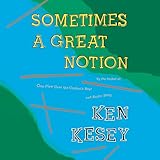
- Audible Audiobook
- Ken Kesey (Author) - Edoardo Ballerini (Narrator)
- English (Publication Language)
- 08/12/2025 (Publication Date) - Penguin Audio (Publisher)
Step-by-Step Plan: Engaging with Sometimes a Great Notion by Ken Kesey
1. Initial Immersion in the Stamper World: Begin reading, paying close attention to the opening chapters that establish the Stamper family and their logging operation in Oregon.
- What to look for: The palpable tension within the family, the stark depiction of the physical labor involved in logging, and the introduction of Hank Stamper’s unwavering resolve and the central conflict of the strike.
- Mistake to avoid: Expecting immediate plot clarity or a straightforward narrative arc. The early sections are designed to immerse you in the world and its characters’ established routines and conflicts, building a foundation for later developments.
2. Navigating the Shifting Perspectives: As the narrative moves between characters and timelines, actively track who is speaking and when.
- What to look for: How each character’s viewpoint shapes their reality and how these differing perceptions create dramatic irony or deepen thematic explorations. Note how Kesey uses shifts to reveal character psychology and the subjective nature of truth.
- Mistake to avoid: Becoming disoriented by the shifts. Consciously noting the transitions, perhaps by marking them in your copy, helps maintain narrative coherence and reveals Kesey’s structural intent to present a fragmented, multifaceted reality.
3. Deconstructing the “Great Notion”: Identify instances where the concept of the “great notion” is invoked or demonstrated by characters.
- What to look for: The various interpretations of this notion—whether it’s individualistic defiance, a commitment to a way of life, a form of self-deception, or a refusal to conform. Observe how it manifests differently in each Stamper.
- Mistake to avoid: Attributing a single, simple meaning to the “great notion.” Its power lies in its multifaceted and often contradictory manifestations, representing a core, often destructive, element of the Stamper ethos.
4. Analyzing the Labor and Its Meaning: Observe the detailed descriptions of the logging process and its significance to the Stamper family.
- What to look for: The physical and psychological toll of the work, its role in defining identity and masculinity, and its connection to a particular ethos of self-reliance and confrontation with nature.
- Mistake to avoid: Skimming over the technical descriptions of logging as mere background. These passages are crucial for understanding the characters’ motivations, their connection to the land, and the novel’s exploration of work as a defining force in their lives.
5. Examining the Stamper Family Saga: Trace the complex and often destructive relationships within the Stamper family across generations.
- What to look for: The patterns of behavior, inherited traumas, and the ways in which family legacy shapes individual choices and perpetuates conflict. Pay attention to the generational transmission of the “notion.”
- Mistake to avoid: Judging characters solely by contemporary moral standards or expecting conventional familial harmony. Understanding their historical context and the specific dynamics of the Stamper clan is key to appreciating their actions.
6. Interpreting the Climax and Resolution: Reflect on the novel’s powerful, albeit unconventional, climax and its aftermath.
- What to look for: How the events resolve or redefine the central conflicts and themes, and the ultimate implications for the characters and their “notion.” Consider the enduring impact of their choices.
- Mistake to avoid: Seeking a tidy, conventionally happy ending. The novel’s conclusion is as complex and challenging as its narrative structure, offering a somber reflection on endurance rather than simple catharsis.
Common Mistakes
- Underestimating the Structural Complexity: Many readers approach Sometimes a Great Notion expecting a linear narrative, leading to frustration.
- Why it matters: This leads to a missed appreciation for Kesey’s deliberate use of multiple perspectives and timelines to create a richer, more fragmented reality that mirrors the characters’ internal states.
- Fix: Approach the novel with an awareness of its experimental structure. Embrace the shifts in viewpoint and time as integral to the story’s meaning and a deliberate artistic choice.
- Simplifying Character Motivations: Characters like Hank Stamper are often reduced to simple archetypes of stubbornness.
- Why it matters: This overlooks the deep-seated psychological and familial forces driving their actions, diminishing the novel’s exploration of human complexity and the roots of ingrained beliefs.
- Fix: Delve into the characters’ backstories and internal monologues. Look for the contradictions and vulnerabilities that make them feel real, even in their extremity, and consider the legacy of their predecessors.
- Ignoring the Significance of Labor: The detailed descriptions of logging are sometimes seen as digressions or tedious interludes.
- Why it matters: This diminishes the novel’s core themes of work, identity, and the physical connection to the land, which are central to the Stamper family’s ethos and their definition of self-reliance.
- Fix: Recognize that the logging operations are not just backdrop but a fundamental element of the characters’ lives and the novel’s thematic core, representing a direct engagement with nature and a test of will.
- Expecting Conventional Catharsis: The novel’s ending can be jarring for readers seeking emotional resolution or a clear moral victory.
- Why it matters: This leads to disappointment if a traditional sense of closure is anticipated, obscuring the novel’s more profound, albeit somber, statement on resilience, fate, and the enduring nature of certain individualistic pursuits.
- Fix: Understand that Sometimes a Great Notion offers a different kind of resolution, one that emphasizes endurance and the unyielding nature of the human spirit, rather than simple emotional release or a clear-cut triumph.
Thematic Core: Exploring the Stamper’s “Great Notion”
The central preoccupation of Sometimes a Great Notion revolves around the concept of the “great notion” itself, a driving force that propels the Stamper family, particularly patriarch Hank, into conflict with the outside world. This notion is not a simple idea but a deeply ingrained, almost existential, commitment to a specific way of life and an unyielding personal will. It represents a refusal to compromise, a defiant stance against external pressures, whether from a labor union, societal expectations, or even the natural environment they work within. Kesey uses this concept to explore the darker side of individualism – the potential for it to become a destructive, isolating force when untempered by connection or empathy. The novel doesn’t necessarily endorse this “notion” but meticulously dissects its psychological and social underpinnings, revealing how deeply ingrained beliefs can become a form of self-imposed bondage, even as they are perceived as freedom.
Strengths and Limitations
- Strengths:
- Profound Thematic Exploration: The novel delves deeply into themes of individualism, family legacy, the meaning of work, and the clash between personal will and societal norms. The exploration of the logging industry’s ethos, as exemplified by the Stamper family, is particularly vivid and integral to the narrative.
- Complex Characterization: Kesey creates deeply flawed, morally ambiguous characters whose internal struggles and motivations are rendered with remarkable psychological acuity. Hank Stamper, in particular, is a force of nature, both compelling and terrifying in his unwavering commitment to his “notion.”
- Lyrical and Powerful Prose: Despite its challenging structure, the novel is replete with passages of stunning, evocative prose that capture the raw beauty and harshness of the Oregon landscape and the intensity of human emotion.
- Structural Innovation: The non-linear, multi-perspective narrative is a deliberate choice that enhances the thematic exploration of subjective reality, fractured identity, and the multifaceted nature of truth. This experimental approach aligns with the novel’s exploration of complex human experience.
- Limitations:
- Demanding Narrative Structure: The frequent shifts in perspective and timeline can be disorienting for readers accustomed to more linear storytelling, requiring significant reader effort to maintain coherence and piece together the narrative.
- Pacing Issues: The novel’s considerable length and detailed descriptions of logging operations can lead to slow pacing in certain sections, potentially testing the patience of some readers who expect a faster plot progression.
- Bleak Outlook: The novel offers a generally somber and often tragic view of human relationships and the consequences of unchecked individualistic pride. This may not appeal to readers seeking lighter fare or straightforwardly optimistic narratives.
Expert Tips for Reading Sometimes a Great Notion
- Tip 1: Embrace the Ambiguity of “The Notion.”
- Actionable Step: As you read, actively look for and jot down instances where characters refer to or embody the “great notion.” Note how its meaning shifts or is interpreted differently by each character, and consider its implications for their actions.
- Common Mistake to Avoid: Trying to pin down a single, definitive meaning for the “notion” early on. Its power lies in its multifaceted and often contradictory nature, reflecting different forms of stubbornness, conviction, and even self-deception within the Stamper family.
- Tip 2: Map the Stamper Family Tree and Dynamics.
- Actionable Step: Keep a simple chart of the Stamper family members, noting their relationships, key traits, and significant conflicts with each other. Refer to it periodically to clarify connections, especially when perspectives shift.
- Common Mistake to Avoid: Getting lost in the intricate and often fraught family relationships. Without a visual aid or conscious tracking, the complex web of loyalties, resentments, and inherited traumas can become confusing, obscuring character motivations.
- Tip 3: Understand the Context of Logging and Labor.
- Actionable Step: Briefly research the history of logging in the Pacific Northwest and the labor movements of the mid-20th century. This provides crucial context for the Stamper family’s defiance and their ethos of self-reliance.
- Common Mistake to Avoid: Viewing the logging operations as mere background detail or technical jargon. The physical labor and the principles of the logging profession are central to the characters’ identities, their worldview, and the novel’s thematic core of confronting nature and societal forces.
A Contrarian Take: The Myth of Unadulterated Individualism
A common interpretation frames the Stamper family, particularly Hank, as paragons of rugged, unadulterated individualism, embodying a pure spirit of self-reliance. However, a closer examination reveals this to be a partial truth, masking a more complex, and perhaps more damning, reality. Their “notion” is not solely about freedom but also about an inherited, almost pathological, defiance that borders on self-destruction. This isn’t a celebration of liberty, but a stark depiction of how deeply ingrained beliefs, passed down through generations and untempered by empathy, can become a prison. The novel doesn’t necessarily endorse their stance; instead, it meticulously dissects the psychological and social mechanisms that drive such rigid adherence to a personal creed, suggesting that absolute individualism, untempered by connection or compromise, can be a profound form of bondage. This perspective shifts the focus from a romanticized view of rebellion to a critical analysis of its often-devastating costs and the psychological mechanisms behind such unwavering commitment.
Table: Character Archetypes and Their Nuances
| Character | Apparent Archetype | Deeper Nuance | Reading Takeaway |
|---|---|---|---|
| Hank Stamper | Stubborn Patriarch | His “notion” is a complex blend of defiance, inherited trauma, and a deep-seated need for control, bordering on self-sabotage. | Represents the destructive potential of rigid adherence to a personal code, even when it leads to isolation and conflict. |
| Joe Stamper | The Estranged Son | Torn between familial loyalty and a desire for a different life, his internal conflict highlights the inescapable pull of legacy and origin. | Embodies the struggle to reconcile personal identity with the demands and expectations of one’s family and upbringing. |
| Viv Stamper | The Enigmatic Wife | Navigates a difficult marriage and family dynamics with a pragmatic, often detached, resilience, observing the chaos with a keen, observant eye. | Represents the often-unseen strength and coping mechanisms required to survive within dysfunctional familial structures and interpersonal storms. |
| Leland Stamper | The Intellectual Outsider | His academic perspective offers an external critique of the Stamper world, yet he too is drawn into its complex emotional currents and moral dilemmas. | Serves as a foil to the visceral world of the loggers, highlighting the disconnect between theory and lived experience, and the pervasive nature of the Stamper “notion.” |
Decision Rules
- If reliability is your top priority for Sometimes a Great Notion by Ken Kesey, choose the option with the strongest long-term track record and support.
- If value matters most, compare total ownership cost instead of headline price alone.
- If your use case is specific, prioritize fit-for-purpose features over generic ‘best overall’ claims.
FAQ
- Q: Is Sometimes a Great Notion a difficult book to read?
- A: Yes, it is considered a challenging novel due to its complex narrative structure, dense thematic content, and extensive length. It requires patience and active engagement from the reader to fully appreciate its depth