John Steinbeck’s Of Mice and Men: A Summary
Of Mice and Men by John Steinbeck: Quick Answer
- Of Mice and Men by John Steinbeck is a poignant novella exploring themes of friendship, the American Dream, and loneliness in the context of migrant farm laborers during the Great Depression.
- Its enduring relevance lies in its stark portrayal of societal outcasts and the fragility of hope.
- The narrative’s power stems from its concise structure and unforgettable characters, making it a staple for high school and college literature courses.
Who This Is For
- Readers seeking a concise yet impactful literary work that grapples with profound human themes.
- Students and educators requiring a foundational text for understanding American literature of the 20th century, particularly the Great Depression era.
What to Check First
- Thematic Depth: Consider if you are looking for a story that delves into the complexities of companionship, isolation, and the elusive nature of dreams.
- Character Focus: Assess your interest in character-driven narratives where the relationships and internal struggles of a few individuals drive the plot.
- Historical Context: Understand that the novella is deeply rooted in the socio-economic conditions of 1930s America, which significantly shapes the characters’ lives and aspirations.
- Emotional Impact: Be prepared for a story that is emotionally resonant, often melancholic, and can elicit strong feelings regarding fate and social injustice.
For a deeper dive into this classic American novella, consider getting your own copy of ‘Of Mice and Men’ by John Steinbeck. It’s a powerful and concise read that remains incredibly impactful.
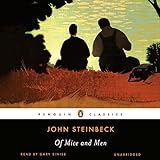
- Audible Audiobook
- John Steinbeck (Author) - Gary Sinise (Narrator)
- English (Publication Language)
- 04/13/2011 (Publication Date) - Penguin Audio (Publisher)
Step-by-Step Plan: Understanding Of Mice and Men by John Steinbeck
1. Identify the Central Relationship: Focus on the bond between George Milton and Lennie Small. What to look for: Their contrasting personalities and George’s protective role over Lennie. Mistake to avoid: Underestimating the depth and significance of their friendship, viewing it as purely utilitarian.
2. Analyze the Dream: Examine the shared dream of George and Lennie to own their own farm. What to look for: The details of their envisioned future and what it represents (security, independence, belonging). Mistake to avoid: Dismissing the dream as naive or impossible without recognizing its function as a source of hope and a coping mechanism.
3. Observe Social Dynamics: Pay attention to the interactions among the ranch hands and their treatment of outsiders. What to look for: The pervasive loneliness, discrimination, and hierarchy on the ranch. Mistake to avoid: Overlooking the systemic issues that contribute to the characters’ isolation and suffering.
4. Track Character Arcs: Follow the development and fates of characters like Candy, Crooks, and Curley’s wife. What to look for: How their individual circumstances mirror or contrast with George and Lennie’s situation. Mistake to avoid: Focusing solely on George and Lennie and neglecting the thematic contributions of supporting characters.
5. Recognize Symbolism: Identify recurring symbols and their meanings. What to look for: The rabbits, the dream farm, the setting itself. Mistake to avoid: Interpreting symbols literally without considering their broader thematic implications.
6. Evaluate the Ending: Consider the tragic conclusion and its implications. What to look for: The inevitability of the outcome and the reasons behind George’s final decision. Mistake to avoid: Judging George’s actions solely on modern moral standards without accounting for the novella’s context and the characters’ limited options.
Thematic Exploration in Of Mice and Men
The novella, Of Mice and Men by John Steinbeck, is a masterclass in thematic resonance, particularly concerning the inherent human desire for connection and the often-unfulfilled promise of the American Dream. Steinbeck meticulously crafts a narrative that exposes the harsh realities faced by marginalized individuals during the Great Depression. The central theme of friendship, embodied by George and Lennie, serves as a beacon of hope against a backdrop of pervasive loneliness. Their shared dream of a small farm, a place of their own where they can “live off the fatta the lan’,” is not merely a plot device but a powerful symbol of aspiration and self-determination in a world that offers little of either.
However, Steinbeck does not shy away from the darker aspects of these themes. The dream is constantly threatened by external forces and internal vulnerabilities, most notably Lennie’s intellectual disability and his uncontrollable strength. This tension highlights the fragility of hope and the societal forces that conspire to crush individual aspirations. The other characters on the ranch—Candy, Crooks, Curley’s wife—each represent different facets of isolation and unfulfilled potential, further underscoring the novella’s critical examination of social outcasts. Their stories serve as cautionary tales and reinforce the central argument that true companionship is a rare and precious commodity.
BLOCKQUOTE_0
This quote encapsulates the core of George and Lennie’s bond and its significance in a world defined by transience and isolation. It emphasizes that their connection provides a buffer against the dehumanizing effects of their itinerant lives.
Common Myths About Of Mice and Men
- Myth: The novella is simply a sad story about two drifters.
- Why it matters: This view overlooks the profound exploration of friendship, the American Dream, and social injustice.
- Fix: Recognize the story as a critical commentary on societal structures and the enduring human need for belonging, even in the face of overwhelming odds.
- Myth: Lennie is purely a burden to George.
- Why it matters: This interpretation ignores the mutual dependence and deep affection between the two characters, reducing their relationship to a one-sided obligation.
- Fix: Understand that while Lennie presents challenges, George’s commitment stems from genuine care and a shared vision, and Lennie’s presence also offers George companionship and purpose.
- Myth: The dream of the farm was always doomed to fail.
- Why it matters: This perspective diminishes the power of hope and aspiration as driving forces, even in dire circumstances.
- Fix: Appreciate the dream as a vital psychological tool that sustains George and Lennie, representing their agency and a future distinct from their current harsh reality, regardless of its ultimate attainability.
Expert Tips for Understanding Of Mice and Men
- Tip: Pay close attention to Steinbeck’s use of natural imagery.
- Actionable Step: Note descriptions of the Salinas Valley, the riverbank, and the animals. For instance, the recurring motif of rabbits symbolizes Lennie’s innocence and the fragile nature of their dream.
- Common Mistake to Avoid: Treating the setting as mere background; the environment is integral to the characters’ existence and reflects their internal states and external limitations.
- Tip: Analyze the dialogue for subtext and character motivation.
- Actionable Step: Examine the way George speaks to Lennie versus how he speaks to others, and how other characters’ language reveals their prejudices or desires. For example, Curley’s wife’s dialogue often masks her own loneliness and yearning for attention.
- Common Mistake to Avoid: Taking dialogue at face value; much of the story’s meaning is conveyed through what is implied rather than explicitly stated.
- Tip: Consider the novella’s structure as a deliberate artistic choice.
- Actionable Step: Observe how the story builds tension and foreshadows events, particularly the cyclical nature of their arrival at new ranches and the inevitable disruption. The novella’s compact length forces a focused examination of its themes.
- Common Mistake to Avoid: Focusing only on the plot points without appreciating how the deliberate pacing and structure enhance the thematic impact and emotional weight of the narrative.
Quick Comparison
| Option | Best for | Pros | Watch out |
|---|---|---|---|
| Quick Answer | General use | Of Mice and Men by John Steinbeck is a poignant novella exploring themes of f… | Common Mistake to Avoid: Treating the setting as mere background; the environ… |
| Who This Is For | General use | Its enduring relevance lies in its stark portrayal of societal outcasts and t… | Common Mistake to Avoid: Taking dialogue at face value; much of the story’s m… |
| What to Check First | General use | The narrative’s power stems from its concise structure and unforgettable char… | Common Mistake to Avoid: Focusing only on the plot points without appreciatin… |
| Step-by-Step Plan Understanding Of Mice and Men by John Steinbeck | General use | Readers seeking a concise yet impactful literary work that grapples with prof… | Common Mistake to Avoid: Treating the setting as mere background; the environ… |
Decision Rules
- If reliability is your top priority for Of Mice and Men by John Steinbeck, choose the option with the strongest long-term track record and support.
- If value matters most, compare total ownership cost instead of headline price alone.
- If your use case is specific, prioritize fit-for-purpose features over generic ‘best overall’ claims.
FAQ
- Q: What is the primary message of “Of Mice and Men”?
- A: The primary message revolves around the pervasive loneliness of the working class, the elusive nature of the American Dream, and the profound importance of companionship in a harsh world. It also critiques social injustice and the treatment of marginalized individuals.
- Q: Why is “Of Mice and Men” still relevant today?
- A: The novella remains relevant because its themes of friendship, dreams, isolation, and the struggle for dignity are universal and timeless. It continues to remain relevant to readers by exploring the human behavior and societal challenges that persist.
- Q: Who are the main characters in “Of Mice and Men”?
- A: The two main characters are George Milton, a small, intelligent, and resourceful migrant worker, and Lennie Small, his large, physically powerful, but mentally disabled friend. Their dynamic forms the emotional core of the story.
- Q: What is the significance of the title “Of Mice and Men”?
- A: The title is derived from a poem by Robert Burns, “To a Mouse,” which speaks of the best-laid plans of mice and men often going awry. This reflects the novella’s central theme that even the most carefully constructed dreams are vulnerable to unforeseen circumstances and tragic outcomes.