Karin Boye’s Kallocain: A Dystopian Vision of Control
Kallocain by Karin Boye: Quick Answer
- Kallocain by Karin Boye is a prescient 1940 Swedish dystopian novel exploring themes of enforced conformity and the suppression of individuality.
- It is best suited for readers interested in early 20th-century speculative fiction, philosophical explorations of societal control, and critiques of totalitarianism.
- Readers seeking fast-paced action or modern dystopian tropes may find its deliberate pacing and philosophical depth less immediately engaging.
Who This Is For
- Readers who appreciate foundational works in the dystopian genre, such as those by Yevgeny Zamyatin or Aldous Huxley, and want to understand its early development.
- Individuals interested in exploring the psychological impact of absolute state control and the nature of truth and individuality within a collectivist society.
If you’re looking to delve into a foundational work of early 20th-century speculative fiction that critiques totalitarianism, Karin Boye’s Kallocain is an excellent choice. This prescient Swedish dystopian novel explores themes of enforced conformity and the suppression of individuality with profound philosophical depth.
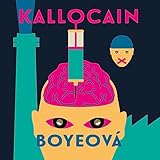
- Audible Audiobook
- Karin Boye (Author) - David Matásek (Narrator)
- Czech (Publication Language)
- 06/22/2023 (Publication Date) - Tympanum s.r.o. (Publisher)
What to Check First
Before diving into Kallocain, consider these points to gauge your readiness and expectations:
- Pacing and Style: Boye’s prose is measured and philosophical, not action-driven. If you prefer rapid plot development, this may not be the immediate choice.
- Thematic Focus: The novel is deeply concerned with the eradication of individual thought and emotion through chemical and societal means. Its strength lies in its intellectual exploration, not external conflict.
- Historical Context: Published in 1940, Kallocain reflects anxieties of its time regarding totalitarian regimes and the potential for scientific advancement to be used for oppression. Understanding this context enhances appreciation.
- Comparison to Modern Dystopias: While foundational, Kallocain predates many conventions of modern dystopian fiction. Its focus is more on internal psychological states than overt rebellion or large-scale societal breakdown.
Step-by-Step Plan for Engaging with Kallocain
To fully appreciate Kallocain, approach it with a focus on its thematic depth and philosophical underpinnings.
1. Familiarize Yourself with the Premise: Read the book’s synopsis or an introductory essay to understand the core concept of “Kallocain,” the truth serum, and the World State’s goal of absolute conformity. What to look for: A clear grasp of the central conflict between individual consciousness and state control. Mistake: Assuming Kallocain is merely a plot device without understanding its symbolic weight.
2. Focus on Leo Kallinger’s Perspective: The narrative is primarily told through the eyes of Bureau Chief Leo Kallinger. Pay close attention to his internal monologues and evolving perceptions. What to look for: Kallinger’s internal struggle, his moments of doubt, and his eventual capitulation or resistance. Mistake: Reading Kallinger’s experiences as solely external events rather than internal psychological journeys.
3. Analyze the Role of Kallocain: Observe how the drug is administered and its effects on individuals. Consider its dual nature: a tool for control and a catalyst for revelation. What to look for: The instances where Kallocain is used and the specific truths or falsehoods it uncovers. Mistake: Overlooking the subtle societal pressures that precede and follow Kallocain’s use.
4. Examine the World State’s Ideology: Identify the principles and justifications the World State uses to maintain order. Note the suppression of art, love, and individual expression. What to look for: The specific doctrines and propaganda that define the World State’s ethos. Mistake: Underestimating the pervasive nature of the state’s control beyond just the administration of Kallocain.
5. Consider the Novel’s Historical Resonance: Reflect on how the themes of Kallocain relate to the political climate of the late 1930s and early 1940s. What to look for: Parallels between the fictional World State and contemporary totalitarian regimes. Mistake: Reading the novel as a purely abstract philosophical exercise without acknowledging its historical context.
6. Evaluate the Ending’s Ambiguity: The conclusion of Kallocain is not a simple resolution. Consider the implications for Kallinger and the future of the World State. What to look for: The lingering questions and the nuanced portrayal of potential outcomes. Mistake: Expecting a definitive, happy ending; the power lies in its open-endedness.
Kallocain by Karin Boye: Themes and Strengths
Kallocain by Karin Boye stands out for its incisive exploration of psychological totalitarianism. The novel’s primary strength lies in its unflinching examination of how a state can control not just actions, but thoughts and emotions, by manipulating the very essence of individual consciousness.
- Enforced Conformity: The most prominent theme is the eradication of individuality in favor of absolute state-approved uniformity. Boye meticulously details a society where deviation is not just punished but biochemically impossible. For instance, the widespread use of “Kallocain” is not merely for interrogation but to ensure citizens genuinely believe in the state’s ideology, erasing dissent at its root.
- Concrete Takeaway: Recognize that the novel’s horror stems from the internal policing of thought, not just external surveillance.
- The Nature of Truth and Reality: The introduction of Kallocain, a truth serum, forces characters to confront their inner selves and the fabricated reality they inhabit. The novel questions whether objective truth can exist when subjective experience is systematically suppressed.
- Concrete Takeaway: Reflect on how the suppression of personal experience can distort an individual’s perception of reality, making them susceptible to external narratives.
- Critique of Totalitarianism: Published in 1940, Kallocain offers a chillingly prescient critique of totalitarian regimes that emerged in the 20th century. It goes beyond political structures to dissect the psychological mechanisms of control.
- Concrete Takeaway: Understand Kallocain as an early literary exploration of the psychological toll of living under oppressive, ideologically driven states, predating many later works in the genre.
A Comparison of Dystopian Approaches
| Feature | Kallocain by Karin Boye (1940) | Brave New World (1932) | Nineteen Eighty-Four (1949) |
|---|---|---|---|
| <strong>Primary Control Method</strong> | Chemical/Psychological (Kallocain, enforced empathy) | Conditioning/Biotechnology (Soma, genetic castes) | Surveillance/Psychological Terror (Big Brother, Thought Police) |
| <strong>Focus of Dystopia</strong> | Eradication of individual thought and emotion | Suppression of individuality through manufactured happiness and social engineering | Absolute state power and control over information and thought |
| <strong>Protagonist’s Struggle</strong> | Internal conflict with enforced conformity and loss of self | Disillusionment with manufactured happiness and search for genuine experience | Rebellion against oppressive regime and fight for truth/freedom |
| <strong>Author’s Insight</strong> | The deepest control is internal; truth serum’s societal implications | Pleasure as a tool of oppression; loss of meaningful human connection | The dangers of unchecked state power and manipulation of reality |
Limitations and Potential Reader Pitfalls
While Kallocain is a significant work, its specific style and thematic focus can present challenges for some readers.
- Deliberate Pacing: The novel prioritizes philosophical exploration and psychological introspection over rapid plot progression. Readers accustomed to more action-oriented narratives might find its pace slow.
- Failure Mode: Readers might become disengaged due to the lack of immediate external conflict, overlooking the profound internal drama.
- Detection: If you find yourself frequently skimming paragraphs or losing track of the narrative thread due to a lack of overt action, this is a sign.
- Mitigation: Approach Kallocain as a contemplative read. Focus on the nuances of Kallinger’s thoughts and the societal implications being described, rather than anticipating plot twists.
- Abstract and Philosophical Tone: The narrative is heavily infused with philosophical inquiry, which can feel dense. The focus is on the “why” and “how” of societal control rather than a direct, relatable protagonist’s journey of rebellion.
- Concrete Takeaway: The novel’s power is in its intellectual dissection of control mechanisms, which requires reader engagement with abstract concepts.
Decision Rules
- If reliability is your top priority for Kallocain by Karin Boye, choose the option with the strongest long-term track record and support.
- If value matters most, compare total ownership cost instead of headline price alone.
- If your use case is specific, prioritize fit-for-purpose features over generic ‘best overall’ claims.
FAQ
- Is Kallocain a difficult book to read?
- Kallocain is not difficult in terms of complex vocabulary, but its philosophical depth and deliberate pacing require focused attention. Readers who appreciate introspective and thematic explorations will find it rewarding.
- What is the significance of the “Kallocain” drug?
- Kallocain is a truth serum that also supposedly instills empathy and conformity. Its significance lies in representing the state’s ultimate control over individual consciousness, aiming to eliminate dissent by altering internal states.
- How does Kallocain compare to other classic dystopian novels like 1984 or Brave New World?
- While all three explore totalitarianism, Kallocain uniquely focuses on the internal psychological mechanisms of control and the suppression of individuality through enforced empathy and chemical means, predating some of the overt surveillance of 1984 and the manufactured pleasure of Brave New World.
- Is there a clear protagonist in Kallocain?
- The novel is primarily narrated from the perspective of Bureau Chief Leo Kallinger. However, the narrative often delves into broader societal observations and philosophical contemplation, making the exploration of the World State’s ideology as much a focus as Kallinger’s personal journey.
Reading Context Checklist
To maximize your understanding and appreciation of Kallocain by Karin Boye, consider these points before and during your reading:
- [ ] Understand the historical period: Are you aware of the political climate of Europe in the late 1930s and early 1940s that influenced Boye’s work?
- [ ] Prepare for a philosophical approach: Are you ready to engage with abstract concepts of individuality, truth, and societal control rather than a fast-paced plot?
*