Josephine Tey’s The Man In The Queue Unveiled
Quick Answer
- The Man In The Queue by Josephine Tey is a quintessential Golden Age detective novel, celebrated for its intricate plotting and reliance on logical deduction.
- The narrative centers on a seemingly impossible murder within a cinema queue, which Inspector Grant must meticulously unravel.
- Readers who appreciate cerebral puzzles and character-driven mysteries, rather than overt action, will find this novel highly rewarding.
Who This Is For
- Readers seeking a classic detective story where the solution is derived through pure logic and careful observation.
- Fans of authors like Agatha Christie or Dorothy L. Sayers, who appreciate detailed plotting and intellectual challenges.
What to Check First
- Authorial Style: Josephine Tey is known for her precise prose and psychological insight. Confirm this analytical approach aligns with your reading preferences.
- Plot Complexity: The central mystery is a carefully constructed puzzle. Assess your enjoyment of intricate plots that demand attention to detail.
- Pacing: This novel employs a measured, contemplative pace, focusing on the accumulation of evidence. Be prepared for a less action-driven experience.
- Golden Age Tropes: Familiarity with Golden Age detective conventions—such as closed circles of suspects and intellectual solutions—enhances appreciation for The Man In The Queue.
Step-by-Step Plan: Analyzing The Man In The Queue by Josephine Tey
1. Establish the Central Paradox: Begin by understanding the core enigma: a man is murdered in a public cinema queue, with no apparent weapon or immediate explanation for how it was done.
- What to look for: The initial description of the scene, the victim’s identity, and the inherent impossibility of the crime as presented.
- Mistake to avoid: Assuming the solution involves external factors or a simple accident; Tey’s resolutions are grounded in internal, logical causality.
2. Analyze Inspector Grant’s Methodology: Observe Inspector Grant’s investigative approach. Note his systematic process, emphasis on observation, and logical inference.
- What to look for: Grant’s interview techniques, his examination of the crime scene, and his methodical elimination of improbable scenarios.
- Mistake to avoid: Dismissing details that appear minor; Tey frequently embeds crucial clues within seemingly insignificant observations that Grant prioritizes.
3. Scrutinize Character Interactions and Motives: Examine the supporting characters. Assess their depth, potential connections to the victim, and any subtle indicators in their behavior or dialogue.
- What to look for: Nuances in character dynamics, background details, and any inconsistencies that might suggest hidden motives or opportunities.
- Mistake to avoid: Overlooking characters who seem peripheral; Tey often uses them to provide context or act as misdirection.
4. Track the Evidence Trajectory: Follow the development and introduction of clues. Note how each piece of information alters the understanding of the crime.
- What to look for: The introduction of new evidence, the re-evaluation of existing facts, and the gradual narrowing of the suspect pool.
- Mistake to avoid: Forgetting earlier details; Tey frequently revisits seemingly minor points introduced much earlier in the narrative.
5. Critically Evaluate the Resolution: Analyze the final reveal. Does it logically derive from the presented evidence? Is the explanation coherent and adequately foreshadowed?
- What to look for: Grant’s final exposition, the corroboration of his deductions with prior facts, and the absence of unforeshadowed plot contrivances.
- Mistake to avoid: Passively accepting the solution; critically examine its foundation within the narrative’s established facts.
6. Consider Thematic Elements: Reflect on any broader themes Tey explores, such as the nature of perception, social commentary, or the mechanics of deception.
- What to look for: Recurring motifs, character archetypes, and the author’s portrayal of societal norms or human behavior.
- Mistake to avoid: Focusing solely on plot mechanics and neglecting the author’s potential deeper intentions or commentary.
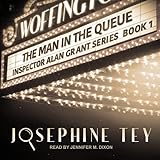
- Audible Audiobook
- Josephine Tey (Author) - Jennifer M. Dixon (Narrator)
- English (Publication Language)
- 04/17/2018 (Publication Date) - Tantor Audio (Publisher)
Common Mistakes
- Mistake: Expecting a high-octane, action-packed narrative.
- Why it matters: Tey’s novels are deliberately paced, prioritizing intellectual engagement over sensationalism. Rushing can lead to missed critical details.
- Fix: Read with patience, allowing the narrative to unfold and dedicating attention to dialogue and descriptive passages, which often contain vital clues.
- Mistake: Underestimating the significance of minor characters or seemingly trivial details.
- Why it matters: Tey masterfully weaves crucial plot elements into the story through subtle means. What seems insignificant often proves vital.
- Fix: Treat every character and descriptive detail as potentially significant, noting them as they appear. Revisit these notes as the plot progresses.
- Mistake: Focusing solely on identifying the killer, neglecting the method and motive.
- Why it matters: The ingenuity of the murder method and the psychological depth of the motive are central to Tey’s craft. The “how” and “why” are as important as the “who.”
- Fix: Engage with the entire puzzle: the victim, the method, the motive, and the perpetrator, recognizing their interconnectedness.
- Mistake: Dismissing the solution as too simple or obvious upon initial consideration.
- Why it matters: Tey’s genius lies in constructing complex solutions that, once revealed, appear deceptively simple through their inherent logic.
- Fix: Trust the process of deduction. The elegance of the solution often lies in its clear, logical derivation from the presented facts, not in its complexity.
The Man In The Queue by Josephine Tey: A Study in Observational Prowess
Josephine Tey’s The Man In The Queue stands as a prime example of her unique contribution to the detective fiction genre, a field often characterized by sensationalism. Tey’s hallmark is her rigorous adherence to logic and psychological plausibility, presenting a murder that appears utterly impossible within the confines of a public space—a cinema queue. The novel serves as a masterclass in how meticulous observation and rational deduction, rather than overt action or improbable coincidences, can effectively unravel a complex crime. Inspector Grant, Tey’s recurring detective, embodies this approach, systematically dismantling the mystery piece by piece.
The enduring appeal of The Man In The Queue by Josephine Tey is rooted in its intellectual rigor. Tey constructs her narratives with the precision of a skilled architect, ensuring that every element serves a distinct purpose in the unfolding puzzle. The reader is invited not merely to witness the investigation but to actively participate, piecing together the evidence alongside Grant. This engagement fosters a deeper appreciation for the craft of mystery writing.
Expert Tips for Engaging with The Man In The Queue
- Tip: Treat every character’s statement as a data point, not necessarily an absolute fact.
- Actionable Step: As characters provide accounts, note their perspective and potential biases. Compare these statements against each other and against physical evidence.
- Common Mistake to Avoid: Accepting witness testimonies at face value without critical evaluation. Inspector Grant frequently revisits and questions initial accounts.
- Tip: Pay close attention to the physical environment and its limitations.
- Actionable Step: Note descriptions of the cinema, the queue’s layout, and the immediate surroundings. Consider how these elements might facilitate or impede certain actions.
- Common Mistake to Avoid: Skimming over descriptive passages, assuming they are mere background. Tey often embeds critical environmental clues within these details.
- Tip: Actively track the timeline and sequence of events.
- Actionable Step: Mentally or physically chart the order in which events occurred, noting who was where and when according to various accounts.
- Common Mistake to Avoid: Assuming a linear progression of events. Tey may present information out of chronological order to test the reader’s deductive skills.
BLOCKQUOTE_0
This principle underscores Tey’s commitment to an evidence-based resolution, where the killer’s identity and method are direct consequences of the clues presented, not external revelations.
Common Myths Debunked
- Myth: The Man In The Queue relies on a sudden, unexpected killer revealed without sufficient prior clues.
- Rebuttal: While Tey is a master of misdirection, her solutions are always logically supported by evidence presented earlier in the text. The “unexpectedness” often stems from the reader’s failure to connect seemingly disparate details, not from a lack of foreshadowing. The brilliance lies in how the revealed solution makes perfect sense in retrospect.
- Myth: Inspector Grant is a brilliant but lucky detective who stumbles upon the truth.
- Rebuttal: Grant’s success is consistently portrayed as the result of his methodical approach, keen observation, and unwavering commitment to logical deduction. He is not lucky; he is diligent and analytical, systematically eliminating possibilities until only the truth remains. His “luck” is earned through persistent investigation.
Decision Framework: Josephine Tey’s Detective Novels
| Novel Title | Primary Detective | Core Appeal | Strengths | Potential Weaknesses |
|---|---|---|---|---|
| The Man In The Queue | Inspector Grant | Ingenious puzzle, meticulous deduction | Precise plotting, character-driven motives | Slower pacing for modern readers |
| The Daughter of Time | Alan Grant | Historical investigation, challenging assumptions | Unique premise, insightful social commentary | Requires reader engagement with historical context |
| Brat Farrar | Inspector Grant (indirectly) | Psychological depth, unreliable narrator | Complex character study, atmospheric tension | Less of a traditional “whodunit” |
Decision Rules
- If a tightly plotted, logically sound mystery is your priority, The Man In The Queue is the recommended choice.
- If you prefer mysteries that