Jacques Futrelle’s The Thinking Machine Explored
Quick Answer
- The Thinking Machine by Jacques Futrelle presents a series of short detective stories featuring Professor Augustus S. F. X. Van Dusen, a character whose intellect is characterized as an infallible logical engine.
- The collection is celebrated for its intricate, seemingly impossible mysteries that are resolved through rigorous deduction, showcasing a foundational approach to the “thinking detective” genre.
- This work is best suited for readers who prioritize intellectual puzzles and the methodical application of logic over action or deep character studies.
Who This Is For
- Readers who appreciate complex logical challenges and the systematic breakdown of mysteries.
- Enthusiasts of early 20th-century detective fiction interested in the evolution of the super-detective archetype.
What to Check First
- Authorial Intent: Jacques Futrelle’s primary focus is on the puzzle and its logical solution, rather than deep character exploration or atmospheric realism.
- Historical Context: The stories emerged during a period when scientific crime-solving was nascent. Van Dusen embodies an idealized form of pure, disembodied intellect.
- Narrative Structure: Each story is a standalone mystery, specifically designed to highlight Professor Van Dusen’s deductive capabilities.
- The “Thinking Machine” Concept: Understand that Van Dusen’s mind is consistently portrayed as a flawless logical apparatus, central to his problem-solving.
Step-by-Step Plan: Engaging with The Thinking Machine by Jacques Futrelle
1. Acquire a Complete Edition: Obtain a definitive collection of The Thinking Machine by Jacques Futrelle short stories.
- Action: Secure a physical or digital copy that guarantees inclusion of the core Professor Van Dusen cases.
- Look For: A comprehensive compilation ensuring no essential mysteries are omitted.
- Mistake: Acquiring an incomplete or misidentified version that lacks key narratives.
2. Understand Van Dusen’s Method: Familiarize yourself with Professor Van Dusen’s distinctive problem-solving approach.
- Action: Read any introductory material or the initial story to grasp Van Dusen’s character as an analytical engine.
- Look For: Emphasis on precise observation, systematic elimination of impossibilities, and logical inference.
- Mistake: Expecting a detective driven by emotion, intuition, or physical prowess; Van Dusen is defined by pure intellect.
3. Analyze Each Mystery: Read each short story with focused attention on the presented facts and circumstances.
- Action: Actively identify the apparent paradox or impossibility that forms the core of each mystery.
- Look For: Seemingly minor details or observations that Van Dusen later elevates to critical significance.
- Mistake: Dismissing descriptive passages or dialogue as extraneous; these elements frequently contain crucial clues.
4. Trace Van Dusen’s Deductive Path: Follow the professor’s logical progression from initial evidence to his final conclusion.
- Action: After Van Dusen reveals his solution, mentally reconstruct his steps, verifying each logical connection.
- Look For: The systematic exclusion of alternative explanations and the identification of the single remaining, viable possibility.
- Mistake: Accepting the solution without fully understanding the underlying logical framework; the value lies in the process of deduction.
5. Evaluate Puzzle Ingenuity: Assess the complexity and internal consistency of the presented mysteries and their resolutions.
- Action: Consider whether the solution feels logically derived from the established facts or relies on authorial contrivance.
- Look For: The elegance and surprising nature of the solution, given the initial presentation of the problem.
- Mistake: Judging solutions by contemporary standards of realism; the primary focus is on logical possibility within the narrative’s established rules.
6. Contextualize within Genre History: Place The Thinking Machine by Jacques Futrelle within the broader evolution of detective fiction.
- Action: Reflect on how the “thinking detective” archetype established by these stories influenced subsequent authors and the genre’s development.
- Look For: The foundational elements of logical deduction that became standard components of mystery writing.
- Mistake: Underestimating the significant impact of these early stories on the trajectory of the detective genre.
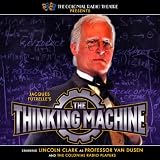
- Audible Audiobook
- M.J. Elliott (Author) - Lincoln Clark and the Colonial Radio Players (Narrator)
- English (Publication Language)
- 08/27/2013 (Publication Date) - The Colonial Radio Theatre (Publisher)
Common Mistakes
- Mistake: Expecting modern psychological depth or character development.
- Why it matters: Professor Van Dusen is intentionally designed as an archetype of pure intellect, rather than a fully realized individual. The stories prioritize plot and logic over detailed characterization.
- Fix: Adjust expectations to appreciate Van Dusen as a personification of reason and focus on the intellectual exercise presented by each case.
- Mistake: Overlooking the significance of seemingly trivial details.
- Why it matters: Futrelle meticulously constructs his plots, and Van Dusen’s solutions frequently depend on overlooked observations that a less analytical mind would disregard.
- Fix: Read with an active, analytical mindset, noting every detail presented, as it may serve as a critical piece of the puzzle.
- Mistake: Dismissing the stories as outdated due to the absence of modern forensic science.
- Why it matters: The stories predate many scientific investigative techniques. Van Dusen’s brilliance lies in his capacity to solve crimes using only observation and pure logic.
- Fix: Appreciate the ingenuity of his methods within their historical context, recognizing them as precursors to more scientific approaches in detective work.
- Mistake: Treating the collection as a continuous narrative.
- Why it matters: The Thinking Machine by Jacques Futrelle consists of independent short stories, each presenting a distinct, self-contained mystery.
- Fix: Approach each story as a separate puzzle, allowing for a fresh intellectual challenge with every new case.
The Thinking Machine by Jacques Futrelle: A Contrarian Perspective
While The Thinking Machine by Jacques Futrelle is widely recognized for its intricate puzzles and the formidable intellect of Professor Van Dusen, a critical examination reveals inherent limitations that temper its universal appeal. The collection undeniably excels at presenting scenarios that appear inexplicable and demonstrating the power of pure, unadulterated deduction. This intellectual rigor is the collection’s primary strength, offering a cerebral workout that many contemporary mysteries tend to avoid. However, the very concept of Van Dusen as a “thinking machine”—a disembodied intellect—means that the human element is often significantly underdeveloped. The characters, including Van Dusen himself, can feel more like automatons serving the plot’s logical requirements than relatable individuals.
The strength of Futrelle’s work resides in its meticulously constructed plots. Each story functions as a complex logical equation, where every clue, regardless of its apparent insignificance, is a necessary variable in Van Dusen’s grand solution. The author’s skill in crafting impossible situations that yield to rigorous analysis is undeniable. For readers who relish the challenge of unraveling such intellectual knots, The Thinking Machine provides a rich and satisfying experience.
Conversely, this intense focus on logic frequently comes at the expense of emotional resonance and character depth. The human dramas that typically underpin crime fiction—motivations, consequences, and psychological nuances—are often sidelined in favor of the puzzle itself. For readers who seek not merely a brain teaser but also an exploration of human nature and compelling characters, the stories might feel sterile or detached. The solutions, while logically sound within the narrative’s framework, can sometimes appear as elaborate contrivances designed solely to showcase Van Dusen’s brilliance, rather than organic outcomes of complex human scenarios.
Decision Criterion: Reader Constraint
The primary decision criterion for appreciating The Thinking Machine by Jacques Futrelle hinges on the reader’s tolerance for abstract intellectualism versus their requirement for emotional engagement.
- High Tolerance for Abstract Intellect: If your priority is the satisfaction derived from solving complex, logically structured puzzles and admiring the power of pure deduction, even if it means sacrificing character depth, then The Thinking Machine is a highly recommended read. You will likely find the meticulous construction and Van Dusen’s reasoning to be its greatest assets.
- Need for Emotional Engagement: If you find yourself disengaged by characters who feel more like plot devices than people, and you prefer narratives rich in human emotion, psychological complexity, and relatable struggles, then The Thinking Machine may prove less fulfilling. You might intellectually appreciate the solutions but find them emotionally hollow.
Expert Tips
- Tip: Approach each story as a formal logic exercise.
- Action: Before reading Van Dusen’s explanation, identify the core paradox of the mystery and list the undisputed facts. Attempt to construct your own logical path to a solution.
- Common Mistake to Avoid: Relying on common sense or intuition; Futrelle’s puzzles are designed to be solved through strict, often unconventional, logical deduction.
- Tip: Contextualize the stories within their historical period.
- Action: Research the state of forensic science and investigative techniques in the early 20th century. This will highlight the innovative and aspirational nature of Van Dusen’s purely rational methods.
- Common Mistake to Avoid: Judging the stories by modern standards of scientific evidence and procedure, which can diminish the perceived ingenuity of Van Dusen’s approach.
- Tip: Recognize Professor Van Dusen as a literary archetype.
- Action: Understand that Van Dusen is intentionally crafted to embody pure reason. His detached, almost robotic intellect is a deliberate feature, not a flaw, serving the purpose of the intellectual puzzle.
- Common Mistake to Avoid: Seeking emotional relatability or personal flaws in Van Dusen; his strength lies in his unwavering, machine-like logical capacity.
Frequently Asked Questions
- Q: Is The Thinking Machine a single novel or a collection of stories?
- A: The Thinking Machine by Jacques Futrelle is a collection of short stories, each featuring Professor Van Dusen solving a distinct mystery.
- Q: What makes Professor Van Dusen unique compared to other fictional detectives?
Quick Comparison
| Option | Best for | Pros | Watch out |
|---|---|---|---|
| Quick Answer | General use | The Thinking Machine by Jacques Futrelle presents a series of short detecti… | Mistake: Acquiring an incomplete or misidentified version that lacks key narr… |
| Who This Is For | General use | The collection is celebrated for its intricate, seemingly impossible mysterie… | Mistake: Expecting a detective driven by emotion, intuition, or physical prow… |
| What to Check First | General use | This work is best suited for readers who prioritize intellectual puzzles and… | Mistake: Dismissing descriptive passages or dialogue as extraneous; these ele… |
| Step-by-Step Plan Engaging with The Thinking Machine by Jacques Futrelle | General use | Readers who appreciate complex logical challenges and the systematic breakdow… | Mistake: Accepting the solution without fully understanding the underlying lo… |
Decision Rules
- If reliability is your top priority for The Thinking Machine by Jacques Futrelle, choose the option with the strongest long-term track record and support.
- If value matters most, compare total ownership cost instead of headline price alone.
- If your use case is specific, prioritize fit-for-purpose features over generic ‘best overall’ claims.