William Golding’s The Inheritors: A Primal Story
Quick Answer
- The Inheritors by William Golding presents a profound, allegorical narrative exploring the extinction of Neanderthals through their own sensory, communal consciousness, contrasting it with the encroaching, individualistic Homo sapiens.
- Its strength lies in Golding’s evocative prose that immerses the reader in a pre-verbal world, forcing a contemplation of what it means to be human and the nature of “otherness.”
- This novel is not for readers seeking historical accuracy or a conventionally plotted story; its philosophical depth and unique perspective require active engagement.
Who This Is For
- Readers interested in philosophical fiction that interrogates themes of consciousness, evolution, and the displacement of one way of being by another.
- Those who appreciate experimental narrative techniques and a focus on primal experience and sensory detail over conventional plot progression.
What to Check First
- Allegorical Intent: Understand that this novel is a fable, not a historical or anthropological account. Golding uses the Neanderthal extinction as a lens to explore the nature of consciousness and humanity’s evolutionary path.
- The Neanderthal Perspective: The narrative is filtered through the collective, sensory consciousness of “the People.” Recognizing this non-verbal, instinctual perception is crucial to engaging with the text.
- The Homo Sapiens as “Other”: Observe how Golding depicts the “New People” (Homo sapiens) through their tools, individualistic drives, and capacity for abstract thought, highlighting their difference and the fear it inspires.
- Golding’s Thematic Concerns: Consider the novel within the context of Golding’s broader work, such as Lord of the Flies, which also examines the darker aspects of human nature and the fragility of societal structures.
Step-by-Step Plan: Understanding The Inheritors by William Golding
1. Immerse in the Neanderthal Consciousness: Begin by focusing on the sensory details and communal experience of “the People.”
- Action: Read the opening chapters with an emphasis on descriptions of the natural world, their physical sensations (smell, touch, sound), and their shared, instinctual understanding.
- What to Look For: Evidence of their deep connection to the environment, their non-verbal communication, and their collective, instinctual awareness.
- Mistake to Avoid: Expecting human-like dialogue or internal monologues; the Neanderthals’ consciousness is depicted as fundamentally different and more collective, operating on a primal, sensory level.
2. Observe the Arrival of the “New People”: Note the stark contrast presented by the encroaching Homo sapiens.
- Action: Identify the distinguishing characteristics of the Homo sapiens – their advanced tools, their individualistic motivations, their capacity for abstract thought, and their underlying fear of the unknown.
- What to Look For: The Homo sapiens’ technological superiority, their more complex social interactions, and their inherent fear manifesting as aggression towards the “other.”
- Mistake to Avoid: Applying modern ethical judgments to the actions of either group; the novel explores primal drives and the raw mechanics of survival and dominance in an evolutionary context.
3. Analyze the Conflict and Displacement: Understand the inevitable clash between these two groups and the subsequent demise of the Neanderthals.
- Action: Trace the escalating encounters and the gradual realization of the People’s vulnerability in the face of the New People’s aggression and territorial expansion.
- What to Look For: The New People’s calculated actions, their fear driving cruelty, and the People’s inability to comprehend or effectively resist the existential threat posed by a more adaptive species.
- Mistake to Avoid: Viewing the extinction solely as a historical event; recognize it as a potent metaphor for the displacement of older, perhaps more integrated, ways of existence by more aggressive, adaptive, and individually driven ones.
4. Interpret the Allegory of Consciousness: Consider Golding’s commentary on the evolution of consciousness and its implications for humanity.
- Action: Reflect on the Homo sapiens’ capacity for abstract thought, their complex social structures, and their drive to impose order and control, and contrast this with the Neanderthals’ integration with nature.
- What to Look For: The novel’s nuanced exploration of the trade-offs inherent in advanced consciousness – its potential for both profound creation and devastating destruction, and the loss of primal connection.
- Mistake to Avoid: Reducing the conflict to a simple “good versus evil” narrative; Golding presents a more complex view, suggesting that “progress” and adaptability can come at a significant cost to existing forms of life and consciousness.
For those looking to dive into William Golding’s thought-provoking work, ‘The Inheritors’ is a must-read. This edition offers the complete, unadulterated narrative.
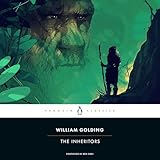
- Audible Audiobook
- William Golding (Author) - David Dawson (Narrator)
- English (Publication Language)
- 03/03/2026 (Publication Date) - Penguin Audio (Publisher)
5. Examine the Role of Fear and “Otherness”: Recognize how fear of difference fuels the actions of the Homo sapiens.
- Action: Identify instances where the Homo sapiens’ fear of the People’s alien nature and perceived strangeness drives their aggressive behavior and misinterpretations.
- What to Look For: The ways in which the New People project their own anxieties and insecurities onto the Neanderthals, leading to dehumanization, violence, and a justification for their displacement.
- Mistake to Avoid: Overlooking the psychological underpinnings of the conflict; the novel delves into how fear of the unfamiliar can be a powerful catalyst for destructive actions against perceived outsiders.
6. Contemplate the Title’s Meaning: Understand who the true inheritors are and what qualities that inheritance entails.
- Action: Ponder the title’s significance in relation to the characters, their fates, and the broader themes of survival, adaptation, and the nature of progress.
- What to Look For: The qualities that enable one group to supersede another, and whether these are inherently superior or simply more adaptable in a changing world, considering the losses incurred.
- Mistake to Avoid: Assuming the title exclusively refers to the Homo sapiens as the victors; the novel invites a deeper contemplation on what it means to inherit the Earth and the potential costs and ethical implications involved in that inheritance.
Common Myths and Corrections
- Myth: The Inheritors is a scientifically accurate depiction of Neanderthal life and extinction.
- Correction: William Golding uses the historical context of Neanderthal extinction as a backdrop for a philosophical allegory. The novel prioritizes thematic exploration of consciousness and humanity’s evolutionary path over strict historical or anthropological accuracy. The focus is on the idea of Neanderthals as a distinct consciousness.
- Myth: The Neanderthals are portrayed as simple-minded and incapable of complex thought.
- Correction: Golding depicts the Neanderthals as possessing a different kind of consciousness—collective, sensory, and deeply integrated with nature—rather than a lack of complexity. Their “simplicity” is a contrast to, not a deficiency compared to, the Homo sapiens’ individualistic and abstract thought, and represents a different form of existential awareness.
- Myth: The Homo sapiens are presented as inherently evil villains.
- Correction: Golding portrays the Homo sapiens as driven by a combination of fear, ambition, and a more advanced, individualistic consciousness that is both creative and destructive. Their actions are depicted as a force of evolutionary adaptation, albeit one that leads to the extinction of another species and involves moral compromise.
Expert Tips for Reading The Inheritors
- Tip 1: Embrace the Alien Perspective.
- Action: Actively seek to understand the world through the sensory and communal lens of the Neanderthals. Focus on their connection to the environment and their instinctual responses rather than expecting human-like reasoning or internal monologue.
- Mistake to Avoid: Constantly comparing their perceptions and actions to modern human behavior, which will create a barrier to appreciating Golding’s unique narrative approach and the fundamental difference in consciousness.
- Tip 2: Recognize the Symbolic Weight.
- Action: Treat the events and characters as symbolic representations of broader concepts: the clash of consciousness, the fear of the unknown, the displacement of older ways of being by newer, more aggressive ones, and the complex nature of evolutionary “progress.”
- Mistake to Avoid: Getting bogged down in the literal interpretation of events without considering the allegorical implications Golding intends to convey about humanity’s past, present, and future.
- Tip 3: Understand the “Inheritance” Ambiguity.
- Action: Ponder the dual meaning of the title. Consider what qualities—adaptability, aggression, advanced consciousness, or perhaps a lost connection to nature—make one group the “inheritors” of the Earth, and what the cost of that inheritance is.
- Mistake to Avoid: Concluding that the title simply refers to the Homo sapiens as the victors; the novel invites deeper reflection on the nature of that inheritance and the ethical questions it raises about dominance and survival.
The Inheritors by William Golding: A Thematic Analysis
William Golding’s The Inheritors stands as a stark and unsettling examination of humanity’s evolutionary trajectory, presenting a primal narrative that challenges comfortable notions of progress. The novel’s core strength lies in its audacious decision to narrate the extinction of the Neanderthals from their own perspective. This narrative choice forces the reader to confront a consciousness fundamentally different from our own—one characterized by deep sensory immersion, communal connection, and a profound, instinctual understanding of the natural world. Golding masterfully crafts a world experienced through touch, smell, and a shared, almost telepathic, awareness, standing in sharp contrast to the individualistic, tool-making, and fear-driven consciousness of the encroaching Homo sapiens.
The “New People,” as the Neanderthals perceive them, represent a powerful, albeit terrifying, force of change. Their advanced tools, their capacity for abstract thought, and their inherent fear of anything different lead to a brutal and inevitable conflict. Golding does not shy away from the violence, but he frames it not as a simple tale of good versus evil, but as a complex interplay of evolutionary pressures, fear, and the inherent drive for dominance that accompanies a certain type of consciousness. The novel prompts critical questions: What constitutes “human
Quick Comparison
| Option | Best for | Pros | Watch out |
|---|---|---|---|
| Quick Answer | General use | <em>The Inheritors by William Golding</em> presents a profound, allegorical narrativ… | Mistake to Avoid: Expecting human-like dialogue or internal monologues; the N… |
| Who This Is For | General use | Its strength lies in Golding’s evocative prose that immerses the reader in a… | Mistake to Avoid: Applying modern ethical judgments to the actions of either… |
| What to Check First | General use | This novel is not for readers seeking historical accuracy or a conventionally… | Mistake to Avoid: Viewing the extinction solely as a historical event; recogn… |
| Step-by-Step Plan Understanding The Inheritors by William Golding | General use | Readers interested in philosophical fiction that interrogates themes of consc… | Mistake to Avoid: Reducing the conflict to a simple “good versus evil” narrat… |
Decision Rules
- If reliability is your top priority for The Inheritors by William Golding, choose the option with the strongest long-term track record and support.
- If value matters most, compare total ownership cost instead of headline price alone.
- If your use case is specific, prioritize fit-for-purpose features over generic ‘best overall’ claims.