John Updike’s Rabbit, Run: A Character Study
John Updike’s 1960 novel, Rabbit, Run, delves into the life of Harry “Rabbit” Angstrom, a former high school basketball star adrift in the disillusionment of early adulthood. This work is not driven by plot but by an intense, almost clinical, examination of a man perpetually seeking escape. For readers interested in the intricacies of flawed characters and the power of precise prose, Rabbit, Run offers a significant literary experience.
Rabbit, Run by John Updike: Core Elements
- Rabbit, Run by John Updike focuses on Harry Angstrom’s attempts to flee his responsibilities, exploring themes of freedom, faith, and marital breakdown.
- The novel’s strength lies in Updike’s masterful, precise prose and his deep dive into a flawed protagonist’s psyche; however, Harry’s passivity can be a challenging aspect for readers.
- Those seeking a fast-paced narrative or a traditionally heroic figure may find Rabbit, Run difficult; readers who appreciate intricate character studies and literary style will likely find it rewarding.
Who This Is For
- Readers interested in mid-20th-century American literature, particularly novels that examine existential anxieties and the darker side of the American Dream.
- Individuals who value literary craftsmanship, precise language, and deep psychological exploration over plot-driven narratives.
For readers interested in the intricacies of flawed characters and the power of precise prose, John Updike’s Rabbit, Run offers a significant literary experience. You can find a copy of this seminal work to dive into Harry Angstrom’s complex world.
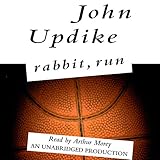
- Audible Audiobook
- John Updike (Author) - Arthur Morey (Narrator)
- English (Publication Language)
- 12/23/2008 (Publication Date) - Random House Audio (Publisher)
What to Check First
- Protagonist’s Agency: Harry Angstrom is largely defined by his passivity and impulsive reactions. Understanding that he is not a proactive hero is crucial for engaging with the narrative.
- Thematic Focus: The novel prioritizes internal conflict—Harry’s struggle with responsibility, faith, and the elusive nature of happiness—over external events.
- Updike’s Prose: Be prepared for a dense, descriptive, and often unsentimental writing style that demands close attention.
- Character Relationships: The dynamics between Harry, his wife Janice, and his lover Ruth are central to the novel’s exploration of failure and connection.
Step-by-Step Plan for Understanding Rabbit, Run
1. Initial Character Assessment of Harry Angstrom: Observe Harry’s immediate decision to leave his pregnant wife, Janice, and their young son.
- Action: Note the superficial justifications for his departure: a feeling of being trapped, a yearning for a vaguely defined freedom, and a desire to escape the perceived banality of his life.
- What to Look For: His actions are primarily impulsive and driven by immediate emotional dissatisfaction, not rational planning.
- Mistake: Assuming Harry’s actions stem from a rational plan.
2. Analyze the Pattern of Escapism: Track Harry’s subsequent attempts to find solace and meaning in transient relationships and locations.
- Action: Identify the recurring cycle of Harry seeking an idealized state that quickly dissolves, leading him to seek another escape.
- What to Look For: The pattern reveals a fundamental inability to sustain happiness or commitment.
- Mistake: Believing that any of his temporary pursuits (e.g., with Ruth) offer a sustainable solution to his internal void.
3. Examine the Marital Dysfunction: Focus on the deeply troubled relationship between Harry and Janice.
- Action: Observe Janice’s own struggles with alcoholism and her passive, yet sometimes desperate, responses to Harry’s abandonment. Note the shared responsibility for their marital breakdown.
- What to Look For: The dynamics reveal a mutual failure in communication and responsibility.
- Mistake: Assigning sole blame for the marital collapse to Harry, overlooking Janice’s complicity and her own significant challenges.
4. Consider the Role of Faith and Morality: Pay attention to the characters’ interactions with religious figures and their moral frameworks.
- Action: Note Reverend Jack’s attempts to guide Harry and the underlying questions about sin, redemption, and the search for spiritual solace.
- What to Look For: The religious undertones are integral to Harry’s existential crisis and the novel’s thematic concerns.
- Mistake: Dismissing the religious undertones as mere background color.
5. Evaluate the Narrative Perspective: Understand that the story is largely filtered through Harry’s limited and often self-deceptive consciousness.
- Action: Recognize how Harry’s internal monologues reveal his rationalizations, his evasions, and his profound inability to see himself or his situation clearly.
- What to Look For: His internal state provides insight into his motivations and limitations.
- Mistake: Accepting Harry’s self-assessment or rationalizations as objective truth, rather than as evidence of his internal struggle.
6. Assess the Novel’s Thematic Resonance: Identify the core themes of disillusionment, the search for meaning in a secularizing world, and the consequences of unchecked personal freedom.
- Action: Connect Harry’s personal failures to broader societal anxieties of the post-war era regarding conformity and existential uncertainty.
- What to Look For: The novel serves as a commentary on human behavior and the search for purpose.
- Mistake: Viewing Rabbit, Run solely as a domestic drama about one man’s poor choices, rather than as a commentary on the human behavior and the search for purpose.
Rabbit, Run by John Updike: A Study in Character Failure
John Updike’s Rabbit, Run is a potent exploration of a man who, despite physical grace and potential, is deeply flawed. The novel excels at dissecting the internal landscape of Harry “Rabbit” Angstrom, a former high school basketball star who, at 26, finds himself trapped by domestic responsibilities and a gnawing dissatisfaction. Updike masterfully renders Harry’s impulsive decisions and his persistent, yet ultimately futile, pursuit of an elusive freedom. The prose is precise, almost surgical, in its depiction of Harry’s internal monologues and his interactions, revealing the profound disconnect between his desires and his capacity to act responsibly.
The novel’s central tension arises from Harry’s repeated attempts to outrun his problems. He leaves his pregnant wife, Janice, and their young son, only to find that the freedom he craves is just as confining in different forms. His affairs and subsequent flights highlight a fundamental inability to confront reality or commit to any meaningful connection. This makes Rabbit, Run a compelling, albeit often uncomfortable, read for those interested in character studies that delve into the darker, more complex aspects of human nature.
BLOCKQUOTE_0
This quote encapsulates the paradox at the heart of Harry Angstrom. He is tethered to the physical world, to his own immediate gratification, yet he possesses an inchoate longing for spiritual or existential fulfillment that he consistently misunderstands and misdirects. This internal conflict is the engine of the novel’s narrative, driving Harry from one failed attempt at happiness to another.
Understanding Rabbit, Run by John Updike’s Core Conflict
The primary conflict in Rabbit, Run is not an external battle but an internal one waged within Harry Angstrom. His inability to reconcile his desire for freedom with his obligations, his yearning for spiritual transcendence with his baser instincts, defines his trajectory. Updike meticulously details Harry’s rationalizations, his self-deceptions, and his consistent failure to learn from his mistakes. This makes the novel a powerful, if bleak, examination of human behavior, particularly the struggle against complacency and the search for meaning in a world that often feels indifferent. The novel’s enduring relevance lies in its unflinching portrayal of these universal struggles, making it a significant work in the American literary canon.
Common Mistakes
- Mistake: Expecting Harry Angstrom to change or redeem himself significantly within the narrative.
- Why it matters: This expectation leads to disappointment, as Rabbit, Run is more about the perpetuation of a character’s flaws than his transformation.
- Fix: Approach the novel with the understanding that Harry’s arc is one of consistent, albeit nuanced, failure and evasion.
- Mistake: Focusing solely on the plot points of Harry’s physical departures.
- Why it matters: The external events are merely manifestations of Harry’s internal crisis. Overemphasis on plot misses the novel’s psychological depth.
- Fix: Pay close attention to Harry’s thoughts, feelings, and rationalizations, as these are the true drivers of the narrative.
- Mistake: Judging the female characters solely by their reactions to Harry.
- Why it matters: Janice and Ruth have their own complex inner lives and motivations, which are often overshadowed by Harry’s perspective.
- Fix: Actively look for moments that reveal the women’s agency, their struggles, and their own forms of resilience or despair.
- Mistake: Dismissing the religious elements as peripheral.
- Why it matters: The novel engages with questions of faith, sin, and redemption, which are central to Harry’s existential unease.
- Fix: Consider how the presence of religious figures and discussions of morality influence Harry’s decisions and the novel’s thematic landscape.
- Mistake: Treating Rabbit, Run as a simple story of marital infidelity.
- Why it matters: While infidelity is present, it serves as a symptom of deeper issues related to identity, purpose, and existential longing.
- Fix: Analyze the infidelity within the broader context of Harry’s search for meaning and his inability to commit to any stable reality.
Expert Tips
- Tip: Pay close attention to the sensory details Updike uses to describe Harry’s environment and internal state.
- Actionable Step: When reading a scene, specifically note the textures, sounds, and smells described and consider how they reflect Harry’s mood or perceptions.
- Common Mistake to Avoid: Skimming over descriptive passages, missing the way Updike uses these details to build psychological portraits and atmosphere.
- Tip: Recognize that Harry’s “freedom” is often a form of self-imposed imprisonment.
- Actionable Step: As Harry makes decisions he believes will liberate him, actively question whether these choices are actually leading him to greater constraint or isolation.
- Common Mistake to Avoid: Taking Harry’s perception of freedom at face value, rather than analyzing the actual consequences of his actions.
- Tip: Understand that the novel is a critique of certain aspects of the American Dream and post-war conformity.
- Actionable Step: Consider how Harry’s restlessness and dissatisfaction contrast with the societal expectations of success and domesticity prevalent in the 1950s.
- Common Mistake to Avoid: Reading the novel as a purely personal story without considering its broader social and cultural commentary.
Decision Rules
- If reliability is your top priority for Rabbit, Run by John Updike, choose the option with the strongest long-term track record and support.
- If value matters most, compare total ownership cost instead of headline price alone.
- If your use case is specific, prioritize fit-for-purpose features over generic ‘best overall’ claims.
FAQ
- Q: Is Rabbit, Run a depressing novel?
- A: Yes, Rabbit, Run is often considered a bleak novel due to its protagonist’s persistent failures and the exploration of dissatisfaction. However, its literary merit lies in its profound psychological realism and precise prose, which can be deeply rewarding for readers.
- Q: Should I read the entire Rabbit Angstrom series?
- A: Reading Rabbit, Run can stand alone as a powerful character study. However, the subsequent novels in the series (Rabbit Redux, Rabbit Is Rich, Rabbit at Rest) follow Harry’s life over several decades, offering a broader perspective on his character and the American experience. If you find Rabbit, Run compelling, the series provides an extended exploration.
- Q: What is the primary theme Updike explores in Rabbit, Run?
- A: The primary themes include the nature of freedom, the burden of responsibility, marital dissatisfaction, the search for meaning, and the limitations of human agency, all viewed through the lens of a flawed protagonist.
- Q: How does the setting of the 1950s influence the novel?
- A: The post-war economic boom and societal expectations of the 1950s create a backdrop against which Harry’s restlessness and desire for something more are amplified. The era’s emphasis on domesticity and conventional success highlights Harry’s rebellion against these norms.
| Character | Core Motivation | Key Flaw | Narrative Function |
|---|---|---|---|
| Harry Angstrom | Search for freedom/escape | Impulsivity, irresponsibility | Protagonist, driver of plot and thematic exploration |
| Janice | Stability, familial connection | Passivity, alcoholism | Represents the domestic life Harry flees |
| Ruth | Security, genuine relationship | Pragmatism, past trauma | Represents a potential alternative path for Harry |