John O’Hara’s Ten North Frederick: A Portrait Of American Life
John O’Hara’s Ten North Frederick plunges readers into the intricate social fabric of mid-20th century America, centered on the life of Joe Chapin in the fictional town of Gibbsville, Pennsylvania. The novel meticulously dissects the pursuit of the American Dream, the compromises it demands, and the subtle yet powerful influence of social class. This analysis provides a precise understanding of the book’s thematic weight and narrative strengths, offering concrete takeaways for the discerning reader.
How this analysis was curated
This examination was curated based on the following criteria:
- Thematic Depth: Evaluation of how effectively the novel explores enduring themes such as social mobility, personal integrity, and the disillusionment that can accompany aspiration.
- Character Authenticity: Assessment of O’Hara’s skill in rendering complex, believable characters whose motivations are deeply rooted in their societal context.
- Narrative Craft: Analysis of the novel’s structure, pacing, and prose style, focusing on their contribution to reader immersion and understanding.
- Social Realism: Examination of the book’s fidelity to depicting the nuances of American social dynamics, aspirations, and the pursuit of success within a specific historical period.
- Reader Takeaways: Identification of concrete insights and perspectives a reader can gain from engaging with Ten North Frederick.
Ten North Frederick by John O’Hara: A Critical Examination
Ten North Frederick chronicles the life of Joseph “Joe” Chapin, tracing his trajectory from youth through his later years in Gibbsville, Pennsylvania. O’Hara meticulously portrays the town’s social strata, its unwritten rules, and the personal compromises that define his characters’ lives. The narrative is characterized by precise prose, capturing the subtleties of dialogue and the shifts in social standing that drive the story. Rather than relying on dramatic plot twists, the novel focuses on the gradual accumulation of life experiences and their profound impact on individual identity.
Who this is for
- Readers interested in literary fiction that dissects the complexities of the American Dream, its challenges, and its discontents.
- Individuals who appreciate detailed social realism and character-driven narratives that explore the influence of societal structures on personal lives.
What to check first
For those looking to dive into John O’Hara’s classic exploration of American life, the novel itself is the perfect starting point. Experience the intricate social fabric of mid-20th century America firsthand.
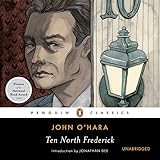
- Audible Audiobook
- John O'Hara (Author) - Scott Aiello (Narrator)
- English (Publication Language)
- 07/02/2014 (Publication Date) - Penguin Audio (Publisher)
- O’Hara’s Narrative Style: O’Hara is known for his extensive use of dialogue and detailed descriptions of social environments. Readers who prefer fast-paced plots may need to adjust their expectations for a more deliberate narrative pace.
- Setting and Historical Context: The novel is deeply embedded in post-World War II America and the specific cultural landscape of a Pennsylvania town. Understanding this historical and geographical context is crucial for appreciating the characters’ motivations and limitations.
- Character-Centric Focus: The narrative centers on Joe Chapin’s internal and external journey. Other characters serve primarily to illuminate his experiences and the social world he inhabits, rather than driving independent plotlines.
Step-by-step plan for appreciating Ten North Frederick
1. Establish the Setting: Begin by immersing yourself in O’Hara’s depiction of Gibbsville and its social hierarchy.
- Action: Read the opening chapters attentively, noting O’Hara’s descriptions of the town and its inhabitants.
- What to look for: Subtle indicators of class, family history, and the unspoken social codes that govern interactions.
- Mistake to avoid: Expecting immediate dramatic conflict; O’Hara builds his narrative and character depth gradually, requiring patience.
2. Analyze Joe Chapin’s Trajectory: Focus on Joe’s key decisions, motivations, and internal struggles as they unfold.
- Action: Track Joe’s aspirations and the compromises he makes throughout his life.
- What to look for: The recurring tension between ambition and reality, and how external pressures shape his choices.
- Mistake to avoid: Judging Joe solely by contemporary moral standards; consider the societal norms and limitations of the era.
3. Identify Core Themes: Recognize the recurring motifs, such as social mobility, disillusionment, and the weight of legacy.
- Action: Note instances where these themes are explicitly or implicitly present in the narrative.
- What to look for: How themes are illustrated through specific events, character interactions, and Joe’s personal reflections.
- Mistake to avoid: Overlooking subtext; O’Hara often implies his points indirectly, requiring careful reading and interpretation.
4. Deconstruct Dialogue: Pay close attention to the conversations between characters.
- Action: Analyze dialogue for what is said, what is implied, and how it reveals character relationships and social dynamics.
- What to look for: The nuances of speech patterns, tone, and the underlying meanings conveyed.
- Mistake to avoid: Skimming dialogue; O’Hara’s conversations are vital for understanding character development and plot progression.
5. Contextualize the Era: Consider the socio-economic and cultural landscape of post-war America.
- Action: Reflect on how the specific historical period influences the characters’ opportunities and decisions.
- What to look for: The impact of post-war optimism, economic shifts, and prevailing social attitudes on the characters’ lives.
- Mistake to avoid: Reading the novel as a timeless allegory without acknowledging its specific historical context.
6. Evaluate the Resolution: Contemplate the ending and its implications for Joe Chapin and the novel’s broader themes.
- Action: Consider the sense of closure or ambiguity O’Hara leaves the reader with.
- What to look for: The long-term consequences of Joe’s life choices and the novel’s final thematic statements.
- Mistake to avoid: Seeking a neat, universally satisfying conclusion; O’Hara’s endings often reflect life’s ongoing complexities.
Common Mistakes in Reading Ten North Frederick
- Mistake: Expecting a plot-driven thriller.
- Why it matters: This can lead to disappointment if the reader prioritizes rapid action. O’Hara’s narrative strength lies in detailed character observation and social depiction, not overt dramatic events.
- Fix: Adjust expectations to appreciate a more deliberate, character-focused narrative that reveals its depths over time.
- Mistake: Dismissing characters for perceived moral failings without historical context.
- Why it matters: The novel reflects the social mores and limitations of its time. Judging characters solely by contemporary standards misses the nuance of O’Hara’s critique and the pressures they faced.
- Fix: Read with an awareness of the historical period, understanding that characters are products of their environment and era.
- Mistake: Overlooking the significance of setting and social milieu.
- Why it matters: Gibbsville and its social hierarchy are integral to the narrative. The setting dictates much of the characters’ behavior, opportunities, and limitations.
- Fix: Pay close attention to O’Hara’s detailed descriptions of place and the unspoken social rules that govern interactions.
- Mistake: Skimming descriptive passages.
- Why it matters: O’Hara uses detailed descriptions to establish atmosphere, social standing, and internal character states. These passages are not mere filler but contain subtle narrative clues.
- Fix: Read these descriptions carefully, as they often provide essential context for character motivations and plot developments.
Expert Tips for Engaging with Ten North Frederick
- Tip: Focus on O’Hara’s mastery of dialogue as a tool for social commentary.
- Actionable Step: Analyze key conversations for subtext, unspoken tensions, and what characters reveal about themselves and their social standing through their speech.
- Common Mistake to Avoid: Treating dialogue as purely functional plot delivery; O’Hara uses it for nuanced character revelation and social critique.
- Tip: Map the social relationships and hierarchies within Gibbsville.
- Actionable Step: Keep a running list of key characters and their connections, noting their social class, familial ties, and allegiances.
- Common Mistake to Avoid: Getting lost in the numerous characters without understanding their place within the Gibbsville social structure.
- Tip: Consider the novel as a critique of the American Dream’s promises and pitfalls.
- Actionable Step: Identify instances where Joe Chapin’s pursuit of success clashes with his personal values, societal expectations, or the inherent limitations of his circumstances.
- Common Mistake to Avoid: Reading the novel as a straightforward success story; it is far more complex and often cautionary in its depiction of aspiration.
Ten North Frederick by John O’Hara: A Thematic Deep Dive
O’Hara’s examination of American life in Ten North Frederick is particularly insightful when viewed through the lens of social mobility and the illusion of the American Dream. Joe Chapin embodies a generation striving for upward mobility, yet he is constantly hampered by the constraints of his background and the rigid social structures of his community. The novel offers a nuanced portrayal of ambition’s cost and the often-unforeseen consequences of societal pressures, avoiding easy answers.
- Best for: Readers who enjoy deep dives into the American psyche and the complexities of social class.
- Skip if: You prefer novels with a straightforward, optimistic outlook on success and achievement.
- Trade-off: The novel’s strength in social realism comes with a trade-off of a less overtly dramatic narrative arc, requiring sustained reader engagement.
Surprising Pick: The Role of Women in Joe’s Life
While Joe Chapin is the central figure, the women in his life—his wife, mother, and romantic interests—are crucial in revealing his character and the limitations placed upon him by societal expectations. Their agency, or lack thereof, provides a potent counterpoint to Joe’s own struggles, highlighting the intersecting pressures of gender and class.
- Best for: Readers who appreciate layered character studies where supporting figures are integral to the protagonist’s development and thematic exploration.
- Skip if: You primarily seek a story focused solely on male ambition
Quick Comparison
| Option | Best for | Pros | Watch out |
|---|---|---|---|
| How this analysis was curated | General use | Thematic Depth: Evaluation of how effectively the novel explores enduring the… | Mistake to avoid: Expecting immediate dramatic conflict; O’Hara builds his na… |
| Ten North Frederick by John OHara A Critical Examination | General use | Character Authenticity: Assessment of O’Hara’s skill in rendering complex, be… | Mistake to avoid: Judging Joe solely by contemporary moral standards; conside… |
| Step-by-step plan for appreciating Ten North Frederick | General use | Narrative Craft: Analysis of the novel’s structure, pacing, and prose style,… | Mistake to avoid: Overlooking subtext; O’Hara often implies his points indire… |
| Common Mistakes in Reading Ten North Frederick | General use | Social Realism: Examination of the book’s fidelity to depicting the nuances o… | Mistake to avoid: Skimming dialogue; O’Hara’s conversations are vital for und… |
Decision Rules
- If reliability is your top priority for Ten North Frederick by John O’Hara, choose the option with the strongest long-term track record and support.
- If value matters most, compare total ownership cost instead of headline price alone.
- If your use case is specific, prioritize fit-for-purpose features over generic ‘best overall’ claims.
How this list was curated
- We selected titles using clarity, practical usefulness, and long-term relevance.
- We balanced foundational picks with specialized options for different reader goals.
Structured Pick Cards
Who this is for
- Best for: readers who want practical takeaways and clear progression.
- Skip if: you need only advanced theory with little implementation guidance.
- Trade-off: stronger depth can mean a slower pace in some chapters.
By Reader Level
- Beginner: start with one fundamentals pick and one habit-building pick.
- Intermediate: prioritize books with frameworks you can apply weekly.
- Advanced: choose deeper titles focused on systems and decision quality.
FAQ
Q: Where should I start?
A: Start with the clearest foundational pick, then add one practical framework-focused title.
Q: How many books should I read first?
A: Begin with 2–3 complementary books and apply one core idea from each before adding more.