Henry James’ Notable Short Novels and Tales
Henry James’s shorter works, including his novellas and short stories, offer a concentrated exploration of complex psychological states and intricate social dynamics. These narratives, while often demanding, provide a potent entry point into his distinctive literary style and thematic concerns, showcasing a mastery of form that rivals his celebrated longer novels. This guide is for readers seeking to engage with James’s precise prose and nuanced explorations of consciousness and morality in a more accessible format.
How this list was curated
This list was curated based on the following criteria:
- Thematic Depth: Prioritizing works that explore core Jamesian themes such as consciousness, social observation, the international theme, and the nuances of moral choice.
- Narrative Cohesion: Selecting stories and novellas that demonstrate strong structural integrity and a focused narrative arc, avoiding fragmented or overly experimental pieces for this introductory selection.
- Reader Accessibility: While James’s prose can be challenging, this list favors works that, while demanding, offer a more immediate entry point into his style and concerns compared to his more labyrinthine longer novels.
- Critical Acclaim and Influence: Considering works that have consistently received critical attention and have demonstrably influenced subsequent literature.
- Variety of Scope: Including a range of lengths and subject matter within the short form to provide a representative overview.
Short Novels And Tales by Henry James: Essential Selections
Henry James’s shorter fiction offers a concentrated dose of his characteristic prose and thematic preoccupations. These works, often overlooked in favor of his sprawling novels, provide critical insights into his development as a writer and stand as significant literary achievements in their own right.
The Turn of the Screw
- Best for: Readers interested in Gothic literature, ambiguity, and psychological horror.
- Skip if: You prefer clear-cut narratives with definitive answers.
- Trade-off: Its enduring ambiguity is its greatest strength, but also its primary challenge for those seeking resolution.
This novella presents a governess’s account of her experiences at a remote estate, where she believes the children in her care are being corrupted by malevolent supernatural forces. The narrative’s power lies in its unreliable narrator and the chilling uncertainty of whether the threats are real or a product of the governess’s descent into madness. The brilliance of The Turn of the Screw lies in its sustained tension and the reader’s active participation in deciphering the events.
The Aspern Papers
- Best for: Readers fascinated by literary obsession, the past’s hold on the present, and the ethics of biographical inquiry.
- Skip if: You find stories about literary scholars and their pursuits tedious.
- Limitation: The narrative’s pacing can feel deliberate, requiring patience to appreciate its unfolding machinations.
In The Aspern Papers, an unnamed American scholar attempts to obtain the unpublished letters of the deceased poet Jeffrey Aspern from his elderly former mistress, Juliana Bordereau. The story masterfully dissects the scholar’s increasingly desperate and morally compromised quest, highlighting the clash between intellectual ambition and human dignity. The novella serves as a potent examination of how the pursuit of knowledge can erode ethical boundaries.
Daisy Miller: A Study
- Best for: Readers interested in cultural misunderstandings, social conventions, and the American expatriate experience.
- Skip if: You are looking for complex psychological introspection.
- Trade-off: While a concise character study, its focus on social observation means internal motivations are often inferred rather than explicitly stated.
This novella introduces Daisy Miller, a vivacious and independent young American woman traveling in Europe, whose unconventional behavior bewilders and fascinates her expatriate countrymen. James uses Daisy as a lens through which to examine the rigid social codes of the time and the often harsh judgments passed upon those who defy them. The work is a poignant critique of social hypocrisy and the tragic consequences of cultural insensitivity.
The Beast in the Jungle
- Best for: Readers drawn to deep psychological exploration of missed opportunities and existential dread.
- Skip if: You prefer external conflict and action-driven plots.
- Limitation: The narrative’s intensely internal focus can make it feel abstract to some readers.
John Marcher is convinced that a great destiny awaits him, a “beast” that he must confront. He dedicates his life to anticipating this event, ironically preventing himself from truly living and forming meaningful connections. The story is a profound meditation on self-absorption and the devastating realization of a life unlived, a classic example of James’s ability to render the internal landscape with stark clarity.
The Lesson of the Master
- Best for: Aspiring writers and readers interested in the artistic life and the compromises it entails.
- Skip if: You have little interest in the creative process or the mentor-mentee dynamic.
- Trade-off: Its focus on the artist’s dilemma might feel niche, but the underlying themes of integrity and sacrifice resonate broadly.
For a comprehensive and accessible entry into Henry James’s masterful short fiction, this collection is an excellent starting point. It gathers many of his most celebrated novellas and tales, offering a concentrated dose of his distinctive prose and thematic depth.
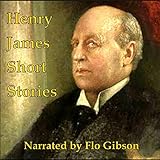
- Audible Audiobook
- Henry James (Author) - Flo Gibson (Narrator)
- English (Publication Language)
- 03/17/2008 (Publication Date) - Audio Book Contractors, LLC (Publisher)
This tale explores the relationship between a young, ambitious writer and the established, seemingly disillusioned “Master.” The Master imparts a harsh lesson: that true artistic integrity often requires sacrificing personal happiness and conventional success. The story delves into the complex relationship between art and life, and the often-painful choices artists must make.
Understanding Short Novels And Tales by Henry James
James’s approach to the shorter form was not simply about condensing his longer works. He used the novella and short story to experiment with narrative structure, focus on specific psychological states, and hone his distinctive prose style. His “short novels and tales” often achieve a remarkable intensity and thematic resonance through their focused scope.
The Short Novel as a Laboratory for Style
James often referred to his shorter works as a testing ground for narrative techniques that he would later employ in his longer novels. The constraints of the short form forced him to be exceptionally precise in his language and economical in his plotting. This resulted in prose that, while dense, is remarkably layered and suggestive. Works like The Aspern Papers demonstrate this perfectly, where every detail contributes to the overarching atmosphere and thematic development.
Psychological Depth in Concise Narratives
One of the hallmarks of James’s fiction is his profound exploration of consciousness. In his shorter works, he could isolate and dissect specific psychological phenomena with an almost clinical precision. The Beast in the Jungle, for instance, is a masterful study of a man trapped by his own existential expectations, a deep dive into the internal world that few authors can match. These stories reveal the intricate workings of the human mind, often through subtle shifts in perception and internal monologue.
Common Myths About Henry James’s Short Fiction
- Myth: Henry James’s short stories are all about wealthy Americans abroad.
- Correction: While the “international theme” is prevalent, James also explored domestic settings and a wide range of social strata. Works like “The Pupil” delve into the lives of less affluent characters and the complexities of their relationships.
- Myth: All of Henry James’s short novels and tales are impenetrable due to his complex prose.
- Correction: While James’s style is sophisticated, many of his shorter works, particularly earlier ones like Daisy Miller, are more accessible. The perceived difficulty often arises from the density of observation and psychological nuance rather than obscure vocabulary alone.
Expert Tips for Reading Henry James’s Short Novels and Tales
- Tip 1: Read Actively and Re-read: James’s prose is rich with implication.
- Actionable Step: When encountering a complex sentence, pause and try to paraphrase its core meaning. Consider re-reading passages that feel particularly dense or significant.
- Common Mistake to Avoid: Rushing through the text without allowing time for absorption. This can lead to missing crucial nuances and thematic connections.
- Tip 2: Focus on the Unsaid: James excels at suggesting rather than stating.
- Actionable Step: Pay close attention to what characters don’t say, their hesitations, and the subtext of their interactions. Consider what motivations might be driving these silences.
- Common Mistake to Avoid: Expecting explicit exposition for every character motivation or plot point. This can lead to frustration and an incomplete understanding of the narrative’s depth.
- Tip 3: Understand the Social Context: James’s characters are deeply embedded in their social environments.
- Actionable Step: Briefly research the social norms and expectations of the era and location in which a story is set. This provides vital context for understanding character behavior and conflicts.
- Common Mistake to Avoid: Judging characters solely by modern standards without appreciating the constraints and values of their time. This can lead to misinterpretations of their actions and James’s commentary.
Segmentation: A Reader’s Guide to James’s Short Fiction
For the Newcomer: Begin with Daisy Miller: A Study or The Turn of the Screw. Daisy Miller offers a more straightforward narrative and a compelling social portrait, while The Turn of the Screw, despite its ambiguity, is a masterclass in suspense that draws readers in.
For the Deep Diver: Explore The Aspern Papers and The Beast in the Jungle. These works represent the height of James’s psychological realism and thematic complexity, rewarding careful study and multiple readings.
For the Literary Enthusiast: Consider The Lesson of the Master. This tale offers a fascinating meta-commentary on the artistic life and the sacrifices involved in creative pursuit, resonating deeply with anyone interested in the writer’s craft.
Surprising Pick: “The Pupil”
While often overshadowed by the more famous ghost stories or literary dramas, “The Pupil” is a remarkably poignant and insightful work that stands out for its compassionate portrayal of a child caught between difficult adult circumstances.
- Why it’s different: Unlike many of James’s tales that focus on the upper echelons of society or supernatural intrigue, “The Pupil” centers on the quiet desperation of a young boy, Morgan Moreen, whose parents are social climbers and financial dependents. The story’s power comes from its subtle depiction of Morgan’s intelligence
Quick Comparison
| Option | Best for | Pros | Watch out |
|---|---|---|---|
| How this list was curated | General use | Thematic Depth: Prioritizing works that explore core Jamesian themes such as… | Common Mistake to Avoid: Rushing through the text without allowing time for a… |
| Short Novels And Tales by Henry James Essential Selections | General use | Narrative Cohesion: Selecting stories and novellas that demonstrate strong st… | Common Mistake to Avoid: Expecting explicit exposition for every character mo… |
| Understanding Short Novels And Tales by Henry James | General use | Reader Accessibility: While James’s prose can be challenging, this list favor… | Common Mistake to Avoid: Judging characters solely by modern standards withou… |
| Common Myths About Henry Jamess Short Fiction | General use | Critical Acclaim and Influence: Considering works that have consistently rece… | Common Mistake to Avoid: Rushing through the text without allowing time for a… |
Decision Rules
- If reliability is your top priority for Short Novels And Tales by Henry James, choose the option with the strongest long-term track record and support.
- If value matters most, compare total ownership cost instead of headline price alone.
- If your use case is specific, prioritize fit-for-purpose features over generic ‘best overall’ claims.
By Reader Level
- Beginner: start with one fundamentals pick and one habit-building pick.
- Intermediate: prioritize books with frameworks you can apply weekly.
- Advanced: choose deeper titles focused on systems and decision quality.
FAQ
Q: Where should I start?
A: Start with the clearest foundational pick, then add one practical framework-focused title.
Q: How many books should I read first?
A: Begin with 2–3 complementary books and apply one core idea from each before adding more.