Joe Abercrombie’s The Blade Itself: Grimdark Fantasy Begins
Joe Abercrombie’s The Blade Itself is the foundational novel in the First Law series and a seminal work in the grimdark fantasy genre. This guide examines its narrative structure, character development, and thematic underpinnings, offering a precise assessment for readers considering this influential title. It focuses on the practical considerations for engaging with its unique brand of fantasy, emphasizing clarity and actionable insights.
Who This Is For
- Readers seeking nuanced, morally gray characters: Those who prefer protagonists and antagonists operating in shades of gray, driven by self-interest and internal conflict rather than clear-cut heroism.
- Fans of deconstructed fantasy tropes: Readers interested in a subgenre that actively questions and subverts traditional heroic narratives, focusing on realism, consequence, and flawed individuals.
What to Check First
- Genre Expectation: Confirm understanding of “grimdark” fantasy, which prioritizes moral ambiguity, visceral realism, and often bleak outcomes over optimistic heroism.
- Authorial Style: Joe Abercrombie employs sharp, cynical dialogue and a narrative voice that blends dark humor with unflinching brutality.
- Series Context: The Blade Itself is the first book in a trilogy. It establishes characters and world-building, with plot threads developing across subsequent volumes.
- Thematic Focus: The novel explores themes of power, violence, corruption, and the inherent flaws within individuals and societies.
Step-by-Step Plan: Engaging with The Blade Itself
1. Deconstruct Character Arcs: Actively analyze the motivations and internal conflicts of key figures such as Logen Ninefingers, Inquisitor Glokta, and Jezal dan Luthar.
- What to look for: Examine their dialogue, actions, and internal monologues for evidence of self-preservation, past trauma, or personal ambition.
- Mistake to avoid: Assuming characters act from pure altruism or malice; focus on their complex, often self-serving, rationalizations.
2. Analyze Dialogue and Voice: Pay close attention to Abercrombie’s distinct character voices and the narrative’s tone.
- What to look for: Note the cynical wit of Glokta, the gruff pragmatism of Logen, and the vanity of Jezal. Observe how their speech patterns reveal their personalities and worldviews.
- Mistake to avoid: Treating dialogue as mere exposition; it is a primary mechanism for characterization and thematic delivery.
3. Map Intersecting Plot Threads: Identify the separate narrative strands and observe how they begin to intersect or run parallel across the Union and beyond.
- What to look for: Track the political machinations within the Union, Logen’s journey north, and Jezal’s involvement with the Mage Guild.
- Mistake to avoid: Expecting immediate convergence of all plotlines; the deliberate separation is integral to the series’ foundational structure.
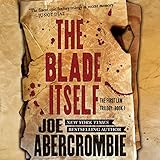
- Audible Audiobook
- Joe Abercrombie (Author) - Steven Pacey (Narrator)
- English (Publication Language)
- 09/08/2015 (Publication Date) - Orbit (Publisher)
4. Identify Trope Subversions: Actively seek instances where Abercrombie challenges conventional fantasy archetypes and narrative expectations.
- What to look for: Recognize the anti-heroic nature of protagonists, the grim realism of combat, and the absence of clear moral victories.
- Mistake to avoid: Reading it as traditional heroic fantasy; its strength lies in its critical examination and subversion of these established tropes.
5. Assess Grimdark Elements: Reflect on how the novel portrays a world devoid of easy answers and where survival necessitates moral compromise.
- What to look for: Observe the pervasive corruption, the brutal consequences of violence, and the characters’ internal struggles with their darker impulses.
- Mistake to avoid: Expecting a power fantasy or a story with a clearly triumphant hero; the “grim” aspect is central to its thematic core.
6. Evaluate Initial Character Development: Understand that character transformation in The Blade Itself is a gradual process, focused on establishing established flaws and hinting at potential future change.
- What to look for: Observe glimmers of vulnerability or deeper motivations beneath surface-level actions.
- Mistake to avoid: Demanding immediate, drastic character transformations; Abercrombie’s characters evolve through slow, often painful, experiences.
Common Myths About The Blade Itself
- Myth: The Blade Itself relies solely on gratuitous violence for impact.
- Why it matters: This perspective overlooks the novel’s intricate character studies and thematic depth. The violence is purposeful, illustrating the brutal realities of its world and the morally compromised lives of its inhabitants.
- Fix: Approach the novel with an emphasis on character motivation and thematic exploration, recognizing that the darkness serves a deconstructive purpose rather than being mere spectacle.
- Myth: The characters are irredeemable villains lacking any humanity.
- Why it matters: This overlooks Abercrombie’s nuanced portrayal of their internal conflicts and the vestiges of humanity they possess. Characters like Logen Ninefingers and Inquisitor Glokta are complex figures, despite their brutal actions and morally ambiguous paths.
- Fix: Seek out the glimmers of humanity, the internal struggles, and the rationalizations (however flawed) for their actions. Abercrombie specializes in anti-heroes, not simplistic villains.
The Blade Itself by Joe Abercrombie: A Critical Analysis
Joe Abercrombie’s The Blade Itself is a landmark novel that helped define the modern grimdark fantasy genre. It eschews traditional heroic narratives for a gritty, morally ambiguous reality where characters grapple with their inner demons and the brutal consequences of their choices. The novel’s primary strength lies in its unflinching portrayal of deeply flawed individuals navigating a world that offers few clear-cut answers.
Strengths of The Blade Itself
- Character Depth and Nuance: Abercrombie excels at creating complex, often morally reprehensible characters who nonetheless feel compellingly real. Logen Ninefingers, a notorious warrior, is depicted with his own internal code and struggles, while Inquisitor Glokta’s physical agony mirrors his psychological torment.
- Concrete Takeaway: Readers will find themselves invested in characters they might not traditionally root for, drawn in by their raw humanity and internal conflicts.
- Sharp, Witty Dialogue: The prose is infused with dark humor and incisive dialogue that reveals character and offers a cynical, yet often entertaining, commentary on events.
- Concrete Takeaway: The dialogue is not merely decorative; it’s a primary engine for characterization and thematic exposition, providing sharp insights into the characters’ minds.
- Subversion of Fantasy Tropes: The novel actively dismantles traditional heroic archetypes, presenting a world where power corrupts and noble intentions often lead to disastrous outcomes.
- Concrete Takeaway: Approach this novel as a deconstruction of heroic fantasy rather than a straightforward example. This offers a critical lens on heroism and morality in fiction.
Limitations of The Blade Itself
- Pacing and Plot Convergence: As the first book in a trilogy, The Blade Itself prioritizes character introduction and setup. Some readers may find the pacing deliberate, as plot threads are intentionally kept separate for much of the novel.
- Concrete Takeaway: Do not expect a fully resolved narrative arc within this single volume. Its primary function is to establish the world and characters for the subsequent books in the series.
- Bleak Tone: The grimdark nature means the novel offers little in the way of lightheartedness or traditional heroic triumph. For readers seeking escapism with clear moral victories, the pervasive cynicism and bleakness may be off-putting.
- Concrete Takeaway: This book is designed to challenge and provoke, not necessarily to provide comfort or straightforward wish fulfillment.
Expert Tips for Reading The Blade Itself
- Embrace the Ambiguity: Do not search for clear heroes or villains. Abercrombie’s strength lies in the gray areas of morality.
- Actionable Step: When a character performs a questionable action, focus on understanding their immediate motivations and past experiences that might have led them there, rather than solely on judgment.
- Common Mistake to Avoid: Prematurely labeling characters as purely “good” or “evil”; their complexity is a fundamental element of the narrative.
- Appreciate the Dialogue: The sharp, often cynical, dialogue is a hallmark of Abercrombie’s style and a critical tool for characterization.
- Actionable Step: Read the dialogue aloud or pay close attention to the subtext. Note how characters’ word choices reveal their personalities, insecurities, and hidden agendas.
- Common Mistake to Avoid: Skimming over dialogue sections, assuming they are merely conversational filler; they are often packed with crucial character insights.
- Understand it’s the First of Many: The Blade Itself is the beginning of a larger story. Character development and plot resolutions will span across the trilogy.
- Actionable Step: Be patient with the setup. Recognize that the novel is laying the groundwork for more significant character arcs and plot developments that will unfold in Before They Are Hanged and The Last Argument of Kings.
- Common Mistake to Avoid: Expecting a self-contained story with complete character arcs and plot resolutions; this book serves as an introduction.
BLOCKQUOTE_0
The Blade Itself by Joe Abercrombie: Key Elements
| Element | Description | Impact on Reader Experience |
|---|---|---|
| Character Focus | Deeply flawed, morally ambiguous protagonists like Logen Ninefingers and Inquisitor Glokta. | Creates compelling |
Decision Rules
- If reliability is your top priority for The Blade Itself by Joe Abercrombie, choose the option with the strongest long-term track record and support.
- If value matters most, compare total ownership cost instead of headline price alone.
- If your use case is specific, prioritize fit-for-purpose features over generic ‘best overall’ claims.