Exploring the Enigmatic ‘The Castle’ by Franz Kafka
Franz Kafka’s The Castle is a seminal work of 20th-century literature, renowned for its profound exploration of bureaucracy, alienation, and the elusive nature of authority. This guide offers a structured approach for readers seeking to navigate its thematic complexities and narrative ambiguities, focusing on understanding its unique challenges and how to engage with them effectively.
Who This Is For
- Readers new to Franz Kafka’s distinct literary style and thematic preoccupations, who seek a methodical introduction to his signature explorations of systemic oppression and existential unease.
- Students, academics, and dedicated readers aiming to deeply analyze the novel’s intricate portrayal of power structures, the individual’s struggle for meaning, and the psychological impact of bureaucratic entanglement.
What to Check First
Before immersing yourself in the world of The Castle by Franz Kafka, consider these foundational elements to enhance your comprehension and mitigate common interpretive hurdles.
- Authorial Context: Familiarize yourself with Franz Kafka’s life, particularly his experiences with legal and administrative systems and his complex relationship with paternal authority. This context is crucial for understanding the novel’s allegorical resonance and its critique of impersonal power.
- Key Kafkaesque Themes: Recognize recurring motifs in Kafka’s work, such as the individual’s battle against incomprehensible and overwhelming systems, the subjective experience of guilt and alienation, and the perpetual, often futile, search for justice or belonging.
- Narrative Ambiguity as a Device: Understand that The Castle is intentionally designed to resist definitive interpretation. Its literary power lies not in providing concrete answers but in posing persistent, unresolvable questions about existence, societal structures, and human agency.
- The Symbolic Weight of the Setting: Appreciate that the village and the imposing, unseen Castle are not mere backdrops but active embodiments of the oppressive, illogical forces that protagonist K. confronts. They represent the distant, inaccessible centers of power and meaning.
Step-by-Step Plan for Engaging With The Castle by Franz Kafka
Approaching The Castle requires a deliberate and patient strategy to effectively manage its labyrinthine narrative and thematic density.
1. Initial Objective: K.’s Arrival and the Village Encounter.
- Action: Read the opening chapters with intense focus on the protagonist, K., and his arrival in the village.
- What to Look For: K.’s initial interactions with the villagers and the subtle, pervasive indications of the Castle’s influence. Observe K.’s immediate attempts to assert his authority and the passive, yet firm, resistance he encounters from the village inhabitants.
- Mistake: Expecting immediate plot exposition or clearly defined character motivations. Kafka’s characters often operate based on an assumed obligation or a state of pervasive confusion rather than overt desire or rational intent, making their actions seem illogical to an external observer.
2. Mapping the Bureaucratic Labyrinth.
- Action: As you progress, meticulously map out the various administrative levels, officials, and their purported functions that K. encounters.
- What to Look For: The illogical hierarchies, the arbitrary nature of the rules, and the constant miscommunication that characterizes interdepartmental interactions. Note how the Castle’s bureaucracy appears to function independently of any discernible or logical purpose, creating a system that perpetuates itself.
- Mistake: Attempting to find a rational or coherent explanation for the bureaucracy’s internal workings. Its inherent irrationality and self-serving logic are central to the novel’s critique of systemic power and its dehumanizing effects.
3. Analyzing K.’s Persistent, Futile Efforts.
- Action: Track K.’s continuous attempts to gain access to the Castle or secure official recognition for his surveying role.
- What to Look For: The cyclical nature of his endeavors, the temporary successes that invariably lead to further dead ends, and his increasing isolation and desperation. Observe how his persistence becomes a defining characteristic, even as it yields no tangible results.
- Mistake: Judging K.’s actions solely by their effectiveness or outcome. His persistence, even in the face of overwhelming futility, is a key aspect of his character and the novel’s exploration of human behavior under duress and the persistence of hope against all odds.
4. Examining Supporting Characters as Systemic Embodiments.
- Action: Pay close attention to the roles and interactions of supporting characters, such as Frieda, Klamm, Burgel, and the various village officials.
- What to Look For: How these characters function as intermediaries, obstacles, or reflections of the system itself. Observe their own subservience, complicity, or internal conflicts within the bureaucratic framework. Note their adherence to protocols that seem to serve no one.
- Mistake: Underestimating the significance of seemingly minor characters. In Kafka’s constructed world, even peripheral figures often embody crucial aspects of the overarching systemic force, revealing its pervasive nature and its influence on every level of society.
To fully appreciate the depth of Kafka’s vision, having a well-regarded edition of ‘The Castle’ is essential. This version offers a clear translation and helpful annotations.
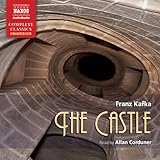
- Audible Audiobook
- Franz Kafka (Author) - Allan Corduner (Narrator)
- English (Publication Language)
- 02/04/2011 (Publication Date) - Naxos AudioBooks (Publisher)
5. Recognizing the Absence of Traditional Resolution.
- Action: As you approach the novel’s conclusion, consciously acknowledge the lack of definitive answers regarding K.’s status or the Castle’s true nature.
- What to Look For: The continuation of K.’s struggle, the ambiguous final pronouncements, and the narrative’s conclusion without K. achieving his stated goal or fully comprehending his predicament. The ending emphasizes ongoing struggle rather than closure.
- Mistake: Seeking or expecting a traditional narrative closure with a clear resolution of K.’s quest. The novel’s enduring impact stems from its unresolved tension and the profound, lingering questions it compels the reader to consider about authority, purpose, and existence.
Common Mistakes When Reading The Castle by Franz Kafka
Navigating Kafka’s literary landscape presents unique challenges that can impede comprehension. Awareness of these common pitfalls can significantly enhance reader engagement and interpretation of The Castle by Franz Kafka.
- Mistake: Searching for a singular, definitive allegorical meaning.
- Why it Matters: Kafka’s work is deliberately multivalent and resistant to easy categorization. Imposing a fixed interpretation can obscure the novel’s broader commentary on systemic power, existential alienation, and the human behavior.
- Fix: Approach the text as a series of interconnected questions and states of being rather than a puzzle with a single solution. Focus on the emotional and psychological impact of K.’s predicament and the systemic absurdity, allowing for multiple layers of interpretation.
- Mistake: Expecting logical character motivations or strict plot coherence.
- Why it Matters: The characters and events in The Castle often operate on an internal logic that defies conventional realism. This is a stylistic choice designed to reflect the absurdity and irrationality of the systems being depicted, mirroring how such systems can feel to those trapped within them.
- Fix: Accept the inherent strangeness of the narrative. Focus on how characters react to their circumstances and the emotional truth of their experiences, even if their actions appear illogical or contradictory from an external, rational perspective.
- Mistake: Getting excessively bogged down in the minutiae of the bureaucracy.
- Why it Matters: While the bureaucratic details are crucial to establishing the novel’s atmosphere of oppressive order, they primarily serve a larger thematic purpose. Focusing too intently on memorizing every official or rule can distract from the novel’s core concerns about power, alienation, and the human spirit.
- Fix: Identify the patterns of bureaucratic behavior—its inefficiency, its self-perpetuating nature, its dehumanizing effects—rather than fixating on individual components. Understand the bureaucracy as a pervasive, oppressive force that shapes the lives of all involved.
- Mistake: Judging K. as a traditional hero or anti-hero.
- Why it Matters: K. is a figure of profound ambiguity. He is neither entirely sympathetic nor entirely reprehensible, and his effectiveness is consistently undermined by the system he confronts. He represents a more complex human struggle than typical archetypes allow.
- Fix: View K. as an everyman figure thrust into an impossible and absurd situation. His struggle is less about heroic triumph and more about the human response in the face of overwhelming, impersonal forces, highlighting the difficulty of asserting individuality within rigid structures.
Expert Tips for Understanding The Castle
To deepen your appreciation and comprehension of The Castle by Franz Kafka, consider these practical insights derived from literary analysis and reader engagement strategies.
- Tip: Emphasize the psychological landscape over external action.
- Actionable Step: Focus on K.’s internal state—his confusion, frustration, anxiety, and the subtle erosion of his sense of self—as much as his external actions and interactions.
- Common Mistake to Avoid: Overlooking the psychological toll of navigating an illogical system, leading to a superficial understanding of K.’s struggle and a failure to grasp the novel’s existential dimensions.
- Tip: Analyze the function of language and communication as tools of power.
- Actionable Step: Pay close attention to the dialogues, the official pronouncements, and the constant misinterpretations. Note how language is used to obfuscate, control, and maintain the bureaucracy’s power, often through convoluted phrasing and deliberate ambiguity.
- Common Mistake to Avoid: Assuming that official communications or character dialogues are intended to be clear or truthful. Their ambiguity, redundancy, and circularity are often the point, serving to disorient and control.
- Tip: Consider the novel as a commentary on modern alienation and the search for belonging.
- Actionable Step: Reflect on how the bureaucratic system isolates individuals, strips them of agency, and creates a sense of meaninglessness, drawing parallels to contemporary societal structures and the challenges of finding one’s place.
- Common Mistake to Avoid: Reading the novel solely as a historical artifact or a personal allegory for Kafka himself, rather than as a broader, enduring critique of modern existence and the human need for validation and purpose.
BLOCKQUOTE_0
Common Myths About The
Quick Comparison
| Option | Best for | Pros | Watch out |
|---|---|---|---|
| Who This Is For | General use | Readers new to Franz Kafka’s distinct literary style and thematic preoccupati… | Mistake: Expecting immediate plot exposition or clearly defined character mot… |
| What to Check First | General use | Students, academics, and dedicated readers aiming to deeply analyze the novel… | Mistake: Attempting to find a rational or coherent explanation for the bureau… |
| Step-by-Step Plan for Engaging With The Castle by Franz Kafka | General use | Authorial Context: Familiarize yourself with Franz Kafka’s life, particularly… | Mistake: Judging K.’s actions solely by their effectiveness or outcome. His p… |
| Common Mistakes When Reading The Castle by Franz Kafka | General use | Key Kafkaesque Themes: Recognize recurring motifs in Kafka’s work, such as th… | Mistake: Underestimating the significance of seemingly minor characters. In K… |
Decision Rules
- If reliability is your top priority for The Castle by Franz Kafka, choose the option with the strongest long-term track record and support.
- If value matters most, compare total ownership cost instead of headline price alone.
- If your use case is specific, prioritize fit-for-purpose features over generic ‘best overall’ claims.