James Ellroy’s ‘White Jazz’ Crime Novel
This analysis of White Jazz by James Ellroy is for readers who approach densely plotted crime fiction with a critical eye, seeking to understand its structural mechanics, thematic underpinnings, and potential pitfalls. It offers a balanced perspective for those who appreciate narrative complexity but remain wary of uncritical praise.
Who This Is For
- Readers who relish intricate, demanding narratives and are willing to invest significant mental effort to decipher them.
- Fans of James Ellroy who are not just looking for more of his signature style but are interested in a critical assessment of its effectiveness in White Jazz.
What to Check First
Before immersing yourself in White Jazz, consider these critical points:
- Narrative Density: Ellroy’s prose is famously dense and fast-paced, characterized by a vast cast and interwoven plotlines. Expect a challenging read that demands sustained attention.
- Character Ambiguity: Characters in White Jazz operate in shades of gray. Avoid assuming straightforward motivations or moral alignments; their actions are often driven by complex, self-serving impulses.
- Historical Setting’s Role: The novel is deeply embedded in 1950s Los Angeles. Understanding the era’s political climate, racial dynamics, and Hollywood undercurrents is crucial for grasping the narrative’s context and thematic weight.
- Pacing and Structure: Ellroy’s stylistic choices—short, punchy sentences and abrupt scene shifts—create a unique rhythm. Be prepared for a narrative that prioritizes momentum over leisurely exposition.
Step-by-Step Plan for Engaging with White Jazz
Navigating White Jazz requires a deliberate and analytical approach to fully appreciate its construction and thematic depth.
1. Initial Character Triage: Upon starting, identify the central figures and their primary affiliations.
- Action: Focus on Detective Dave Klein, his direct superiors, and any figures explicitly linked to the unfolding assassination plots. Note their stated roles and immediate conflicts.
- What to look for: Observe their initial connections and potential antagonisms.
- Mistake to avoid: Becoming overwhelmed by the sheer number of names; prioritize those actively driving the plot or directly interacting with Klein.
2. Map the Core Conflicts: Identify the primary, intersecting narrative threads.
- Action: Trace the assassination schemes, the internal LAPD power struggles, and the influence of organized crime.
- What to look for: Observe how these elements begin to converge and create tension.
- Mistake to avoid: Treating each conflict as isolated; the novel’s strength lies in their intricate entanglement.
3. Analyze Ellroy’s Stylistic Cadence: Pay close attention to the sentence structure and paragraph length.
- Action: Note how short, declarative sentences and abrupt transitions contribute to the sense of urgency and paranoia.
- What to look for: The effect of shifting perspectives and the overall rhythm.
- Mistake to avoid: Assuming the style is merely superficial; it is integral to conveying the novel’s atmosphere and the characters’ fragmented realities.
4. Deconstruct the Dialogue: Ellroy’s dialogue is often laconic and layered with subtext.
- Action: Analyze what is implied rather than stated in conversations.
- What to look for: How dialogue reveals character motivations through omissions or indirect expressions.
- Mistake to avoid: Taking dialogue at face value; characters are frequently engaged in deception and manipulation.
5. Identify Thematic Undertones: As the narrative progresses, look for recurring ideas and motifs.
- Action: Scan for themes of corruption, betrayal, the illusion of control, and moral compromises.
- What to look for: The underlying messages about power structures and human nature.
- Mistake to avoid: Focusing solely on plot mechanics; the thematic resonance is crucial to the novel’s lasting impact.
6. Embrace Narrative Ambiguity: Recognize that not all plot threads will be neatly resolved.
- Action: Accept the deliberate unresolved questions and moral gray areas Ellroy leaves for the reader.
- What to look for: The deliberate ambiguities that encourage reader interpretation.
- Mistake to avoid: Seeking definitive closure; the novel’s power is in its unflinching portrayal of a morally compromised world.
If you’re looking to dive into James Ellroy’s signature style of gritty crime fiction, his novel ‘White Jazz’ is a compelling choice. It’s the final installment of his acclaimed ‘L.A. Quartet’ and offers a deep dive into the dark underbelly of mid-20th century Los Angeles.
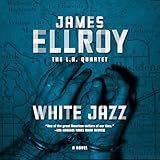
- Audible Audiobook
- James Ellroy (Author) - Scott Brick (Narrator)
- English (Publication Language)
- 06/05/2007 (Publication Date) - Random House Audio (Publisher)
White Jazz by James Ellroy: A Noir Examination
James Ellroy’s White Jazz stands as a formidable, if often challenging, entry in his oeuvre, a meticulously constructed edifice of crime, corruption, and the dark underbelly of mid-20th century Los Angeles. This novel, the final installment of his acclaimed “L.A. Quartet,” plunges readers into a world where loyalty is a fleeting commodity and survival often depends on mastering the art of deception.
The narrative centers on LAPD Lieutenant Dave Klein, a man caught in a web of his own making. Tasked with investigating a series of high-profile assassinations and entangled with a dangerous femme fatale, Klein finds himself navigating a treacherous landscape of political intrigue, organized crime, and internal police department power plays. Ellroy masterfully orchestrates a symphony of violence and paranoia, where every character seems to harbor a hidden agenda, and trust is a luxury few can afford. The prose is characteristically Ellroy: sharp, percussive, and relentlessly propulsive, mirroring the frantic pace of the events it describes.
One of the novel’s significant strengths lies in its intricate plotting. Ellroy weaves together multiple storylines with a precision that can be both dazzling and disorienting. The sheer density of characters and their interconnected machinations demand a high level of reader engagement. For those accustomed to more straightforward crime narratives, White Jazz offers a different kind of reward: the satisfaction of piecing together a complex puzzle. The novel doesn’t shy away from the grim realities of its setting, painting a vivid, unflinching portrait of a city teetering on the edge of moral decay.
However, the very qualities that make White Jazz compelling can also be its most significant hurdles. The relentless pace and the sheer volume of information can, at times, feel overwhelming. Readers may find themselves needing to pause, re-read passages, or even sketch out character relationships to keep pace. This is not a novel to be skimmed; it demands a dedicated reader willing to immerse themselves in its intricate world. The stylistic choices, while effective in creating atmosphere, can also contribute to a sense of detachment, as the emotional arcs of characters are often subsumed by the overwhelming machinations of the plot.
Thematic Resonance in White Jazz by James Ellroy
Thematically, White Jazz explores the corrosive effects of power and the elusive nature of justice in a world rife with corruption. James Ellroy uses the backdrop of 1950s Los Angeles not merely as a setting but as a character in itself, a sprawling, seductive, and ultimately dangerous entity. The novel delves into the compromises individuals make to survive and thrive within such a system. The pervasive sense of paranoia and betrayal underscores Ellroy’s bleak vision of human nature, where ambition and self-preservation often override any semblance of morality. The exploration of racial tensions and the rigid social structures of the era add another layer of complexity, revealing how power dynamics intersect with identity.
BLOCKQUOTE_0
This quote encapsulates the ethos that permeates Ellroy’s work, and particularly this novel. It speaks to the moral compromises necessary for characters like Dave Klein to navigate the treacherous landscape they inhabit. The novel presents a world where innocence is a liability and a willingness to engage in morally questionable acts is a prerequisite for advancement, or even survival.
Common Myths About White Jazz by James Ellroy
- Myth 1: White Jazz is a straightforward procedural.
- Correction: This novel is a departure from traditional crime fiction. Its complexity lies in its interwoven plotlines, vast cast, and fragmented narrative structure, demanding more than passive reading.
- Evidence: The sheer number of characters (over 50 named individuals with significant roles) and the non-linear progression of events defy simple procedural categorization.
- Myth 2: Ellroy’s style is purely for shock value.
- Correction: While Ellroy’s prose is often brutal and unflinching, its percussive, clipped nature is integral to creating the pervasive sense of paranoia, desperation, and moral decay that defines the novel’s atmosphere and thematic concerns.
- Evidence: The relentless pace and staccato sentences mirror the frantic, high-stakes environment of 1950s Los Angeles, making the reader experience the characters’ disorientation and constant threat.
Expert Tips for Navigating Ellroy’s L.A.
- Tip 1: Embrace the “Ellroy-esque” Pace.
- Actionable Step: Read with a sense of urgency, mirroring the clipped prose. Do not linger excessively on individual sentences; allow the momentum to carry you through the immediate action.
- Common Mistake to Avoid: Trying to parse every single word for hidden meaning on the first pass, which can slow down comprehension and create anxiety about missing crucial details.
- Tip 2: Utilize a Character and Plot Tracker.
- Actionable Step: Keep a running list of characters, their affiliations, and key plot points as they emerge. A simple notebook or digital document can be invaluable for cross-referencing and maintaining clarity.
- Common Mistake to Avoid: Relying solely on memory for a novel with a large cast and complex interconnections, leading to confusion about character identities and the progression of events.
- Tip 3: Understand the “L.A. Quartet” Connection (as a Decision Criterion).
- Actionable Step: If your primary constraint is maximizing thematic depth and character continuity, consider reading the preceding novels in the “L.A. Quartet” (The Black Dahlia, The Big Nowhere, L.A. Confidential) before White Jazz.
- Why it matters: This provides crucial context for recurring characters and thematic evolution, enhancing the understanding of White Jazz by James Ellroy.
Quick
Quick Comparison
| Option | Best for | Pros | Watch out |
|---|---|---|---|
| Who This Is For | General use | Readers who relish intricate, demanding narratives and are willing to invest… | Character Ambiguity: Characters in White Jazz operate in shades of gray. Av… |
| What to Check First | General use | Fans of James Ellroy who are not just looking for more of his signature style… | Mistake to avoid: Becoming overwhelmed by the sheer number of names; prioriti… |
| Step-by-Step Plan for Engaging with White Jazz | General use | Narrative Density: Ellroy’s prose is famously dense and fast-paced, character… | Mistake to avoid: Treating each conflict as isolated; the novel’s strength li… |
| White Jazz by James Ellroy A Noir Examination | General use | Historical Setting’s Role: The novel is deeply embedded in 1950s Los Angeles.… | Mistake to avoid: Assuming the style is merely superficial; it is integral to… |
Decision Rules
- If reliability is your top priority for White Jazz by James Ellroy, choose the option with the strongest long-term track record and support.
- If value matters most, compare total ownership cost instead of headline price alone.
- If your use case is specific, prioritize fit-for-purpose features over generic ‘best overall’ claims.