Italo Calvino’s Unique Narrative: The Castle of Crossed Destinies
The Castle of Crossed Destinies by Italo Calvino: Quick Answer
- The Castle of Crossed Destinies by Italo Calvino is a postmodern novel that uses tarot cards as a narrative engine, creating fragmented yet interconnected stories.
- Its strength lies in its experimental structure and intellectual playfulness, offering a unique reading experience.
- Readers seeking traditional linear plots or straightforward character development may find it challenging.
Who This Is For
- Readers interested in experimental literature and postmodern narrative techniques.
- Those who appreciate intellectual puzzles and metafictional explorations of storytelling.
If you’re looking for a truly unique literary experience, Italo Calvino’s ‘The Castle of Crossed Destinies’ is a must-read. This novel uses tarot cards to weave a tapestry of interconnected stories, offering a fascinating exploration of narrative itself.
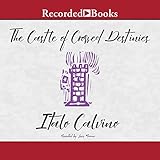
- Audible Audiobook
- Italo Calvino (Author) - Luis Moreno (Narrator)
- English (Publication Language)
- 08/21/2019 (Publication Date) - Recorded Books (Publisher)
What to Check First
- Familiarity with Tarot: While not strictly necessary, a basic understanding of tarot card imagery and archetypes can enhance appreciation.
- Patience for Ambiguity: The novel embraces non-linear storytelling and leaves much to the reader’s interpretation.
- Interest in Metafiction: The book is self-aware about its own construction, frequently drawing attention to the act of narration.
- Previous Calvino Works: If you enjoyed If on a winter’s night a traveler, you will likely find similar intellectual delights here.
Step-by-Step Plan for Understanding The Castle of Crossed Destinies
This guide outlines how to approach and decipher the narrative structure of The Castle of Crossed Destinies by Italo Calvino.
1. Acknowledge the Premise: Begin by recognizing that the narrative is generated by tarot card spreads.
- What to look for: The initial setup where characters, unable to speak, use tarot cards to tell their stories.
- Mistake to avoid: Expecting characters to communicate through dialogue; their primary mode is the card arrangement.
2. Follow the Card Sequences: Each chapter or section is dictated by a new tarot spread.
- What to look for: The transition from one character’s story to another, often initiated by a new arrangement of cards.
- Mistake to avoid: Trying to force a single, continuous plot across all card sequences; each spread offers a distinct narrative fragment.
3. Interpret the Archetypes: Understand that the cards represent archetypal figures, actions, and situations.
- What to look for: How each card’s traditional meaning (e.g., The Fool, The Lovers, The Tower) contributes to the unfolding narrative.
- Mistake to avoid: Over-reliance on rigid, literal interpretations; Calvino plays with and subverts traditional meanings.
4. Connect the Fragments: Look for thematic or characterological links between seemingly disparate stories.
- What to look for: Recurring motifs, character echoes, or thematic resonances that bind the narratives together.
- Mistake to avoid: Disregarding potential connections because the plot jumps; the cohesion is often thematic or symbolic, not strictly chronological.
5. Embrace the Metafiction: Recognize the novel’s commentary on the nature of storytelling itself.
- What to look for: Instances where the narrative draws attention to its own artificiality or the process of creation.
- Mistake to avoid: Treating the book as a straightforward fantasy or adventure; its core is an exploration of narrative mechanics.
6. Observe the Visual Structure: Pay attention to how the text is presented on the page, often mimicking card layouts.
- What to look for: The typographical arrangement and visual cues that reinforce the tarot structure.
- Mistake to avoid: Skimming text without noticing the layout; the visual presentation is integral to the narrative experience.
7. Reconstruct the Narratives: After reading, consider how you might reassemble the stories from the card sequences.
- What to look for: The reader’s active role in creating meaning and coherence from the provided elements.
- Mistake to avoid: Feeling frustrated by the lack of a definitive, author-provided resolution; the ambiguity is intentional.
The Castle of Crossed Destinies by Italo Calvino: A Structuralist Examination
Calvino’s novel presents a fascinating case study in structuralist and postmodern approaches to narrative. Instead of relying on character arcs or plot progression in a conventional sense, the stories are generated by the placement of tarot cards. This method intentionally disrupts linear causality, forcing the reader to engage with narrative as a combinatorial system. The novel is less about what happens and more about how stories can be constructed from a finite set of elements. The reader is positioned not as a passive recipient but as an active interpreter, tasked with deciphering the symbolic language of the cards and weaving together the fragmented tales. This approach challenges the very notion of authorship, suggesting that meaning is co-created between the text and its audience.
Common Myths About The Castle of Crossed Destinies
- Myth 1: The book requires deep knowledge of tarot to be understood.
- Why it matters: This deters readers who are interested in Calvino’s experimental style but feel intimidated by the tarot element.
- Correction: While familiarity with tarot can enrich the experience, Calvino provides enough context and symbolic resonance within the text that a reader can follow the narrative logic even without prior tarot expertise. The cards function more as symbolic prompts than as a rigid interpretive key.
- Myth 2: The novel is simply a collection of random, unconnected stories.
- Why it matters: This mischaracterization overlooks the intricate connections and thematic resonances Calvino masterfully weaves between the fragmented narratives.
- Correction: The “randomness” is a controlled literary device. The tarot cards, though generating distinct tales, create a complex web of thematic parallels, character archetypes, and narrative echoes. The reader’s task is to discern these connections, making the act of reading a process of discovery and synthesis.
- Myth 3: The book is inaccessible and overly academic.
- Why it matters: This perception can make potential readers shy away, assuming it’s only for literary scholars.
- Correction: While intellectually stimulating, the novel is driven by imaginative storytelling and a playful engagement with narrative possibilities. The “academic” quality stems from its exploration of literary theory, but the experience of reading it is often one of wonder and surprise, akin to solving a complex, beautiful puzzle.
Expert Tips for Navigating Calvino’s Narrative Structure
- Tip 1: Embrace the lack of a traditional protagonist.
- Actionable Step: Instead of searching for a central character to follow, focus on the recurring archetypes and narrative functions that appear across different card spreads.
- Common Mistake to Avoid: Getting frustrated by the absence of a stable, relatable protagonist, which can lead to abandoning the book prematurely.
- Tip 2: Treat each card spread as a self-contained narrative unit.
- Actionable Step: Read each sequence of cards as a mini-story, identifying its core elements and characters, before looking for connections to other sequences.
- Common Mistake to Avoid: Trying to force a continuous, chronological plot from one spread to the next, which is not how the novel is constructed.
- Tip 3: Pay attention to the author’s notes and framing devices.
- Actionable Step: Read the introductory and concluding sections carefully, as they often provide crucial context for Calvino’s experimental method.
- Common Mistake to Avoid: Skipping the framing material, which can leave the reader less equipped to understand the underlying principles of the novel’s design.
BLOCKQUOTE_0
Decision Rules
- If reliability is your top priority for The Castle of Crossed Destinies by Italo Calvino, choose the option with the strongest long-term track record and support.
- If value matters most, compare total ownership cost instead of headline price alone.
- If your use case is specific, prioritize fit-for-purpose features over generic ‘best overall’ claims.
FAQ
- Q1: Is it necessary to read The Castle of Crossed Destinies before The Tale of the Rabbit-Hatter?
A1: Yes, it is highly recommended. The Tale of the Rabbit-Hatter is a direct sequel and relies heavily on the narrative framework and thematic explorations established in The Castle of Crossed Destinies.
- Q2: How does Calvino’s use of tarot differ from other authors who incorporate symbolic systems?
A2: Calvino uses the tarot not merely as a source of symbolism, but as a generative engine for narrative structure. The cards dictate the plot’s progression and character interactions, making the system itself a central element of the story, rather than just decorative or thematic.
- Q3: What kind of emotional experience can I expect from this book?
A3: The emotional experience is primarily intellectual and contemplative. Readers may feel a sense of wonder, curiosity, and satisfaction from deciphering the complex narrative, rather than deep emotional engagement with characters.
| Aspect | Description | Reader Takeaway |
|---|---|---|
| Narrative Engine | Tarot card spreads dictate story fragments and character interactions. | Expect non-linear plots and symbolic rather than literal character development. |
| Reader Role | Active interpreter deciphering symbolic language and connecting fragments. | Your engagement is crucial to constructing meaning from the text. |
| Thematic Focus | Exploration of storytelling, chance, fate, and the nature of narrative. | The book offers insights into literary theory through imaginative narrative. |
| Structural Strength | Innovative and intellectually stimulating use of combinatorial literature. | A unique reading experience that challenges traditional narrative conventions. |
| Potential Limitation | Can be challenging for readers seeking conventional plot and character arcs. | May require patience and a willingness to engage with experimental form. |