Marilynne Robinson’s Home Explored
Quick Answer
- For the contemplative reader: This novel offers a profound exploration of family, faith, and the complexities of belonging.
- Focus on character and theme: Expect a slow-burn narrative driven by internal reflection and nuanced dialogue rather than plot-heavy action.
- A return to roots: The story centers on Jack Boughton’s unexpected homecoming to his estranged father and family in rural Iowa.
Who This Is For
- Readers who appreciate character-driven literary fiction and contemplative prose.
- Those interested in themes of faith, redemption, and the enduring nature of family bonds.
For readers seeking a profound exploration of family, faith, and belonging, Marilynne Robinson’s ‘Home’ is an exceptional choice. This novel delves into the complexities of homecoming and redemption.
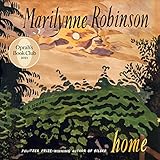
- Audible Audiobook
- Marilynne Robinson (Author) - Maggi-Meg Reed (Narrator)
- English (Publication Language)
- 09/02/2008 (Publication Date) - Macmillan Audio (Publisher)
What to Check First
- Author’s Style: Marilynne Robinson’s writing is known for its deliberate pacing, rich internal monologues, and theological undertones. If you prefer fast-paced thrillers, this may not be the immediate choice.
- Theological Elements: Faith and its role in everyday life are central to Robinson’s work. Be prepared for discussions that engage with religious thought, though not necessarily from a strictly orthodox perspective.
- Focus on the Interior: The novel excels at portraying the inner lives of its characters. The “action” often occurs within their thoughts and emotional landscapes.
Step-by-Step Plan: Engaging with Home by Marilynne Robinson
1. Initial Immersion: Begin by reading the first fifty pages. What to look for: Robinson’s characteristic lyrical prose and the establishment of the central conflict—Jack’s return. Mistake to avoid: Expecting immediate plot resolution; the narrative unfolds gradually.
2. Character Mapping: As you progress, create a mental or written map of the Boughton family dynamics. What to look for: The unspoken tensions, past grievances, and the subtle ways characters interact. Mistake to avoid: Overlooking the significance of silences and indirect communication.
3. Thematic Identification: Pay attention to recurring motifs like faith, home, and memory. What to look for: How these themes are explored through the characters’ experiences and dialogues. Mistake to avoid: Dismissing the theological discussions as tangential; they are integral to the novel’s core.
4. Dialogue Analysis: Examine the conversations closely, especially those between Jack and his father. What to look for: The subtext and the emotional weight carried by seemingly simple exchanges. Mistake to avoid: Focusing solely on the literal meaning of words; much is conveyed implicitly.
5. Setting as Character: Consider how the physical setting of rural Iowa influences the characters and their relationships. What to look for: Descriptions of the landscape, the house, and their symbolic resonance. Mistake to avoid: Treating the setting as mere backdrop; it actively shapes the narrative.
6. Pacing Appreciation: Allow yourself to settle into the novel’s measured pace. What to look for: The deepening of understanding that comes from sustained attention to character and interiority. Mistake to avoid: Rushing through sections; the rewards lie in patient observation.
7. Reflection on Home: Reflect on the novel’s exploration of what “home” truly means, beyond a physical location. What to look for: The characters’ search for belonging and acceptance. Mistake to avoid: Limiting the definition of home to familial ties; Robinson expands this concept.
Common Myths About Home by Marilynne Robinson
- Myth: The novel is a straightforward tale of family reconciliation.
- Why it matters: This assumption can lead to disappointment if the reader expects a simple, happy ending. Robinson’s exploration is far more nuanced, acknowledging lingering pain and the difficulty of true forgiveness.
- Fix: Approach the novel with an understanding that reconciliation is a complex, often imperfect process, marked by ongoing struggle and tentative steps rather than outright resolution.
- Myth: The book is exclusively for religious readers.
- Why it matters: While faith is a significant theme, the novel’s strength lies in its universal exploration of human connection, regret, and the search for meaning, which resonates regardless of a reader’s personal beliefs.
- Fix: Engage with the novel’s spiritual dimensions as a lens through which to view human experience, rather than a prerequisite for understanding or enjoyment.
Exploring the Depths of Home by Marilynne Robinson
Marilynne Robinson’s Home delves into the intricate landscape of family, faith, and the elusive nature of belonging. The novel, set in rural Iowa, revisits characters and themes familiar to readers of her previous works, particularly Gilead. However, Home stands independently as a profound meditation on the ties that bind us, even when frayed by time and distance. The narrative centers on Jack Boughton, who returns to his childhood home after years of estrangement, seeking refuge and perhaps redemption. His presence disrupts the quiet lives of his aging father, Reverend John Ames Boughton, and his sisters, Glory and Della.
Robinson masterfully crafts an atmosphere of quiet intensity, where profound emotional shifts occur beneath the surface of everyday interactions. The prose is rich and contemplative, inviting readers to immerse themselves in the inner lives of the characters. This is not a novel driven by external plot twists; instead, its power lies in the slow unfolding of understanding, the examination of past hurts, and the enduring, often complicated, nature of familial love. The central tension arises from Jack’s return and the family’s struggle to reconcile their memories of him with the man who has reappeared.
BLOCKQUOTE_0
This quote encapsulates the novel’s central concern: the weight of memory and its impact on present relationships. Robinson uses the Boughton family to explore broader questions about grace, forgiveness, and the possibility of finding home, both within oneself and within the flawed embrace of others. The novel’s strength lies in its refusal to offer easy answers, instead presenting a deeply human portrait of people grappling with their past and attempting to forge a future.
Home by Marilynne Robinson: Strengths and Limitations
- Strengths:
- Profound Characterization: Robinson excels at rendering complex internal lives. The characters, particularly the Boughton family members, feel achingly real, their motivations and struggles meticulously detailed.
- Lyrical Prose: The writing is beautiful, often poetic, drawing the reader into the emotional and spiritual nuances of the narrative.
- Thematic Depth: The novel thoughtfully explores themes of faith, doubt, family, and the search for meaning in a way that is both intellectually stimulating and emotionally resonant.
- Atmospheric Setting: The rural Iowa setting is rendered with a palpable sense of place, contributing significantly to the novel’s mood and themes.
- Limitations:
- Pacing: The deliberate, slow pace may be challenging for readers accustomed to more plot-driven narratives. The emphasis is on introspection rather than action.
- Subtlety: Much of the emotional and thematic weight is conveyed subtly, requiring close attention. Readers looking for overt pronouncements or dramatic confrontations might find the novel understated.
- Connection to Gilead: While Home can be read independently, a familiarity with Gilead enriches the reading experience, as it revisits characters and theological underpinnings established in that earlier novel.
Expert Tips for Reading Home
- Tip 1: Embrace the Quiet.
- Actionable Step: Dedicate uninterrupted reading time, allowing yourself to sink into the novel’s contemplative rhythm.
- Common Mistake to Avoid: Trying to rush through chapters or skim passages. The novel’s power is in its density and the subtle unfolding of character and theme.
- Tip 2: Focus on Dialogue Subtext.
- Actionable Step: Pay close attention to what is not said, as well as what is. Notice the pauses, hesitations, and indirect phrasing in conversations.
- Common Mistake to Avoid: Interpreting dialogue solely at face value. The emotional and psychological undercurrents are crucial to understanding the characters’ relationships.
- Tip 3: Consider the Theological Framework.
- Actionable Step: Reflect on how the characters’ faith (or lack thereof) informs their decisions, their understanding of themselves, and their relationships.
- Common Mistake to Avoid: Dismissing the religious elements as inaccessible or irrelevant. Robinson uses faith as a lens to explore universal human questions about love, sin, and redemption.
Quick Comparison
| Option | Best for | Pros | Watch out |
|---|---|---|---|
| Quick Answer | General use | For the contemplative reader: This novel offers a profound exploration of fam… | Common Mistake to Avoid: Trying to rush through chapters or skim passages. Th… |
| Who This Is For | General use | Focus on character and theme: Expect a slow-burn narrative driven by internal… | Common Mistake to Avoid: Interpreting dialogue solely at face value. The emot… |
| What to Check First | General use | A return to roots: The story centers on Jack Boughton’s unexpected homecoming… | Common Mistake to Avoid: Dismissing the religious elements as inaccessible or… |
| Step-by-Step Plan Engaging with Home by Marilynne Robinson | General use | Readers who appreciate character-driven literary fiction and contemplative pr… | Common Mistake to Avoid: Trying to rush through chapters or skim passages. Th… |
Decision Rules
- If reliability is your top priority for Home by Marilynne Robinson, choose the option with the strongest long-term track record and support.
- If value matters most, compare total ownership cost instead of headline price alone.
- If your use case is specific, prioritize fit-for-purpose features over generic ‘best overall’ claims.
FAQ
- Q: Is Home a sequel to Marilynne Robinson’s Gilead?
- A: Home is part of the same literary universe as Gilead and features some of the same characters, particularly Reverend John Ames Boughton and his family. However, it can be read as a standalone novel, though familiarity with Gilead may enhance understanding of certain character dynamics and theological themes.
- Q: What is the primary theme of Home?
- A: The primary themes revolve around the complex nature of family, the search for belonging and home, the weight of the past, and the possibility of grace and redemption, often explored through a lens of faith and doubt.
- Q: How does the setting of rural Iowa contribute to the novel?
- A: The rural Iowa setting is not merely a backdrop but an integral element that shapes the characters’ lives and the novel’s atmosphere. It evokes a sense of tradition, quietude, and the enduring connection to the land, which contrasts with the internal turmoil of the characters.