Irène Némirovsky’s Suite Française: A Historical Perspective
Suite Française by Irène Némirovsky: Quick Answer
- Suite Française by Irène Némirovsky offers a unique, dual-perspective look at France during the early days of World War II and the German occupation.
- It is a vital historical document and a compelling literary work, though its fragmented nature as an unfinished posthumous publication should be considered.
- Readers interested in intimate, character-driven narratives set against a backdrop of profound historical upheaval will find this work rewarding.
Who This Is For
- Readers seeking deeply personal accounts of historical events, focusing on individual experiences and societal shifts.
- Those interested in exploring themes of collaboration, resistance, and survival through nuanced character portrayals, rather than broad strategic overviews.
What to Check First
Before diving into Suite Française, consider these points:
- Publication Context: This novel was published posthumously and remains unfinished. Némirovsky died in Auschwitz before completing it. The published work consists of two completed parts and extensive notes for the planned third.
- Narrative Structure: The book is divided into two distinct parts: “Tempête en juin” (Storm in June), depicting the mass exodus from Paris, and “Dolce” (Sweet), focusing on life in a German-occupied village. The contrast between these sections is deliberate and significant.
- Character Focus: Némirovsky excels at portraying a wide array of characters, from the wealthy bourgeoisie to simple village folk, capturing their varied reactions to the unfolding crisis. The strength lies in these individual portraits.
- Historical Accuracy vs. Literary Interpretation: While grounded in the historical reality of 1940 France, the novel is a work of fiction. Némirovsky uses historical events as a stage for exploring human nature under duress.
Step-by-Step Plan for Understanding Suite Française
To fully appreciate Suite Française by Irène Némirovsky, consider approaching it with an analytical framework:
1. Read “Tempête en juin”: Focus on the chaotic flight from Paris. Observe Némirovsky’s depiction of societal breakdown, class distinctions, and the immediate panic.
- What to look for: The stark contrast between characters like the wealthy Arpel family and the fleeing masses. Note how fear manifests differently across social strata.
- Mistake to avoid: Dismissing the Arpels as mere caricatures; their superficiality is a key element of Némirovsky’s social commentary.
2. Transition to “Dolce”: Shift focus to the village of Bussy, under German occupation. Pay attention to the slower, more insidious nature of the occupation and the complex relationships that develop.
- What to look for: The evolving dynamic between the French villagers and the occupying soldiers, particularly the interactions involving Lieutenant von Falkenrath and the young Lucille.
- Mistake to avoid: Expecting overt acts of resistance or clear-cut heroes and villains. Némirovsky’s strength lies in depicting moral ambiguity and the compromises people make.
For a profound exploration of France during the early days of WWII and the German occupation, Irène Némirovsky’s Suite Française is an essential read. This powerful work offers a dual-perspective look at the unfolding crisis.
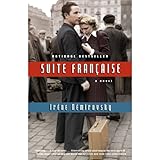
- Audible Audiobook
- Irene Nemirovsky (Author) - Daniel Oreskes, Barbara Rosenblat (Narrators)
- English (Publication Language)
- 07/16/2013 (Publication Date) - Random House Audio (Publisher)
3. Analyze Character Motivations: Throughout both parts, scrutinize the underlying reasons for characters’ actions and beliefs, especially concerning collaboration and survival.
- What to look for: The subtle shifts in loyalty and perspective. How do characters rationalize their choices in the face of occupation?
- Mistake to avoid: Judging characters solely by modern moral standards; understand their choices within the context of their time and circumstances.
4. Examine Némirovsky’s Style: Note the author’s prose, which is both precise and evocative, capturing the atmosphere of fear, uncertainty, and resilience.
- What to look for: The use of irony and understated emotion. How does Némirovsky convey the psychological impact of war without explicit melodrama?
- Mistake to avoid: Overlooking the author’s own Jewish heritage and its potential, albeit complex, influence on her portrayal of occupied France.
5. Consider the Unfinished Nature: Reflect on the extensive notes for the planned third part, “Guerre et Amour” (War and Love). Understand how this influences the overall narrative arc.
- What to look for: The thematic threads Némirovsky intended to explore further. How does the existing structure hint at her larger vision?
- Mistake to avoid: Treating the published work as a fully resolved narrative; its incompleteness is a crucial aspect of its legacy.
Suite Française by Irène Némirovsky: A Counter-Intuitive Reading
A less common, yet critical, perspective on Suite Française by Irène Némirovsky is to view its strength not in its narrative arc, but in its fragmented portrayal of psychological adaptation. Many reviews highlight the historical setting and character studies. However, the book’s true power might lie in its almost clinical dissection of how individuals and communities begin to normalize the unthinkable. The transition from the chaotic flight of Part I to the uneasy coexistence in Part II, “Dolce,” is where Némirovsky excels. She doesn’t offer easy answers or grand gestures of defiance. Instead, she meticulously details the small compromises, the quiet resentments, the grudging acceptance, and the tentative human connections that emerge when life, however diminished, must go on. The unfinished nature, rather than being a flaw, can be seen as a testament to this ongoing, unresolved process of adaptation under occupation.
Comparison Framework: Historical Fiction of World War II
When evaluating Suite Française, it’s helpful to compare it against other notable works of historical fiction set during World War II, focusing on specific aspects of their approach.
| Feature | Suite Française (Irène Némirovsky) | All the Light We Cannot See (Anthony Doerr) | The Nightingale (Kristin Hannah) |
|---|---|---|---|
| <strong>Primary Focus</strong> | Civilian experience, immediate occupation | Sensory details, intertwined fates, moral choices | Sisterhood, resistance, sacrifice |
| <strong>Narrative Style</strong> | Observational, ironic, character-centric | Lyrical, rich in metaphor, dual perspective | Emotional, character-driven, propulsive |
| <strong>Scope</strong> | Pre-occupation exodus and early occupation | Occupied France, German perspective | Occupied France, French resistance |
| <strong>Historical Detail</strong> | Social dynamics, daily life under occupation | Technological details, philosophical underpinnings | Operational details of resistance, personal cost |
| <strong>Reader Takeaway</strong> | Nuance of human behavior under duress | Interconnectedness, resilience of the human spirit | Courage in ordinary individuals, enduring bonds |
Best-Fit Picks by Use Case
- For the Reader Seeking Intimate Historical Portraits: Suite Française is ideal. Its strength lies in capturing the personal impact of invasion on ordinary lives. The detailed observation of social interactions and psychological shifts, as seen in the villagers of Bussy, provides a granular view of history.
- For the Reader Interested in the Psychology of Occupation: This novel excels at depicting the subtle ways occupation infiltrates daily life. The slow burn of “Dolce,” with its focus on the complex relationships between French civilians and German soldiers, offers a nuanced exploration of collaboration and coexistence.
- For the Reader Who Appreciates Unfinished Masterpieces: The posthumous nature of Suite Française adds a layer of poignancy. Its two completed sections, combined with Némirovsky’s notes for future parts, allow readers to engage with the author’s vision and contemplate what might have been.
Common Mistakes
- Mistake: Expecting a straightforward plot with a clear resolution.
- Why it matters: Suite Française is more a collection of vignettes and character studies than a traditional narrative arc, especially given its unfinished state.
- Fix: Approach the book as an exploration of moments and personalities rather than a tightly plotted story.
- Mistake: Overlooking the author’s background.
- Why it matters: Némirovsky was Jewish and died in Auschwitz. While the novel doesn’t explicitly dwell on her personal tragedy, her perspective on occupied France is informed by her identity and fate.
- Fix: Read with an awareness of the author’s context to appreciate the layers of her portrayal of French society.
- Mistake: Judging characters by contemporary standards.
- Why it matters: The novel depicts a specific historical moment where moral choices were complex and survival often dictated actions that might seem compromised today.
- Fix: Strive to understand the characters’ motivations and decisions within the context of 1940 France and the pressures of occupation.
- Mistake: Focusing solely on the historical events.
- Why it matters: While the historical backdrop is crucial, Némirovsky’s primary focus is on human nature and the psychological impact of war on individuals and families.
- Fix: Prioritize character development and interpersonal dynamics as the core elements of the novel’s power.
Decision Rules
- If reliability is your top priority for Suite Française by Irène Némirovsky, choose the option with the strongest long-term track record and support.
- If value matters most, compare total ownership cost instead of headline price alone.
- If your use case is specific, prioritize fit-for-purpose features over generic ‘best overall’ claims.
FAQ
- Q: Is Suite Française a complete novel?
A: No, Suite Française is an unfinished novel. Irène Némirovsky died before completing it. The published version consists of two completed parts and extensive notes for subsequent parts.
- Q: What is the primary theme of Suite Française?
A: The primary themes revolve around human behavior under duress, the impact of war on individuals and society, class divisions, and the complexities of collaboration and survival during the German occupation of France.
- Q: Should I read Suite Française if I’m not interested in war novels?
A: Yes, if you are interested in character-driven narratives and explorations of human psychology. While set during wartime, the novel’s focus is on the personal experiences and internal lives of its characters, making it accessible to readers beyond the typical war genre audience.
- Q: How does “Dolce” differ from “Tempête en juin”?
A: “Tempête en juin” depicts the chaotic mass exodus from Paris as the German army advances, focusing on immediate panic and societal breakdown. “Dolce” shifts to a German-occupied village, exploring the slower, more insidious process of occupation and the development of complex relationships between French civilians and German soldiers.