Humphrey Carpenter’s The Inklings: Literary Circle
Quick Answer
Humphrey Carpenter’s The Inklings offers a detailed historical account of the Oxford literary group, focusing on its key members and their intellectual exchanges. It is essential reading for scholars of C.S. Lewis, J.R.R. Tolkien, and literary modernism. Readers seeking a critical analysis of their collective output or a more personal narrative may find it less engaging.
Who This Is For
- Academics and serious students of C.S. Lewis, J.R.R. Tolkien, and the broader landscape of 20th-century English literature.
- Readers interested in the biographical and historical context behind the creation of seminal works like The Chronicles of Narnia and The Lord of the Rings.
What to Check First
- Your interest level in literary history: This book is a historical survey, not a critical deconstruction of individual works.
- Familiarity with the Inklings’ major figures: While it introduces them, prior knowledge of Lewis, Tolkien, Charles Williams, and Owen Barfield enhances comprehension.
- Your tolerance for detailed chronological accounts: Carpenter’s approach is thorough and chronological, which can be dense.
- Your expectation for thematic analysis: The focus is on the group’s interactions and development rather than deep dives into the philosophical underpinnings of their fiction.
For a comprehensive historical account of the Oxford literary group, Humphrey Carpenter’s The Inklings is an essential read, particularly for those interested in C.S. Lewis and J.R.R. Tolkien.
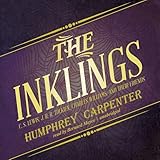
- Audible Audiobook
- Humphrey Carpenter (Author) - Bernard Mayes (Narrator)
- English (Publication Language)
- 11/01/2017 (Publication Date) - Blackstone Audio, Inc. (Publisher)
Step-by-Step Plan to Reading The Inklings by Humphrey Carpenter
1. Begin with the Introduction: Read Carpenter’s preface to understand his stated aims and the scope of his research.
- What to look for: The author’s perspective on the Inklings and the sources he utilized.
- Mistake to avoid: Skipping the introduction, which sets the historical and scholarly context for the entire book.
2. Focus on the Early Chapters: Familiarize yourself with the founding members and the origins of the group in the 1930s.
- What to look for: The intellectual climate of Oxford and the initial meetings that formed the Inklings.
- Mistake to avoid: Underestimating the importance of the early meetings; they established the group’s foundational dynamics.
3. Track Key Member Contributions: Pay close attention to the sections detailing the specific roles and writings of C.S. Lewis, J.R.R. Tolkien, Charles Williams, and Owen Barfield.
- What to look for: How each member’s ideas influenced the others and their individual creative output.
- Mistake to avoid: Treating all members equally; Carpenter highlights the prominence of Lewis and Tolkien, and understanding their primary roles is crucial.
4. Observe the Group’s Evolution: Note how the Inklings adapted through World War II and into the post-war period.
- What to look for: Changes in membership, meeting formats, and the reception of their major works.
- Mistake to avoid: Assuming the group remained static; its composition and focus shifted over time.
5. Examine the Post-War Period: Understand the later years of the Inklings and the eventual dissolution of the group.
- What to look for: The factors leading to the group’s decline and the lasting impact of its members.
- Mistake to avoid: Stopping your reading prematurely; the later chapters provide essential context for the group’s legacy.
6. Consult the Index: Use the index to cross-reference specific works, concepts, or individuals mentioned throughout the text.
- What to look for: Connections between different members or thematic threads that may not be immediately apparent.
- Mistake to avoid: Relying solely on linear reading; the index is a valuable tool for deeper engagement.
The Inklings by Humphrey Carpenter: A Critical Examination
Humphrey Carpenter’s The Inklings stands as a foundational text for understanding the Oxford literary society that included C.S. Lewis, J.R.R. Tolkien, and others. The book meticulously documents the group’s meetings, discussions, and the gestation of their most celebrated works. Carpenter, a biographer of both Lewis and Tolkien, brings a deep familiarity with his subjects and their milieu. The strength of The Inklings lies in its comprehensive archival research and its clear, chronological narrative. It offers an unparalleled look at the intellectual ecosystem that fostered such significant contributions to fantasy, theology, and literary criticism. However, readers seeking a more interpretive or thematic analysis of the Inklings’ collective literary output may find the book’s descriptive and historical focus to be a limitation. The narrative prioritizes factual reporting over speculative literary theory, which can make it feel less engaging for those not already deeply invested in the biographical details.
The book’s value is amplified by its detailed accounts of the group’s reading habits and critical engagements. For instance, Carpenter describes how Tolkien’s early readings of mythological texts and Lewis’s engagement with theological debates directly informed the shape of their respective fictional worlds. The Inklings were not merely a social club; they were a crucible for ideas, where nascent concepts were tested and refined through vigorous debate. This dynamic is central to Carpenter’s portrayal. The book’s primary contribution is in mapping this intellectual exchange, providing concrete examples of how specific discussions led to specific literary developments. For example, the evolution of Lewis’s “space trilogy” is traced through discussions that considered scientific speculation alongside Christian allegory.
A key decision criterion for engaging with The Inklings by Humphrey Carpenter hinges on your primary objective: if your goal is to establish a robust, fact-based understanding of the group’s formation, membership, and historical trajectory, this book is an indispensable resource. Conversely, if you are primarily seeking a critical dissection of the philosophical or stylistic merits of their individual works, or a more emotionally resonant narrative, you might find yourself wishing for a different kind of book. Carpenter’s work excels at presenting the “what” and “when” of the Inklings, laying essential groundwork for any deeper interpretive study.
Common Mistakes
- Mistake: Assuming The Inklings is a literary criticism of individual works.
- Why it matters: This book is primarily a historical and biographical account of the group’s dynamics and development, not an in-depth analysis of the themes or literary techniques within works like The Lord of the Rings or The Screwtape Letters.
- Fix: Approach the book with the expectation of learning about the group’s interactions, the context of their writing, and their personal histories.
- Mistake: Overlooking the influence of Charles Williams and Owen Barfield.
- Why it matters: While C.S. Lewis and J.R.R. Tolkien are the most prominent figures, Williams and Barfield played significant roles in shaping the Inklings’ discussions and intellectual environment.
- Fix: Give due attention to Carpenter’s descriptions of Williams’s theological romances and Barfield’s philosophical contributions, as they were integral to the group’s intellectual ferment.
- Mistake: Expecting a highly critical or contrarian perspective.
- Why it matters: Carpenter’s approach is largely descriptive and sympathetic, aiming to present the Inklings as they were rather than to deconstruct or challenge their legacy overtly.
- Fix: Read The Inklings as a historical record and a detailed portrait of a literary circle, rather than a critical assessment that might question their foundational assumptions.
Expert Tips
- Tip: Focus on the group’s shared intellectual vocabulary.
- Actionable Step: As you read, note recurring terms or concepts like “myth,” “allegory,” “imagination,” and “theology” as they are discussed by Carpenter.
- Common Mistake to Avoid: Treating these terms as generic; understanding how the Inklings used them specifically within their discussions is key to grasping their intellectual framework.
- Tip: Correlate meetings with literary output.
- Actionable Step: When Carpenter describes a specific discussion or reading session, make a mental note (or a physical one) of which member’s work was being developed or presented at that time.
- Common Mistake to Avoid: Reading the book as a series of disconnected events; Carpenter’s structure is chronological to show the causal link between group interaction and literary creation.
- Tip: Utilize supplementary materials if available.
- Actionable Step: If you have access to the primary works of the Inklings, keep them on hand to refer to passages that Carpenter discusses or alludes to.
- Common Mistake to Avoid: Reading The Inklings in isolation; cross-referencing with the Inklings’ own writings will provide a richer, more grounded understanding of their ideas.
BLOCKQUOTE_0
Quick Comparison
| Option | Best for | Pros | Watch out |
|---|---|---|---|
| Quick Answer | General use | Academics and serious students of C.S. Lewis, J.R.R. Tolkien, and the broader… | Mistake to avoid: Skipping the introduction, which sets the historical and sc… |
| Who This Is For | General use | Readers interested in the biographical and historical context behind the crea… | Mistake to avoid: Underestimating the importance of the early meetings; they… |
| What to Check First | General use | Your interest level in literary history: This book is a historical survey, no… | Mistake to avoid: Treating all members equally; Carpenter highlights the prom… |
| Step-by-Step Plan to Reading The Inklings by Humphrey Carpenter | General use | Familiarity with the Inklings’ major figures: While it introduces them, prior… | Mistake to avoid: Assuming the group remained static; its composition and foc… |
Decision Rules
- If reliability is your top priority for The Inklings by Humphrey Carpenter, choose the option with the strongest long-term track record and support.
- If value matters most, compare total ownership cost instead of headline price alone.
- If your use case is specific, prioritize fit-for-purpose features over generic ‘best overall’ claims.
FAQ
- Q: Is The Inklings by Humphrey Carpenter a good starting point for someone new to C.S. Lewis or J.R.R. Tolkien?
- A: It can be, but it is more of a historical overview of their shared circle. While it introduces them, a reader primarily interested in the individual biographies or literary analysis of Lewis or Tolkien might find more direct satisfaction in dedicated biographies of those authors.
- Q: What is the primary difference between Carpenter’s The Inklings and other books about the Inklings?
- A: Carpenter’s work is distinguished by its comprehensive archival research and its focus on the chronological development and interactions of the group as a whole, rather than deep dives into individual members’ theological or philosophical systems.
- Q: Does Carpenter offer a critical evaluation of the Inklings’ literary merit?