How To Quit Smoking With Allen Carr’s Method
Allen Carr’s Easy Way To Stop Smoking by Allen Carr offers a distinct psychological framework for quitting. It aims to eliminate the desire to smoke by challenging smokers’ beliefs and fears about addiction, asserting that cigarettes provide no genuine benefits and thus dissolving the craving itself. The method emphasizes understanding this illusion to achieve freedom from smoking.
Allen Carr’s Easy Way To Stop Smoking by Allen Carr: Quick Answer
- Allen Carr’s method reframes smoking as a psychological trap, not a physical dependency, focusing on removing the desire to smoke.
- The core principle is that cigarettes offer no real advantages, making cessation feel liberating rather than difficult.
- Success depends on an open mind and full engagement with the book’s cognitive principles.
Who This Is For
- Individuals who have tried and failed with other smoking cessation methods.
- Smokers who believe they need willpower to quit or fear significant withdrawal symptoms.
What To Check First
- Your Smoking Triggers: Identify specific times, places, or emotions that prompt smoking. This awareness is crucial for understanding your patterns.
- Your Perceived Benefits of Smoking: List any advantages you associate with smoking, such as stress relief, enhanced focus, or social inclusion.
- Your Readiness to Quit: Ensure you have a genuine desire to stop smoking and are prepared to fully engage with the method’s cognitive restructuring.
- The Method’s Core Premise: Accept that Carr’s approach views smoking not as a habit to manage, but as an illusion to escape.
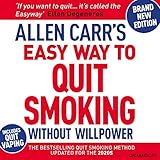
- Audible Audiobook
- Allen Carr (Author) - John Chancer (Narrator)
- English (Publication Language)
- 11/29/2019 (Publication Date) - Arcturus Digital Limited (Publisher)
Step-by-Step Plan
This plan details the process for implementing Allen Carr’s Easy Way To Stop Smoking by Allen Carr.
1. Read the Book Sequentially:
- Action: Read “The Easy Way to Stop Smoking” by Allen Carr from beginning to end without interruption.
- What to Look For: Pay close attention to how Carr systematically dismantles the perceived benefits of smoking and redefines addiction. Note any shifts in your perspective or questioning of your habits.
- Mistake: Skimming sections or pausing your reading, which can disrupt the cumulative effect of the arguments presented.
2. Understand the “Little Monster”:
- Action: Grasp that the physical withdrawal symptoms are minimal and short-lived.
- What to Look For: Carr refers to the physical addiction as the “Little Monster,” which typically subsides within approximately three days. The primary challenge is psychological.
- Mistake: Overestimating the severity of physical withdrawal, reinforcing the belief that quitting is inherently painful and difficult.
3. Deconstruct Psychological Crutches:
- Action: Challenge the notion that smoking aids in stress management, concentration, or social comfort.
- What to Look For: Carr argues that smoking creates the stress it supposedly relieves by satisfying a craving it initiated. Recognize that perceived benefits are illusions maintained by the addiction.
- Mistake: Believing you will miss the “pleasure” of smoking or require it to cope with daily life.
4. Commit to Immediate and Complete Cessation:
- Action: Make a firm decision to stop smoking entirely, avoiding gradual reduction or substitutes.
- What to Look For: The method requires a definitive choice to quit, not a trial or negotiation. Embrace quitting as a positive step toward freedom.
- Mistake: Attempting to quit using nicotine replacement therapies (NRTs) or e-cigarettes, which Carr contends prolongs the addiction cycle.
5. Smoke Your Final Cigarette with Awareness:
- Action: After completing the book, smoke your last cigarette with full understanding of the method’s principles.
- What to Look For: As you smoke, consciously acknowledge that this is your final cigarette and that you are not sacrificing anything of value. Recognize the act for what it is: the end of a trap.
- Mistake: Smoking the last cigarette with a sense of loss or regret, rather than with a feeling of liberation and achievement.
6. Maintain Your Freedom:
- Action: Once you have quit, do not second-guess your decision or romanticize smoking.
- What to Look For: When an urge arises, recall the trap you have escaped and the freedom you have gained. Focus on the positive aspects of being a non-smoker.
- Mistake: Indulging in “just one” cigarette, which typically re-establishes the addiction and leads to relapse.
Applying Allen Carr’s Easy Way To Stop Smoking by Allen Carr
Effective implementation of Allen Carr’s methodology involves internalizing its unique perspective and applying its principles consistently. This section details practical application strategies.
- Focus on the “Why Not” of Smoking: The book’s power lies in fundamentally changing your perception of smoking. It shifts the focus from the difficulty of quitting to understanding the inherent lack of benefit in smoking, thereby dissolving the craving.
- Example: Carr explains that the “relief” a smoker feels after lighting up is not genuine stress reduction but the temporary cessation of nicotine withdrawal symptoms. Grasping this removes the perceived necessity of smoking for relaxation.
- Takeaway: Reframe your thinking from “How do I quit?” to “Why would I ever want to smoke again?”
- Embrace the “Easy Way” Mindset: This method is designed to make quitting feel effortless by removing the desire to smoke. It achieves this by systematically dismantling the mental conditioning that leads smokers to believe they need cigarettes.
- Example: The book addresses common justifications for smoking, such as needing it for concentration or during social events, demonstrating these are illusions created by addiction.
- Takeaway: Trust the process and accept that quitting can be straightforward once the psychological trap of addiction is understood and dismantled.
Expert Tips
- Tip 1: Internalize the “No Sacrifice” Principle.
- Actionable Step: When you experience an urge, remind yourself that you are not giving up anything enjoyable or necessary. You are escaping a harmful addiction that has never provided genuine benefit.
- Common Mistake to Avoid: Believing you are making a sacrifice or enduring a difficult period. This mindset prolongs the perceived hardship and can hinder the process.
- Tip 2: Differentiate Physical vs. Psychological Addiction.
- Actionable Step: Understand that the physical withdrawal symptoms (the “Little Monster”) are minor and temporary. The primary challenge is the psychological conditioning and fear of life without cigarettes (the “Big Monster”).
- Common Mistake to Avoid: Overemphasizing the severity of physical withdrawal. This can lead smokers to believe quitting is far harder than it actually is, reinforcing their dependence.
- Tip 3: Guard Against the “Just One” Temptation.
- Actionable Step: Treat any urge to smoke as a signal that the addiction is attempting to reassert itself. Remind yourself of the reasons you quit and the freedom you have gained.
- Common Mistake to Avoid: Thinking you can have “just one” cigarette to satisfy a craving. This often leads back to a full relapse into smoking.
Common Mistakes
- Mistake: Relying solely on willpower.
- Why it Matters: Willpower implies fighting a genuine need. Carr asserts there is no inherent need, only a manufactured one by the nicotine trap. Using willpower suggests enduring hardship, which is unnecessary with this method.
- Fix: Understand that you are not depriving yourself. You are escaping a trap, which is a positive act of liberation.
- Mistake: Reading the book sporadically or skipping sections.
- Why it Matters: The method’s effectiveness depends on a cumulative understanding of its arguments. Each chapter builds upon the previous one to dismantle the psychological hold of smoking.
- Fix: Dedicate uninterrupted time to read the book from beginning to end. Treat it as essential guidance for achieving freedom.
- Mistake: Using nicotine replacement therapies (NRTs) or other substitutes.
- Why it Matters: NRTs (patches, gum, lozenges) and e-cigarettes still deliver nicotine, perpetuating the physical addiction. They also fail to address the core psychological dependency.
- Fix: Commit to quitting all forms of nicotine simultaneously. The “Easy Way” involves stopping all nicotine sources at once.
- Mistake: Feeling deprived after quitting.
- Why it Matters: This feeling indicates a lingering belief that you are missing out on something important. Carr’s method aims to eliminate this belief by demonstrating smoking’s lack of real benefits.
- Fix: Actively recall the perceived benefits you once attributed to smoking and recognize them as illusions. Focus on the newfound freedom and improved health.
Decision Checklist
Apply these checks to ensure you are effectively applying Allen Carr’s method:
- [ ] Have I read the entire book without interruption?
- [ ] Do I understand that the physical withdrawal is minor and temporary?
- [ ] Do I believe that smoking provides no genuine benefits?
- [ ] Have I committed to quitting all forms of nicotine immediately?
- [ ] Do I view quitting as escaping a trap, not making a sacrifice?
- [ ] Am I prepared to never smoke another cigarette, regardless of circumstances?
How this list was curated
- We prioritized resources based on clarity, practical utility, and the method’s core principles.
- We focused on materials that facilitate understanding and application of Allen Carr’s psychological approach.
- We selected items that directly address the unique cognitive restructuring required by the method.
Structured Pick Cards
Allen Carr’s method posits that smoking is a psychological trap, not a physical need, and
- Best for: Readers seeking a cognitive shift to eliminate the desire to smoke.
- Skip if: You prefer methods focused on willpower or physical symptom management.
- Trade-off: Requires an open mind to challenge deeply ingrained beliefs about smoking.
The
Quick Comparison
| Option | Best for | Pros | Watch out |
|---|---|---|---|
| Allen Carrs Easy Way To Stop Smoking by Allen Carr Quick Answer | General use | Allen Carr’s method reframes smoking as a psychological trap, not a physical… | Mistake: Skimming sections or pausing your reading, which can disrupt the cum… |
| Who This Is For | General use | The core principle is that cigarettes offer no real advantages, making cessat… | Mistake: Overestimating the severity of physical withdrawal, reinforcing the… |
| What To Check First | General use | Success depends on an open mind and full engagement with the book’s cognitive… | Mistake: Believing you will miss the “pleasure” of smoking or require it to c… |
| Step-by-Step Plan | General use | Individuals who have tried and failed with other smoking cessation methods. | Action: Make a firm decision to stop smoking entirely, avoiding gradual reduc… |
Decision Rules
- If reliability is your top priority for Allen Carr’s Easy Way To Stop Smoking by Allen Carr, choose the option with the strongest long-term track record and support.
- If value matters most, compare total ownership cost instead of headline price alone.
- If your use case is specific, prioritize fit-for-purpose features over generic ‘best overall’ claims.
Structured Pick Cards
Allen Carr’s method posits that smoking is a psychological trap, not a physical need, and
- Best for: readers who want practical takeaways and clear progression.
- Skip if: you need only advanced theory with little implementation guidance.
- Trade-off: stronger depth can mean a slower pace in some chapters.
The
- Best for: readers who want practical takeaways and clear progression.
- Skip if: you need only advanced theory with little implementation guidance.
- Trade-off: stronger depth can mean a slower pace in some chapters.
By Reader Level
- Beginner: start with one fundamentals pick and one habit-building pick.
- Intermediate: prioritize books with frameworks you can apply weekly.
- Advanced: choose deeper titles focused on systems and decision quality.
An under-the-radar pick worth considering is a less mainstream title that explains decision quality with unusually clear examples.
FAQ
Q: Where should I start?
A: Start with the clearest foundational pick, then add one practical framework-focused title.
Q: How many books should I read first?
A: Begin with 2–3 complementary books and apply one core idea from each before adding more.