Henry Roth’s Powerful Novel ‘Call It Sleep
Quick Answer
- Call It Sleep by Henry Roth is a seminal modernist novel exploring the immigrant experience in early 20th-century New York City through the eyes of a young boy.
- Its dense, experimental prose and psychological depth offer a profound, albeit challenging, literary experience.
- Readers seeking a raw, authentic portrayal of urban poverty, cultural assimilation, and childhood alienation will find significant value.
Who This Is For
- Readers interested in American modernist literature and the immigrant narrative.
- Those who appreciate experimental prose and deep psychological exploration of childhood trauma and identity.
What to Check First
- The novel’s setting: Early 20th-century New York City, specifically the Lower East Side, is crucial to understanding the characters’ struggles.
- Protagonist David Schearl’s perspective: The narrative is largely filtered through his limited, often confused, understanding of the adult world.
- The author’s stylistic choices: Henry Roth employs a stream-of-consciousness technique, vivid imagery, and a unique dialect that can be demanding but rewarding.
- Themes of alienation and identity: The novel delves into the complexities of being an outsider, both within the family and the broader society.
Step-by-Step Plan for Understanding Call It Sleep
1. Familiarize yourself with the historical context: Understand the social and economic conditions of Jewish immigrants on the Lower East Side in the early 1900s.
- What to look for: Details about tenement life, labor conditions, and the clash between Old World traditions and American realities.
- Mistake to avoid: Assuming the narrative is a straightforward historical account without considering its subjective, psychological lens.
2. Engage with David’s consciousness: Immerse yourself in the protagonist’s sensory experiences and emotional landscape.
- What to look for: The symbolic weight of objects, the fragmented nature of his thoughts, and his literal interpretation of adult conversations.
- Mistake to avoid: Trying to impose adult logic onto David’s often irrational or instinctual reactions; his perception is the reality of the novel.
3. Pay close attention to language and dialect: Roth’s prose is dense and innovative, often incorporating Yiddish and a distinct rhythm.
- What to look for: The way language reflects the characters’ backgrounds and internal states, and how it creates a unique sonic texture.
- Mistake to avoid: Getting bogged down by unfamiliar vocabulary or sentence structure; allow the language to wash over you, focusing on the emotional impact.
4. Identify recurring motifs and symbols: Certain images and ideas reappear, gaining significance throughout the narrative.
- What to look for: The sea, the subway, shadows, and the concept of sleep itself as metaphors for escape, unconsciousness, or unresolved issues.
- Mistake to avoid: Treating these elements as mere decorative details; they are integral to the novel’s thematic development.
5. Analyze the complex family dynamics: The relationships, particularly between David and his parents, are fraught with tension and misunderstanding.
- What to look for: The impact of parental expectations, cultural pressures, and unspoken resentments on David’s development.
- Mistake to avoid: Seeking simple villains or heroes; the characters are deeply flawed products of their environment.
6. Consider the novel’s modernist techniques: Recognize its place within literary history and appreciate its experimental nature.
- What to look for: Stream-of-consciousness, interior monologue, and a non-linear narrative structure that mirrors psychological experience.
- Mistake to avoid: Expecting a conventional plot progression; the novel’s power lies in its exploration of inner life.
7. Reflect on the themes of assimilation and otherness: The novel powerfully depicts the challenges of belonging in a new land.
- What to look for: David’s internal conflict between his heritage and his American surroundings, and the pressures to conform.
- Mistake to avoid: Viewing the immigrant experience as monolithic; Roth captures its specific, often painful, nuances.
For a profound literary experience that delves into the immigrant journey, Henry Roth’s ‘Call It Sleep’ is a must-read. This seminal modernist novel offers a raw and authentic portrayal of childhood alienation and cultural assimilation.
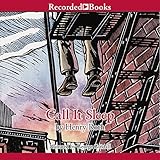
- Audible Audiobook
- Henry Roth (Author) - George Guidall (Narrator)
- English (Publication Language)
- 04/10/2012 (Publication Date) - Recorded Books (Publisher)
Call It Sleep by Henry Roth: A Counter-Intuitive Reading
Many approaches to Henry Roth’s Call It Sleep by Henry Roth focus on its monumental status as an immigrant narrative or a modernist masterpiece. While these are valid, a more counter-intuitive angle reveals its true power: viewing it not as a story about a boy, but as a profound exploration of the limitations of language and perception as experienced by a child navigating an incomprehensible adult world. The novel’s famous density and difficult prose are not obstacles to be overcome, but rather the very fabric of David’s reality—a reality characterized by misunderstanding, sensory overload, and the constant struggle to articulate an inner life that defies easy expression. This perspective shifts the reader’s focus from decoding plot points to experiencing the raw, often disorienting, subjective state of childhood alienation.
Common Myths About Call It Sleep
- Myth: The novel is overly difficult and inaccessible to the average reader.
- Why it matters: This perception can deter readers who might otherwise find profound resonance in the book’s themes and emotional honesty.
- Fix: Approach the text with patience, focusing on the emotional arc and vivid imagery rather than demanding immediate comprehension of every sentence. Allow the language to create an atmosphere.
- Myth: Henry Roth’s prose is intentionally obscure to showcase his literary skill.
- Why it matters: This frames the style as an affectation rather than a deliberate artistic choice serving the narrative’s core themes.
- Fix: Recognize that the complex, often fragmented, language directly mirrors the protagonist David’s confused and overwhelming experience of the world. The style is the substance.
- Myth: The novel is primarily a historical document of Jewish immigrant life.
- Why it matters: While it is set in a specific time and place, reducing it to a historical record misses its deeper psychological and existential dimensions.
- Fix: Prioritize the exploration of universal themes like childhood trauma, the search for identity, and the struggle for belonging, which transcend its historical specificity.
Expert Tips for Engaging with Call It Sleep
- Tip: Embrace the sonic quality of the prose.
- Actionable step: Read passages aloud to appreciate the rhythm, the invented words, and the unique cadences that Roth employs.
- Common mistake to avoid: Reading silently without attending to the musicality, which is a key component of its immersive power.
- Tip: Focus on sensory details and emotional resonance over plot mechanics.
- Actionable step: Keep a running list of striking images, sounds, and feelings that David experiences, noting how they contribute to his understanding (or misunderstanding) of events.
- Common mistake to avoid: Getting frustrated by the lack of clear narrative causality; the novel prioritizes subjective experience over objective storytelling.
- Tip: Understand that David’s perspective is the primary filter.
- Actionable step: Constantly ask yourself: “How would a young child perceive this?” and “What does this word or event literally mean to David?”
- Common mistake to avoid: Projecting adult understanding or adult motivations onto David’s actions or the adults’ behaviors as perceived by him.
Quick Comparison
| Option | Best for | Pros | Watch out |
|---|---|---|---|
| Quick Answer | General use | Call It Sleep by Henry Roth is a seminal modernist novel exploring the immigr… | Mistake to avoid: Assuming the narrative is a straightforward historical acco… |
| Who This Is For | General use | Its dense, experimental prose and psychological depth offer a profound, albei… | Mistake to avoid: Trying to impose adult logic onto David’s often irrational… |
| What to Check First | General use | Readers seeking a raw, authentic portrayal of urban poverty, cultural assimil… | Mistake to avoid: Getting bogged down by unfamiliar vocabulary or sentence st… |
| Step-by-Step Plan for Understanding Call It Sleep | General use | Readers interested in American modernist literature and the immigrant narrati… | Mistake to avoid: Treating these elements as mere decorative details; they ar… |
Decision Rules
- If reliability is your top priority for Call It Sleep by Henry Roth, choose the option with the strongest long-term track record and support.
- If value matters most, compare total ownership cost instead of headline price alone.
- If your use case is specific, prioritize fit-for-purpose features over generic ‘best overall’ claims.
FAQ
- Q: Is Call It Sleep by Henry Roth suitable for a first-time reader of modernist literature?
- A: It can be challenging but ultimately rewarding. If you are new to modernism, consider reading an introductory work on the movement or a more accessible modernist novel first to acclimate to the style before diving into Roth’s dense prose.
- Q: How long does it typically take to read Call It Sleep?
- A: Reading speed varies greatly due to the novel’s challenging prose. A slower, more deliberate pace of 1-3 chapters per day is recommended for full comprehension and appreciation, potentially spanning 2-4 weeks.
- Q: What are the main themes explored in the novel?
- A: Key themes include the immigrant experience, childhood trauma, alienation, the search for identity, the complexities of family relationships, and the limitations of language and perception.
- Q: Is there a definitive interpretation of the ending?
- A: The ending is famously ambiguous and open to interpretation, reflecting the ongoing nature of David’s struggles and the unresolved complexities of his life. Its power lies in its evocation rather than its resolution.
The Immigrant Experience in Call It Sleep by Henry Roth
The narrative of Call It Sleep by Henry Roth is deeply embedded in the immigrant experience of early 20th-century New York. The novel vividly portrays the physical and emotional landscape of the Lower East Side, a crucible of cultures where new arrivals grappled with poverty, prejudice, and the daunting task of assimilation. Roth masterfully captures the sensory overload of this environment—the cacophony of languages, the crowded tenements, the pervasive smells—all filtered through the sensitive, often bewildered, consciousness of young David Schearl. His internal world reflects the external pressures: the clash between his parents’ Old World traditions and their American aspirations, his own burgeoning awareness of his difference, and the psychological toll of navigating a world that often feels hostile and incomprehensible.
The novel does not shy away from the harsh realities faced by immigrants. It depicts the struggle for economic survival, the anxieties of cultural displacement, and the profound sense of otherness that can accompany the immigrant journey. Yet, Roth’s approach is not merely documentary; he uses the immigrant experience as a powerful lens through which to explore universal human themes of belonging, identity, and the enduring quest for understanding in a fragmented world. The specificity of the Jewish immigrant community in New York provides a rich, textured backdrop for these explorations, making the novel a landmark achievement in American literature for its unflinching and deeply felt portrayal of this crucial aspect of the national story.
BLOCKQUOTE_0
This quote encapsulates the novel’s core concern: the internal alienation that mirrors external displacement. It highlights how the immigrant experience, as depicted in Call It Sleep, is not just about navigating a new country, but also about the profound internal journey of self-discovery and the often-painful realization of one’s own distinctiveness.
Strengths of Call It Sleep
- Profound Psychological Depth: The novel excels at portraying the inner life of a child, capturing the confusion, fear, and burgeoning awareness with remarkable authenticity. The use of stream-of-consciousness allows for an unparalleled immersion into David’s mind.
- Vivid and Evocative Prose: Roth’s language is dense, lyrical, and highly original, creating a powerful sensory experience for the reader. The novel’s distinctive voice is one of its most significant achievements.
- Authentic Depiction of Immigrant Life: The novel provides a raw, unvarnished look at the challenges and complexities faced by Jewish immigrants on the Lower East Side, offering a vital historical and cultural document.
Limitations of Call It Sleep
- Demanding Readability: The experimental prose and stream-of-consciousness style can be challenging and require significant reader effort. Some may find it too dense or inaccessible.
- Lack of Traditional Plot: Readers accustomed to conventional narrative structures might find the novel’s focus on internal experience and its episodic nature disorienting. The story is driven by atmosphere and psychological state rather than a linear plot.
- Potential for Overwhelm: The intensity of David’s experiences and the relentless nature of the prose can be emotionally taxing, making it a difficult read for those seeking lighter fare.
Reading Context and Recommendations
Call It Sleep is best approached when one is prepared for a demanding but deeply rewarding literary experience. It is not a book to be rushed. Consider reading it during a period when you can dedicate focused attention to its intricate prose and psychological nuances. For those who appreciate authors like James Joyce, Virginia Woolf, or William Faulkner for their experimental techniques and deep dives into consciousness, Call It Sleep will likely resonate strongly. It is a foundational text for understanding American modernism and the literature of the immigrant experience.