Harry Potter And The Goblet Of Fire: Key Plot Points And Themes
This analysis examines the critical plot junctures and thematic developments within Harry Potter and the Goblet of Fire by J. K. Rowling. It is designed for readers seeking a precise understanding of the narrative’s structural progression and its thematic evolution within the broader Harry Potter saga, particularly those aiming to identify and rectify common misinterpretations of character agency and plot mechanics.
Harry Potter and the Goblet of Fire by J. K. Rowling: Quick Answer
- Central Conflict: Harry Potter is unexpectedly nominated as a champion in the Triwizard Tournament, a dangerous inter-school magical competition, while Lord Voldemort orchestrates his full return to power.
- Key Themes: The novel critically explores the nature of courage under duress, the corrupting influence of power, and the tension between predetermined destiny and personal choice.
- Reader Takeaway: This installment serves as a pivotal turning point, illustrating that heroism is often defined by enduring overwhelming adversity with limited control, and that the true antagonists are not always immediately apparent.
Harry Potter and the Goblet of Fire by J. K. Rowling: Who This Is For
- Readers requiring a structured breakdown of the core plot events and thematic concerns within Harry Potter and the Goblet of Fire.
- Individuals seeking to understand the book’s significant tonal shift and its foundational role in the series’ progression toward darker, more complex narrative territory.
What to Check First
- Triwizard Tournament Rules: Verify the established criteria for champion selection, noting the age restriction and the unexplained inclusion of Harry Potter.
- The Four Champions: Identify each champion, their respective schools (Hogwarts, Beauxbatons, Durmstrang), and the inherent dangers they face.
- The Three Tasks: Understand the specific challenges of each task: dragon confrontation, underwater rescue, and maze navigation.
- Voldemort’s Re-emergence: Note the increasing signs of Lord Voldemort’s growing strength, the activities of his Death Eaters, and the pervasive atmosphere of unease.
- Barty Crouch Jr.’s Role: Critically assess the actions and pronouncements of the character impersonating Alastor Moody, looking for inconsistencies and hidden motives.
Step-by-Step Plan: Deconstructing Harry Potter and the Goblet of Fire
1. Analyze the Tournament’s Unconventional Entry:
- Action: Examine the ceremonial selection of champions by the Goblet of Fire, noting the explicit age requirement (seventeen years) and the magical safeguards designed to prevent cheating.
- What to Look For: The anomalous appearance of Harry’s name as a fourth champion, and the subsequent pronouncements that he is bound by the magical contract, despite his underage status.
- Mistake: Assuming Harry’s entry was a purely random magical malfunction or an act of pure chance, thereby overlooking the deliberate manipulation by an external party.
2. Evaluate the Nature of Each Task:
- Action: Deconstruct the specific perils of the First Task (dragon confrontation), the Second Task (underwater rescue), and the Third Task (maze navigation).
- What to Look For: The unique skills, courage, and resourcefulness required for each trial, and how each champion adapts to unexpected challenges.
- Mistake: Underestimating the profound physical and psychological toll these tasks exact on the champions, viewing them solely as plot devices rather than severe tests of survival.
3. Track the Subtle Escalation of Dark Magic:
- Action: Monitor the recurring instances of dark magic and unsettling events throughout the school year, from the Dark Mark appearing at the Quidditch World Cup to the activities within Hogwarts.
- What to Look For: The presence of Death Eaters, the strange behavior of Professor Moody, and the increasing sense of dread surrounding the school.
- Mistake: Dismissing these darker elements as tangential to the tournament plot, failing to recognize their integral connection to Voldemort’s overarching plan for his return.
4. Assess Harry’s Limited Agency:
- Action: Observe the extent to which Harry has control over his participation in the tournament and the events that unfold around him.
- What to Look For: Instances where Harry is compelled by magical contracts, manipulated by others, or placed in situations beyond his immediate control.
- Mistake: Attributing Harry’s survival and success solely to his inherent abilities or luck, without acknowledging the significant influence of external assistance and manipulation.
5. Investigate the Imposter “Mad-Eye” Moody:
- Action: Critically examine the actions, pronouncements, and teaching methods of the new Defense Against the Dark Arts professor, Alastor Moody.
- What to Look For: His aggressive teaching style, his peculiar fascination with Harry, and any inconsistencies in his behavior or knowledge.
- Mistake: Accepting “Mad-Eye” Moody’s persona at face value, failing to question his true identity or the hidden agenda behind his carefully constructed facade.
For those looking to dive straight into the core of the story, the book itself, Harry Potter and the Goblet of Fire by J. K. Rowling, is essential reading.
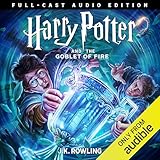
- Audible Audiobook
- J.K. Rowling (Author) - Hugh Laurie, James McAvoy, Ruth Wilson (Narrators)
- English (Publication Language)
- 02/10/2026 (Publication Date) - Pottermore Publishing and Audible Studios (Publisher)
6. Confirm the Graveyard’s Pivotal Role:
- Action: Detail the sequence of events in the graveyard that culminates in Lord Voldemort’s physical rebirth.
- What to Look For: The duel between Harry and Voldemort, the “Priori Incantatem” phenomenon, the reappearance of Death Eaters, and the tragic death of Cedric Diggory.
- Mistake: Focusing solely on Voldemort’s return and failing to recognize the profound impact of Cedric’s death as the first overt casualty of Voldemort’s renewed reign of terror.
Common Mistakes in Interpreting Harry Potter and the Goblet of Fire
- Mistake: Believing Harry was solely responsible for his own survival through the Triwizard Tournament.
- Why it Matters: This overlooks the significant, often hidden, interventions from characters like Barty Crouch Jr. (as Moody), Dobby, and the magical properties of the Goblet itself, which were manipulated to ensure Harry’s progression.
- Fix: Re-examine the narrative for instances where external forces or characters actively aided Harry, either intentionally or unintentionally, in overcoming obstacles.
- Mistake: Underestimating the significance of Barty Crouch Jr.’s role and his motivations.
- Why it Matters: Crouch Jr.’s meticulous planning and long-term deception are central to Voldemort’s return. Misinterpreting his actions as mere fanatical devotion ignores the complex, albeit twisted, personal vendetta and ambition driving him.
- Fix: Analyze Crouch Jr.’s dialogue and actions for evidence of his personal animosity towards Harry and the Ministry of Magic, and his desire to serve Voldemort’s cause directly.
- Mistake: Viewing the Triwizard Tournament as a fair competition.
- Why it Matters: The tournament is demonstrably rigged from the outset, with Harry’s entry and the nature of the tasks being manipulated. Recognizing this subverts the notion of a level playing field and highlights the pervasive dark magic at play.
- Fix: Focus on the specific ways the Goblet of Fire was tampered with and how the tasks were designed to isolate and endanger Harry, rather than testing the skills of all champions equally.
- Mistake: Overlooking the thematic exploration of prejudice and social hierarchy.
- Why it Matters: The book subtly critiques how individuals are judged based on their perceived status or origin, exemplified by the treatment of house-elves and the prejudiced attitudes displayed by some wizarding factions.
- Fix: Pay attention to scenes involving house-elves, the interactions between students from different schools, and the underlying biases that inform character perceptions.
Decision Rules for Character Interpretation
- If assessing character motivation is your priority for Harry Potter and the Goblet of Fire by J. K. Rowling, focus on actions and stated goals that align with the character’s established history, rather than solely on perceived intentions.
- If determining plot causality matters most, trace the chain of events back to the initial instigator or manipulation, rather than accepting surface-level explanations.
- If understanding thematic resonance is key, connect specific plot points and character arcs to broader concepts like power, courage, and prejudice, looking for evidence of Rowling’s commentary.
Quick Comparison
| Option | Best for | Pros | Watch out |
|---|---|---|---|
| Harry Potter and the Goblet of Fire by J K Rowling Quick Answer | General use | Central Conflict: Harry Potter is unexpectedly nominated as a champion in the… | Mistake: Assuming Harry’s entry was a purely random magical malfunction or an… |
| Who This Is For | General use | Key Themes: The novel critically explores the nature of courage under duress,… | Mistake: Underestimating the profound physical and psychological toll these t… |
| What to Check First | General use | Reader Takeaway: This installment serves as a pivotal turning point, illustra… | Mistake: Dismissing these darker elements as tangential to the tournament plo… |
| Step-by-Step Plan Deconstructing Harry Potter and the Goblet of Fire | General use | Readers requiring a structured breakdown of the core plot events and thematic… | Mistake: Attributing Harry’s survival and success solely to his inherent abil… |
FAQ
- Q: Was Harry Potter truly chosen by the Goblet of Fire, or was it rigged?
- A: The Goblet of Fire was demonstrably rigged. Barty Crouch Jr., disguised as Alastor Moody, used a powerful Confundus Charm to influence the Goblet and ensure Harry’s name was added as a fourth champion.
- Q: What is the primary thematic shift in Harry Potter and the Goblet of Fire?
- A: The primary thematic shift is the introduction of moral ambiguity and the loss of innocence. The book moves away from clear-cut good versus evil, exploring the complexities of character, the corrupting nature of power, and the harsh realities of a world where death and betrayal are significant threats.
- Q: Who is the true antagonist of Harry Potter and the Goblet of Fire?
- A: While Lord Voldemort is the ultimate antagonist orchestrating his return, the immediate antagonist is Barty Crouch Jr., who acts as Voldemort’s agent throughout the year, manipulating events and individuals to achieve his master’s goal.
- Q: How does Harry Potter and the Goblet of Fire set the stage for the later books?
- A: This book marks Voldemort’s physical return, establishing him as a tangible threat. It also introduces the concept of the Death Eaters operating openly again and foreshadows the larger war to come, solidifying the darker trajectory of the series.
BLOCKQUOTE_0