Franklin W. Dixon’s The Tower Treasure: A Hardy Boys Mystery
Quick Answer
- The Tower Treasure by Franklin W. Dixon is the foundational novel of the Hardy Boys series, establishing the protagonists and their investigative methodology for a young audience.
- Its primary strength lies in its clear, accessible mystery plot and archetypal characters, making it a suitable entry point for juvenile readers into the detective genre.
- Readers seeking complex character development, intricate plot twists, or modern investigative techniques may find the novel’s simplicity a notable limitation.
Who This Is For
- Young readers, typically aged 8-12, new to mystery novels or seeking straightforward adventures.
- Adults interested in the origins of the Hardy Boys franchise or looking for a nostalgic, uncomplicated reading experience.
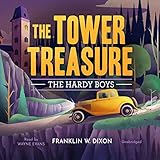
- Audible Audiobook
- Franklin W. Dixon (Author) - Wayne Evans (Narrator)
- English (Publication Language)
- 06/28/2022 (Publication Date) - Wayne Evans LLC (Publisher)
What to Check First
- Publication Era: The novel was first published in 1927. This context is crucial for understanding its narrative conventions, language, and societal norms.
- Character Archetypes: Frank and Joe Hardy are presented as archetypal heroes, embodying traits like bravery and resourcefulness. Their characterization is functional rather than deeply psychological.
- Narrative Structure: The plot is episodic, focusing on the sequential discovery of clues. The pacing is deliberate, prioritizing clarity over rapid action.
- Mystery Design: The central puzzle, involving a missing fortune and an unidentified culprit, is structured for accessibility, not for sophisticated misdirection.
Step-by-Step Plan for Analyzing The Tower Treasure by Franklin W. Dixon
1. Assess Historical Context: Approach the novel with an awareness of its 1927 publication date.
- Action: Observe the language, social attitudes, and technological limitations presented within the narrative.
- What to Look For: How these historical elements shape character actions and the methods of investigation employed.
- Mistake to Avoid: Judging the plot or characters solely by contemporary standards without acknowledging the historical setting.
2. Deconstruct the Central Mystery: Focus on the core puzzle of the stolen inheritance and the identity of the antagonist.
- Action: Trace the progression of clues related to the “Tower Treasure” and the involved parties.
- What to Look For: The sequence of evidence, any misleading elements, and the logical deductions made by Frank and Joe.
- Mistake to Avoid: Becoming overly critical of plot developments before the narrative’s resolution; the solution is typically direct.
3. Examine Investigative Methodology: Observe the techniques Frank and Joe utilize in their investigations.
- Action: Note their reliance on direct observation, witness interviews, and persistent questioning.
- What to Look For: Their collaborative dynamic, their determination, and the straightforward nature of their investigative process.
- Mistake to Avoid: Expecting the sophisticated forensic analysis or complex psychological profiling found in modern detective fiction.
4. Evaluate the Resolution: Assess how the mystery of The Tower Treasure is ultimately resolved.
- Action: Consider whether the conclusion feels earned based on the clues presented throughout the story.
- What to Look For: The reveal of the culprit and the explanation for the “Tower Treasure.”
- Mistake to Avoid: Dismissing the ending as overly simplistic; its directness is a characteristic of its intended audience and literary period.
5. Analyze Character Motivations: Consider the underlying reasons for characters’ actions, even if presented straightforwardly.
- Action: Reflect on the primary drivers for protagonists (justice, adventure) and antagonists (greed, deception).
- What to Look For: The foundational moral framework that guides the narrative.
- Mistake to Avoid: Over-analyzing subtle psychological nuances that are not explicitly developed within the text.
The Tower Treasure by Franklin W. Dixon: A Critical Perspective
This analysis examines The Tower Treasure by Franklin W. Dixon through a lens that challenges its common perception as merely a simple children’s book. While its accessibility is a key feature, its true significance lies in its function as an early blueprint for serialized juvenile detective fiction. The novel establishes a formula prioritizing archetypal characters and a predictable, yet satisfying, resolution structure. Its enduring appeal is derived not from narrative complexity, but from its successful codification of a format that would resonate for decades.
The central mystery involves a missing fortune and the investigation by Frank and Joe Hardy. The narrative is structured around a series of episodic clues, often uncovered through direct observation or straightforward interrogation. This methodical, uncomplex approach is a hallmark of the Hardy Boys’ methodology, distinguishing them from more cerebral fictional detectives. Their reliance on direct deduction, rather than intricate psychological manipulation or advanced technology, is characteristic of both the era and the intended audience.
BLOCKQUOTE_0
This quote highlights the novel’s core. The “baffling” nature of the mystery is relative to the juvenile reader; for adult readers, the plot often unfolds with a degree of predictability. The Hardy boys’ unwavering resolve, however, is a constant, reinforcing their role as steadfast heroes. This persistence, while admirable, can also be viewed as a limitation, as it rarely allows for genuine character doubt or complex moral quandaries.
Common Myths About The Tower Treasure
- Myth: The Hardy Boys exhibit highly sophisticated detective skills for their era.
- Correction: While competent, their methods in The Tower Treasure are rudimentary. They rely on persistence, direct observation, and occasional chance encounters, rather than advanced deductive reasoning or forensic analysis. Their success is more a product of determination than exceptional intellect.
- Myth: The plot of The Tower Treasure is replete with intricate twists and turns.
- Correction: The mystery is relatively linear. Clues are presented sequentially, and the path to the solution, while not immediately apparent to the characters, is generally direct and resolves with a clear antagonist and motive.
Expert Tips for Analyzing The Tower Treasure
- Tip 1: Focus on Character Archetypes.
- Action: Identify the archetypal roles each character fulfills within the narrative (e.g., the brave protagonist, the loyal companion, the authoritative figure).
- Common Mistake: Attempting to find deep, nuanced psychological profiles for characters who are primarily defined by their function within the plot structure.
- Tip 2: Track the Narrative Formula.
- Action: Note the recurring pattern of problem introduction, clue gathering via simple investigation, encountering minor obstacles, and achieving a straightforward resolution.
- Common Mistake: Overlooking the formulaic structure in favor of searching for unique literary devices or complex thematic explorations.
- Tip 3: Evaluate Historical Significance.
- Action: Consider how the novel reflects the societal expectations and literary conventions of the 1920s for children’s literature.
- Common Mistake: Disregarding the book’s historical context and evaluating it solely through a modern lens, which can lead to criticisms of its simplicity or outdated elements.
Frequently Asked Questions
- Q: Is The Tower Treasure suitable for contemporary young readers?
- A: Yes, for readers new to mystery novels, its straightforward plot and clear moral compass can serve as an excellent introduction. However, readers accustomed to more complex narratives might find its pace slow.
- Q: What distinguishes the Hardy Boys from other fictional detectives?
- A: Their youth, their amateur status, and their reliance on direct, often physically active, investigation rather than deep analysis or specialized knowledge.
- Q: How does The Tower Treasure compare to later Hardy Boys books?
- A: It establishes the core characters and their investigative style but lacks the more elaborate plots and slightly more developed character interactions found in subsequent installments.
- Q: Are there any significant plot holes in The Tower Treasure?
- A: While not overt plot holes, the narrative relies on certain conveniences and straightforward deductions that might appear simplistic or implausible to a critical adult reader. The primary focus is on clarity for the intended audience.
| Element | Description | Impact on Reader Experience |
|---|---|---|
| Setting | Small-town America, early 20th century. | Provides a sense of nostalgia and a simpler, less technologically driven investigative environment. |
| Protagonists | Frank and Joe Hardy, teenage brothers. | Offers relatable young heroes for the target demographic, embodying courage and resourcefulness. |
| Mystery Type | Classic whodunit with a focus on tangible clues and a clear antagonist. | Ensures a solvable puzzle that rewards close reading and logical deduction by the reader. |
| Pacing | Deliberate, with emphasis on clue discovery and character interaction. | Allows younger readers time to process information; may feel slow for experienced mystery fans. |
| Resolution | Direct and unambiguous, with justice served. | Provides a satisfying and clear conclusion, reinforcing moral lessons. |
Decision Rules
- If reliability is your top priority for The Tower Treasure by Franklin W. Dixon, choose the option with the strongest long-term track record and support.
- If value matters most, compare total ownership cost instead of headline price alone.
- If your use case is specific, prioritize fit-for-purpose features over generic ‘best overall’ claims.