Charles Nordhoff’s The Bounty Trilogy: A Nautical Adventure
The Bounty Trilogy by Charles Nordhoff: Quick Answer
- The Bounty Trilogy by Charles Nordhoff presents a detailed, historically grounded account of the infamous mutiny and its aftermath, prioritizing authenticity in its depiction of 18th-century maritime life.
- This series is ideal for readers who value meticulous research, deliberate pacing, and a deep exploration of human endurance and the harsh realities of naval command.
- Readers seeking rapid plot progression or contemporary writing styles may find the trilogy’s classic, descriptive approach less immediately engaging.
The Bounty Trilogy by Charles Nordhoff: Who This Is For
- Individuals with a strong interest in naval history, exploration narratives, and the Golden Age of Sail, who appreciate historical fiction that leans heavily on factual detail.
- Readers who enjoy immersive storytelling that delves into the psychological and physical challenges of survival, leadership dynamics, and life aboard sailing vessels.
What to Check First
- Historical Accuracy: Nordhoff’s commitment to historical detail is a hallmark. Verify the depth of his research into naval customs, shipboard life, and the specific events of the Bounty mutiny against established historical accounts.
- Narrative Pacing: The trilogy is characterized by a measured, deliberate pace, dedicating significant narrative space to the routines, hardships, and psychological impacts of extended voyages. Assess if this style aligns with your reading preferences.
- Character vs. Event Focus: While pivotal figures like Captain Bligh and Fletcher Christian are central, the narrative often emphasizes the environment and the historical unfolding of events over plot-driven momentum. Consider your preference for character-centric versus event-driven storytelling.
- Prose Style: The writing reflects its early 20th-century publication date and the period it portrays, featuring formal language and extensive descriptive passages. This differs from contemporary literary conventions and may require an adjustment in reader expectations.
Exploring The Bounty Trilogy by Charles Nordhoff
Charles Nordhoff’s The Bounty Trilogy by Charles Nordhoff, comprising Mutiny on the Bounty (1932), Men Against the Sea (1933), and Pitcairn’s Island (1934), stands as a significant work of maritime historical fiction. Published in the early 20th century, the trilogy meticulously reconstructs the events surrounding the 1789 mutiny aboard HMS Bounty and its subsequent consequences. Nordhoff’s objective was to present a narrative deeply rooted in historical fact, prioritizing authenticity and a nuanced exploration of the human elements involved in survival, command, and the severe conditions of 18th-century naval service. The work offers an unvarnished perspective on life at sea, the friction between personalities under duress, and the desperate measures taken by men facing extreme circumstances.
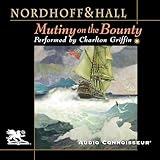
- Audible Audiobook
- Charles Nordhoff (Author) - Charlton Griffin (Narrator)
- English (Publication Language)
- 07/18/2014 (Publication Date) - Audio Connoisseur (Publisher)
The enduring appeal of The Bounty Trilogy by Charles Nordhoff lies in its commitment to verisimilitude. Nordhoff drew extensively upon historical records, including court-martial transcripts and personal accounts, to shape his storytelling. This dedication to detail immerses readers in the experience, allowing them to almost feel the salt spray, the cramped shipboard quarters, and the gnawing hunger of castaways. The narrative does not shy away from the brutality and severe discipline characteristic of naval life during that era, portraying Captain Bligh as a complex, often tyrannical figure, and Fletcher Christian as a man pushed beyond his limits. This approach offers a counterpoint to more romanticized adventure narratives, grounding the drama in palpable historical authenticity.
Step-by-Step Plan for Engaging with The Bounty Trilogy
A structured approach can significantly enhance the comprehension and appreciation of The Bounty Trilogy by Charles Nordhoff, particularly its historical and literary dimensions.
1. Initiate with Mutiny on the Bounty:
- Action: Begin reading with the first novel in the series.
- Focus On: The initial voyage, the escalating tensions between Captain Bligh and his crew, and the underlying causes of the mutiny. Pay close attention to Nordhoff’s portrayal of Bligh’s command style and the crew’s expressed grievances.
- Mistake to Avoid: Perceiving the mutiny as a simplistic conflict between a villainous captain and heroic sailors. Nordhoff offers a more nuanced, though arguably biased, perspective.
2. Proceed to Men Against the Sea:
- Action: Continue to the second novel in the trilogy.
- Focus On: The arduous ordeal faced by Captain Bligh and his loyalists after being cast adrift. Analyze the resourcefulness and sheer resilience displayed in their survival against overwhelming odds.
- Mistake to Avoid: Underestimating the profound physical and psychological toll of Bligh’s 3,600-mile journey. The narrative underscores the raw will to survive amidst starvation and exposure.
3. Conclude with Pitcairn’s Island:
- Action: Read the final novel of the series.
- Focus On: The establishment of the mutineers’ settlement on Pitcairn Island, the ensuing internal conflicts, and the eventual discovery of their descendants. Observe Nordhoff’s depiction of the long-term consequences stemming from their actions.
- Mistake to Avoid: Expecting a direct continuation of the high-stakes action from the first book. This novel shifts focus to the complex social dynamics and the eventual decline of the Pitcairn community.
4. Contextualize with Historical Research:
- Action: Undertake research into the actual historical events of the Bounty mutiny and its aftermath.
- Focus On: How Nordhoff’s fictionalized narrative aligns with or diverges from documented historical accounts. Understanding the real individuals involved can deepen your appreciation of the characters presented.
- Mistake to Avoid: Treating the trilogy as an exclusively factual historical document. While well-researched, it remains a work of fiction that involves deliberate narrative choices.
5. Deconstruct Thematic Elements:
- Action: Identify and analyze recurring themes that emerge throughout the trilogy.
- Focus On: Themes such as leadership, authority, survival, the nature of humanity under duress, and the ramifications of rebellion.
- Mistake to Avoid: Concentrating solely on the adventure aspects and overlooking the deeper thematic explorations of human behavior and societal structures presented by Nordhoff.
Common Myths
- Myth: Captain Bligh was purely a sadistic tyrant.
- Correction: While Nordhoff’s narrative emphasizes Bligh’s authoritarian nature and harsh discipline, historical records indicate he was also a competent navigator and officer operating within the strictures of the Royal Navy. The trilogy presents a complex, albeit critical, portrait, highlighting his flaws within the context of his command.
- Myth: The mutiny was a simple act of rebellion against a bad captain.
- Correction: The motivations behind the mutiny were multifaceted. While Bligh’s actions were a significant catalyst, the crew’s desire to remain in Tahiti, combined with the general harshness of naval discipline and specific crew grievances, contributed to the complex chain of events.
Common Mistakes
- Mistake: Viewing Captain Bligh solely as a one-dimensional villain.
- Why it Matters: Nordhoff, while critical, also presents Bligh as a competent navigator and a man operating within the rigid disciplinary framework of the Royal Navy. His flaws are amplified, but his role as a leader, however flawed, is central to the narrative’s conflict.
- Fix: Read with an understanding that historical figures are complex. Acknowledge Bligh’s harshness but also his navigational skills and the context of naval discipline.
- Mistake: Expecting modern pacing and dialogue.
- Why it Matters: The trilogy was written in the early 20th century and aims to capture the spirit and language of the late 18th century. This results in a more formal, descriptive style that can feel slow to readers accustomed to contemporary fiction.
- Fix: Adjust your expectations. Embrace the detailed descriptions and the deliberate unfolding of events as part of the immersive experience.
- Mistake: Overlooking the significance of the “Men Against the Sea” section.
- Why it Matters: This middle novel, focusing on Bligh’s survival voyage, is a masterclass in depicting human endurance. It provides a crucial counterpoint to the mutiny, showcasing Bligh’s own extraordinary capabilities when stripped of command.
- Fix: Give Men Against the Sea the attention it deserves. Recognize it not just as a bridge between the other two books but as a powerful, self-contained narrative of survival.
- Mistake: Assuming Pitcairn’s Island offers a tidy resolution.
- Why it Matters: The final book explores the long-term, often grim, reality of the mutineers’ self-imposed exile. It highlights internal strife, moral decay, and the eventual fading of their society, offering a complex and cautionary conclusion rather than a simple happy ending.
- Fix: Approach Pitcairn’s Island with an eye for the consequences and the psychological toll of the mutineers’ choices, rather than seeking a straightforward adventure conclusion.
Expert Tips for Reading The Bounty Trilogy
- Tip 1: Utilize a Ship Diagram.
- Actionable Step: Before or during your reading, find a diagram of an 18th-century sailing ship like HMS Bounty.
- Common Mistake to Avoid: Getting lost in the descriptions of shipboard locations (forecastle, quarterdeck, gunroom) without a visual reference, which can hinder comprehension of the spatial dynamics during key scenes.
- Tip 2: Keep a Character Tracker.
- Actionable Step: Maintain a simple list of the main characters encountered, noting their roles (e.g., officer, midshipman, sailor) and any significant early traits or allegiances.
- Common Mistake to Avoid: Confusing the numerous crew members, especially in Mutiny on the Bounty, leading to a diminished understanding of the interpersonal conflicts that drive the narrative.
- **Tip 3:
Quick Comparison
| Option | Best for | Pros | Watch out |
|---|---|---|---|
| The Bounty Trilogy by Charles Nordhoff Quick Answer | General use | The Bounty Trilogy by Charles Nordhoff presents a detailed, historically grou… | Mistake to Avoid: Perceiving the mutiny as a simplistic conflict between a vi… |
| Who This Is For | General use | This series is ideal for readers who value meticulous research, deliberate pa… | Mistake to Avoid: Underestimating the profound physical and psychological tol… |
| What to Check First | General use | Readers seeking rapid plot progression or contemporary writing styles may fin… | Mistake to Avoid: Expecting a direct continuation of the high-stakes action f… |
| Step-by-Step Plan for Engaging with The Bounty Trilogy | General use | Individuals with a strong interest in naval history, exploration narratives,… | Mistake to Avoid: Treating the trilogy as an exclusively factual historical d… |
Decision Rules
- If reliability is your top priority for The Bounty Trilogy by Charles Nordhoff, choose the option with the strongest long-term track record and support.
- If value matters most, compare total ownership cost instead of headline price alone.
- If your use case is specific, prioritize fit-for-purpose features over generic ‘best overall’ claims.