Faith and Doubt: Ross Douthat’s ‘The Deep Places
The Deep Places by Ross Douthat is a profound and often challenging examination of chronic illness, faith, and doubt, rooted in the author’s personal experience with Lyme disease. This book is not a narrative of simple recovery, but a deep dive into the theological and existential questions that arise when life’s certainties are eroded by persistent suffering.
Quick Answer
- The Deep Places by Ross Douthat offers a personal and theological exploration of chronic illness and its intersection with faith and doubt.
- It is best suited for readers grappling with existential questions, those interested in the theological implications of suffering, or individuals who appreciate introspective, essayistic writing.
- Readers seeking practical medical advice or a straightforward narrative of recovery will find this book does not meet those expectations.
Who This Is For
- Individuals interested in the philosophical and theological dimensions of suffering and chronic illness, particularly as viewed through a conservative Christian lens.
- Readers who appreciate deeply personal essays that blend memoir with broader reflections on faith, doubt, and the human behavior, similar to works by authors like Marilynne Robinson or Leslie Jamison.
What to Check First
- Author’s Perspective: Ross Douthat is a conservative Catholic columnist for The New York Times. His perspective will inherently shape the narrative and theological interpretations.
- Genre & Focus: This is not a medical memoir focused on recovery. It is a theological and philosophical reflection on experiencing Lyme disease and the spiritual questions it provokes.
- Narrative Style: Expect an essayistic, introspective style rather than a linear plot. The book prioritizes theological and existential exploration over a straightforward chronological account.
- Emotional Tone: The tone is often somber, questioning, and deeply personal, reflecting the author’s struggle with chronic illness.
The Deep Places by Ross Douthat: A Step-by-Step Exploration
This book is best approached not as a step-by-step guide to overcoming illness, but as an invitation to contemplate the profound questions that suffering can ignite. The author’s journey through chronic Lyme disease serves as the catalyst for these explorations.
1. Engage with the Personal Narrative:
- Action: Read the initial chapters detailing Douthat’s experience contracting Lyme disease and the onset of his chronic symptoms.
- What to Look For: The author’s initial bewilderment, the physical and mental toll, and the early signs of how this experience begins to challenge his established worldview.
- Mistake to Avoid: Expecting a linear medical case study. Douthat is not detailing symptoms for diagnostic purposes but as the raw material for theological reflection.
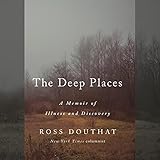
- Audible Audiobook
- Ross Douthat (Author) - Ross Douthat (Narrator)
- English (Publication Language)
- 10/26/2021 (Publication Date) - Random House Audio (Publisher)
2. Examine the Theological Framework:
- Action: Pay attention to Douthat’s references to Christian theology, particularly concepts of suffering, providence, and the nature of faith.
- What to Look For: How he attempts to reconcile his personal suffering with his religious beliefs, exploring traditional theological explanations and finding them potentially insufficient.
- Mistake to Avoid: Assuming a simple affirmation of faith. Douthat’s exploration is marked by genuine doubt and wrestling with difficult questions.
3. Analyze the Concept of “Deep Places”:
- Action: Consider the recurring metaphor of “deep places” as Douthat uses it to describe the hidden, often uncomfortable, realities of existence—physical ailments, spiritual struggles, and existential voids.
- What to Look For: How he contrasts these “deep places” with the superficiality of modern life and the conventional understanding of faith.
- Mistake to Avoid: Interpreting “deep places” solely as negative or pathological. Douthat suggests these are fundamental aspects of the human experience that can lead to deeper truth.
4. Trace the Evolution of Doubt:
- Action: Follow Douthat’s intellectual and spiritual journey as he confronts the limitations of his faith in the face of persistent illness.
- What to Look For: The moments where his previously held beliefs are tested and where he grapples with the silence or perceived absence of divine intervention.
- Mistake to Avoid: Dismissing his doubt as a lack of conviction. Douthat’s doubt is presented as an active, intellectually honest engagement with his faith.
5. Consider the Book’s Counterpoint to Modernity:
- Action: Observe how Douthat positions his personal struggle and theological reflections against contemporary cultural narratives, particularly those emphasizing optimism, constant progress, and the eradication of suffering.
- What to Look For: His critique of secularism’s inability to provide solace for deep suffering and his argument for the enduring relevance of religious frameworks.
- Mistake to Avoid: Overlooking the cultural commentary. The book is as much an essay on modern spiritual malaise as it is about chronic illness.
6. Reflect on the Nature of “Meaning-Making”:
- Action: Assess how Douthat attempts to derive meaning from his illness, not necessarily through a miraculous cure, but through the process of questioning and enduring.
- What to Look For: The insights gained from confronting vulnerability, the recalibration of priorities, and the potential for a more profound, albeit harder-won, faith.
- Mistake to Avoid: Searching for a neat resolution or a triumphant overcoming. The book’s power lies in its honest portrayal of ongoing struggle and contemplation.
Common Myths About The Deep Places by Ross Douthat
- Myth 1: The book is a guide to overcoming chronic illness.
- Why it Matters: This expectation leads to disappointment as the book’s focus is theological and existential, not medical.
- Fix: Approach the book as a philosophical exploration of suffering, not a self-help manual for illness management.
- Myth 2: Douthat’s writing suggests faith offers easy answers to suffering.
- Why it Matters: This misinterprets the core of his struggle. He actively questions and wrestles with his faith precisely because easy answers are absent.
- Fix: Recognize that Douthat’s exploration is characterized by doubt and a profound questioning of traditional theological certainties in the face of pain.
- Myth 3: The book is solely for devout Christians.
- Why it Matters: While rooted in Christian theology, the book’s themes of doubt, suffering, and the search for meaning are universal and can remain relevant to readers of various backgrounds.
- Fix: Consider the book as an exploration of fundamental human experiences that transcend specific religious doctrines, focusing on the author’s intellectual and emotional journey.
Expert Tips for Reading The Deep Places
- Tip 1: Read with an Open Mind to Theological Inquiry.
- Actionable Step: Be prepared to engage with theological concepts and arguments, even if they differ from your own beliefs.
- Common Mistake to Avoid: Dismissing the book if the theological framework doesn’t immediately align with your worldview; the value lies in observing the process of theological grappling.
- Tip 2: Pace Yourself and Allow for Reflection.
- Actionable Step: Do not rush through the text. Allow time after reading sections to consider the author’s reflections and their implications.
- Common Mistake to Avoid: Treating the book as a quick read; its density of thought requires deliberate engagement and contemplation.
- Tip 3: Contextualize Douthat’s Personal Experience.
- Actionable Step: Remember that the personal narrative of illness is the foundation upon which broader philosophical and theological arguments are built.
- Common Mistake to Avoid: Focusing solely on the medical details of Lyme disease and missing the author’s deeper existential and spiritual project.
BLOCKQUOTE_0
Decision Rules
- If reliability is your top priority for The Deep Places by Ross Douthat, choose the option with the strongest long-term track record and support.
- If value matters most, compare total ownership cost instead of headline price alone.
- If your use case is specific, prioritize fit-for-purpose features over generic ‘best overall’ claims.
FAQ
- Q: Is The Deep Places by Ross Douthat a book about finding a cure for Lyme disease?
- A: No, the book is primarily a theological and philosophical reflection on experiencing chronic illness. It uses Douthat’s personal struggle with Lyme disease as a lens through which to examine faith, doubt, and the human behavior, rather than offering medical advice or a narrative of recovery.
- Q: What is the central theme Douthat explores in The Deep Places?
- A: The central theme is the intersection of chronic suffering with faith and doubt. Douthat grapples with how personal physical and spiritual crises can challenge, deepen, or fundamentally alter one’s understanding of God, meaning, and existence.
- Q: Who would find this book most challenging?
- A: Readers who are strictly looking for practical medical advice, a straightforwardly optimistic narrative of overcoming adversity, or those who are uncomfortable with introspective theological questioning may find the book challenging or not to their taste.
- Q: Does Douthat offer solutions to the problem of suffering?
- A: Douthat does not offer simplistic solutions. Instead, he explores the nature of suffering and how confronting it can lead to a more profound, albeit often difficult, engagement with faith and the realities of human vulnerability. His “solution” lies more in the honest exploration and contemplation of these “deep places.”
| Aspect | Description | Strengths | Limitations |
|---|---|---|---|
| Narrative Style | Introspective, essayistic, blends memoir with theological reflection. |