Exploring The Death of Artemio Cruz
Alice Munro by The Death of Artemio Cruz: Quick Answer
- The Death of Artemio Cruz by Carlos Fuentes offers a fragmented, introspective examination of a powerful man’s life and legacy, structured around his deathbed.
- Readers seeking complex, non-linear narratives exploring themes of power, corruption, and memory will find this novel rewarding.
- Those who prefer straightforward chronological storytelling or lighter thematic content may find it challenging.
Who This Is For
- Readers interested in Latin American literature and its canonical works, particularly those exploring post-revolutionary Mexico.
- Individuals who appreciate experimental narrative structures and character studies that delve into the moral complexities of a life lived.
What to Check First
- Narrative Structure: The novel employs a non-linear, fragmented approach, shifting between Artemio’s present on his deathbed and various moments from his past, told from multiple perspectives (first-person, third-person, and an omniscient narrator addressing Artemio directly).
- Thematic Depth: Key themes include the corrupting nature of power, the unreliability of memory, the consequences of moral compromise, and the search for redemption or meaning in a life filled with regret.
- Historical Context: Understanding the Mexican Revolution and its aftermath provides crucial context for Artemio’s rise and the societal forces that shaped him.
- Character Complexity: Artemio Cruz is not presented as a simple hero or villain, but as a morally ambiguous figure whose actions have far-reaching consequences.
Step-by-Step Plan for Reading The Death of Artemio Cruz
1. Familiarize yourself with the premise: Understand that the novel is set during Artemio Cruz’s final moments, where his life flashes before his eyes.
- Action: Begin reading with the understanding that the narrative is anchored in death and reflection.
- What to look for: The immediate sense of finality and introspection.
- Mistake to avoid: Expecting a traditional, linear plot progression from the outset.
2. Engage with the fragmented structure: Be prepared for shifts in time, perspective, and narrative voice.
- Action: Allow the narrative to unfold without forcing a chronological order.
- What to look for: The way different viewpoints reveal contrasting aspects of Artemio’s character and experiences.
- Mistake to avoid: Becoming frustrated by the lack of chronological order; embrace it as a key element of the novel’s design.
3. Identify recurring motifs and symbols: Pay attention to recurring images, phrases, and ideas that contribute to the thematic landscape.
- Action: Note down any repeated elements that seem significant.
- What to look for: The symbolic weight of elements like the land, women, and money.
- Mistake to avoid: Overlooking the subtle connections that build the novel’s deeper meaning.
4. Analyze the different narrative voices: Note how each narrative perspective (I, you, he) offers a distinct lens through which to view Artemio’s life.
- Action: Differentiate between the “I” (Artemio’s internal monologue), “You” (direct address from an omniscient narrator), and “He” (external observations).
- What to look for: The distinct contribution of each voice to the portrait of Artemio.
- Mistake to avoid: Confusing the distinct narrative voices, which are crucial for understanding the multifaceted nature of Artemio’s consciousness.
For those interested in comparing literary styles and thematic explorations, the connection between Alice Munro’s work and Carlos Fuentes’s The Death of Artemio Cruz offers a fascinating perspective. This comparison highlights how different authors approach complex human experiences.
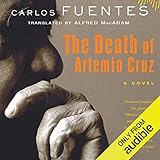
- Audible Audiobook
- Carlos Fuentes (Author) - Tony Chiroldes (Narrator)
- English (Publication Language)
- 04/29/2014 (Publication Date) - Audible Studios (Publisher)
5. Consider the moral implications of Artemio’s choices: As you read, reflect on the ethical compromises Artemio made in his pursuit of power and wealth.
- Action: Pause periodically to consider the ethical weight of Artemio’s decisions.
- What to look for: The impact of his decisions on himself and others.
- Mistake to avoid: Judging Artemio solely by modern moral standards without considering the historical and personal context.
6. Reflect on the ending: The conclusion is not a neat resolution but a summation of Artemio’s life and its unresolved questions.
- Action: Allow the ending to resonate without seeking definitive closure.
- What to look for: The lingering sense of ambiguity and the ultimate judgment of his life.
- Mistake to avoid: Searching for definitive answers or a clear moral lesson; the novel is more about exploration than pronouncement.
Alice Munro by The Death of Artemio Cruz: A Comparative Perspective
Carlos Fuentes’s The Death of Artemio Cruz and Alice Munro’s body of work, while distinct in origin and style, offer profound explorations of human experience, memory, and the weight of the past. This comparison highlights how different authors engage with similar thematic concerns. For instance, both authors delve into the complexities of individual lives, but Fuentes does so through the grand, often brutal sweep of a nation’s history embodied in one man, while Munro typically focuses on the intimate, domestic landscapes of ordinary lives in rural Canada. When comparing Alice Munro by The Death of Artemio Cruz, it’s essential to note the differing scales of their narratives.
Examining Alice Munro by The Death of Artemio Cruz
When considering Alice Munro by The Death of Artemio Cruz, one might look at the construction of character and the use of time. Fuentes’s Artemio is a titan, a figure shaped by revolution and immense political power, whose life is a tapestry of grand ambition and moral decay. In contrast, Munro’s characters, while equally complex, often navigate subtler forms of personal struggle and societal constraint within more contained settings. The difference lies not in the depth of psychological insight, but in the scale of the canvas and the forces at play. Fuentes uses Artemio’s deathbed to refract the entire history of modern Mexico, making the personal inextricably political. Munro, conversely, often finds the epic within the everyday, revealing the profound shifts and enduring impacts of seemingly minor life events.
BLOCKQUOTE_0
Common Myths About The Death of Artemio Cruz
- Myth: The novel is difficult because it is written in Spanish.
- Why it matters: This myth can deter readers who might otherwise enjoy the novel but are hesitant due to language barriers, limiting their engagement with a significant work of literature.
- Fix: The Death of Artemio Cruz is widely available in excellent English translations, notably by Sam Hileman. The translation aims to preserve the novel’s stylistic nuances and thematic richness, making it accessible to English-speaking readers.
- Myth: The fragmented structure means the plot is nonsensical.
- Why it matters: This misconception can lead readers to dismiss the novel as unreadable or overly academic, preventing them from appreciating its artistic merit and thematic depth.
- Fix: The fragmentation is a deliberate artistic choice that mirrors the fractured nature of memory and consciousness, particularly in the face of death. Each piece, though seemingly disjointed, contributes to a larger mosaic that reveals Artemio’s character and life story in a unique, psychologically resonant way.
- Myth: Artemio Cruz is simply a corrupt villain.
- Why it matters: This reduces the novel to a simplistic moral tale and overlooks its nuanced exploration of human nature, character development, and historical context.
- Fix: Fuentes presents Artemio as a deeply flawed but complex figure whose actions are a product of his time and circumstances. The novel invites readers to grapple with his compromises and motivations, recognizing the shades of gray inherent in a life lived through turbulent historical events.
Expert Tips for Reading The Death of Artemio Cruz
- Tip: Embrace the “You” narration.
- Actionable Step: When you encounter passages addressed directly to Artemio (“You”), recognize this as the omniscient narrator’s voice, offering an external, often critical, perspective on Artemio’s actions and thoughts.
- Common Mistake to Avoid: Misinterpreting this “You” as Artemio speaking to himself or another character, which can lead to confusion about the narrative perspective.
- Tip: Keep a character and timeline note.
- Actionable Step: Briefly jot down key characters and the general era of the past events you encounter as they emerge. This is particularly helpful during initial readings to track the non-linear progression.
- Common Mistake to Avoid: Trying to perfectly recall every character and date; focus on the major figures and the progression of Artemio’s life stages rather than getting bogged down in minor details.
- Tip: Read with an awareness of symbolism.
- Actionable Step: Pay attention to recurring objects, places, and natural elements (like the river, the land, or specific animals) as they often carry symbolic weight related to Artemio’s life and the novel’s themes of power, decay, and memory.
- Common Mistake to Avoid: Treating all narrative elements as purely literal, missing the deeper layers of meaning Fuentes embeds within the text.
Decision Rules
- If narrative complexity is your primary criterion for appreciating works like Alice Munro by The Death of Artemio Cruz: Prioritize The Death of Artemio Cruz for its experimental structure and dense thematic exploration.
- If straightforward character arcs are more important: You might find The Death of Artemio Cruz challenging, and a different author’s work might be a better fit for this specific preference.
- If historical context is a key driver: The Death of Artemio Cruz offers a potent lens into post-revolutionary Mexico, which is a significant differentiator.
Quick Comparison
| Option | Best for | Pros | Watch out |
|---|---|---|---|
| Alice Munro by The Death of Artemio Cruz Quick Answer | General use | <em>The Death of Artemio Cruz</em> by Carlos Fuentes offers a fragmented, introspect… | Mistake to avoid: Expecting a traditional, linear plot progression from the o… |
| Who This Is For | General use | Readers seeking complex, non-linear narratives exploring themes of power, cor… | Mistake to avoid: Becoming frustrated by the lack of chronological order; emb… |
| What to Check First | General use | Those who prefer straightforward chronological storytelling or lighter themat… | Mistake to avoid: Overlooking the subtle connections that build the novel’s d… |
| Step-by-Step Plan for Reading The Death of Artemio Cruz | General use | Readers interested in Latin American literature and its canonical works, part… | Mistake to avoid: Confusing the distinct narrative voices, which are crucial… |
FAQ
- Q: Is The Death of Artemio Cruz a difficult book to read?
A: While its non-linear structure and thematic depth can present a challenge, The Death of Artemio Cruz is considered a rewarding read for those who engage with its narrative style. Reading with patience and an open mind to its fragmented approach is key.
- Q: What is the significance of the multiple narrative voices?
A: The shifting voices—first-person (“I”), direct address (“You”), and third-person (“He”)—are integral to understanding Artemio Cruz. They reveal his internal consciousness, the narrator’s judgment, and external observations, creating a complex, multi-dimensional portrait of the character.
- Q: How does The Death of Artemio Cruz relate to the Mexican Revolution?
A: The novel is deeply intertwined with the Mexican Revolution and its aftermath. Artemio’s life story is presented as a microcosm of the revolution’s promises, betrayals, and the subsequent rise of a new, often corrupt, elite.
- Q: Should I read The Death of Artemio Cruz before or after other Carlos Fuentes novels?
A: While not strictly necessary, reading other of Fuentes’s works, particularly those dealing with Mexican history like The Good Conscience or Terra Nostra, can enhance your appreciation of his recurring themes and stylistic evolution. However, The Death of Artemio Cruz stands powerfully on its own.