Exploring Emily Brontë’s Poetic Voice and Themes
The Poems of Emily Bronte by Emily Brontë: The Poems of Emily Brontë by Emily Brontë: Quick Answer
- Core Focus: Explores Emily Brontë’s distinctive poetic voice, characterized by intense emotion, a profound connection to nature, and existential questioning.
- Reader Value: Offers direct insight into Brontë’s worldview, showcasing the raw power and often bleak, spiritual underpinnings of her thoughts beyond her novels.
- Required Engagement: Demands an appreciation for stark, unvarnished expression and a willingness to confront challenging emotional and philosophical landscapes.
The Poems of Emily Bronte by Emily Brontë: Who This Is For
- Readers seeking to understand Emily Brontë’s complete literary output, particularly her foundational poetic contributions.
- Individuals interested in the development of her unique thematic concerns and stylistic innovations, which directly inform her prose.
What to Check First
- Brontë’s Biographical Context: Familiarize yourself with her isolated life in Haworth, Yorkshire, and her close familial relationships. This context is critical for understanding the origins of her themes of solitude and intense inner life.
- Victorian Poetic Landscape: Understand the prevailing poetic conventions of the Victorian era. Brontë often adhered to some forms but significantly subverted expectations regarding sentimentality and subject matter.
- Thematic Overlap with Novels: If you have read Wuthering Heights, note the thematic and stylistic echoes present in her poetry. This will provide a comparative framework for her literary voice.
- Critical Interpretations: Briefly review common scholarly interpretations of her work. This awareness can help you critically examine established viewpoints and form your own informed perspective.
Step-by-Step Plan: Engaging with The Poems of Emily Brontë
1. Initial Thematic Identification: Begin by reading a representative selection of poems from The Poems of Emily Brontë by Emily Brontë.
- Action: Read poems such as “No Coward Soul Is Mine,” “The Prisoner,” and “Cold in the Earth.”
- Look for: Recurring themes including nature’s untamed power, spiritual doubt or unconventional faith, mortality, and intense personal longing.
- Mistake: Assuming a straightforward narrative or conventionally sentimental tone. Brontë’s poetry is often philosophical, complex, and emotionally unvarnished.
2. Analyze Nature as a Mirror: Examine how Brontë employs imagery of the natural world.
- Action: Pay close attention to descriptions of moors, storms, wind, and the stark Yorkshire landscape.
- Look for: Nature functioning not merely as a backdrop, but as a reflection of internal states, a source of spiritual insight, or a force of untamed, indifferent power.
- Mistake: Interpreting nature solely as a pleasant or pastoral element; Brontë’s nature is frequently wild, challenging, and even threatening, mirroring human emotional turbulence.
3. Deconstruct Spiritual and Religious Undertones: Assess Brontë’s complex engagement with faith and the divine.
- Action: Identify passages that address God, eternity, or spiritual yearning.
- Look for: A questioning, sometimes defiant, relationship with traditional religious doctrine. Brontë often finds divinity in nature or within the self, rather than solely through established dogma.
- Mistake: Categorizing her spiritual outlook as conventionally pious. Her spirituality is often personal, unconventional, and marked by profound existential wrestling.
4. Evaluate Emotional Intensity and Honesty: Focus on the raw emotional tenor of the poems.
- Action: Note the expressions of love, grief, despair, defiance, and stoicism.
- Look for: A direct, unsparing emotional honesty that can be both profoundly powerful and unsettling for the reader.
- Mistake: Dismissing the intensity as mere melodrama. This raw emotion is a core, authentic element of her poetic voice and worldview.
If you are comparing options here, The Poems of Emily Bronte by Emily Brontë is a relevant choice worth checking.
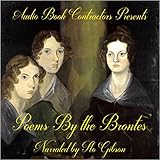
- Audible Audiobook
- Anne Bronte (Author) - Flo Gibson (Narrator)
- English (Publication Language)
- 04/12/2017 (Publication Date) - Audio Book Contractors, LLC (Publisher)
5. Assess Poetic Structure and Diction: Observe Brontë’s deliberate use of form and language.
- Action: Consider rhyme schemes, meter, and specific word choices.
- Look for: A precise, often stark, use of language that reinforces her thematic concerns and contributes to the poems’ impact.
- Mistake: Overlooking the craft in favor of emotional content. Her structural choices and diction are integral to the power and meaning of her work.
6. Identify the “Failure Mode”: The Illusion of Simplicity.
- Action: Re-read a poem where the initial impression was straightforward or easily accessible.
- Look for: Deeper layers of meaning, paradoxes, or unstated philosophical assumptions that challenge the surface interpretation.
- Mistake: Stopping at the first, most obvious meaning. This leads to a superficial understanding of Brontë’s profound, often bleak, philosophical and psychological insights, missing the complex architecture beneath the direct expression.
Common Mistakes
- Mistake: Neglecting her poetry in favor of focusing solely on Wuthering Heights.
- Why it matters: Her poems offer a more direct and unmediated expression of her core philosophical and emotional concerns, providing essential context for the thematic depth of her novel.
- Fix: Allocate dedicated reading time to The Poems of Emily Brontë by Emily Brontë to appreciate the full scope of her literary contributions and the genesis of her ideas.
- Mistake: Expecting conventional Victorian sentimentality or romanticism.
- Why it matters: Brontë’s poetry is often stark, questioning, and intensely personal, diverging significantly from the more decorous or overtly sentimental output of many contemporaries.
- Fix: Approach her work with an openness to challenging themes, a direct emotional landscape, and a willingness to engage with philosophical and spiritual ambiguity.
- Mistake: Interpreting her spiritual themes as orthodox religious adherence.
- Why it matters: Brontë grappled deeply with faith, often finding spiritual truths in nature and personal experience rather than adhering strictly to dogma. Her poems reveal a personal quest for meaning.
- Fix: Analyze her poems for personal dialogues with the divine, instances of doubt, and unconventional affirmations of spiritual truth, rather than seeking conventional piety.
- Mistake: Underestimating the symbolic power of her nature imagery.
- Why it matters: Nature in Brontë’s poetry is not merely descriptive but a potent force that reflects internal states, existential questions, and the sublime.
- Fix: Consider how the wild, untamed, and sometimes indifferent aspects of nature in her poems mirror the intensity of her human emotions and philosophical explorations.
The Poems of Emily Brontë by Emily Brontë: A Contrarian Perspective
While Emily Brontë’s poetry is widely celebrated for its raw emotional power and profound connection to nature, a contrarian viewpoint suggests that its very directness and perceived simplicity can mask a more complex, even bleak, philosophical underpinning. Readers often encounter frustration when their expectations of poetic convention clash with Brontë’s unvarnished, often challenging, truths.
Deconstructing Brontë’s Poetic Landscape
Brontë’s poetry is distinguished by its starkness, its engagement with the sublime in nature, and its deep explorations of isolation, faith, and mortality. Unlike many Victorian poets who favored elaborate ornamentation and clear moral narratives, Brontë’s voice is frequently direct, unsparing, and intensely personal. This directness, however, can be a barrier for readers accustomed to more mediated or conventionally comforting expressions.
BLOCKQUOTE_0
This quote encapsulates Brontë’s self-contained nature, a trait that fuels both her poetic power and her thematic isolation. It highlights a preference for introspection that can make her work feel inaccessible to those seeking external validation or easy emotional resonance.
Counterpoint: The Challenge of Brontë’s Unvarnished Truths
A common pitfall for readers approaching The Poems of Emily Brontë by Emily Brontë is the expectation of a comforting or easily digestible emotional arc. Brontë frequently delves into themes of despair, existential doubt, and the perceived indifference of the universe. Her profound connection to nature is not always one of pastoral beauty but often of a wild, untamed power that mirrors the turbulence of the human soul.
- Thematic Complexity vs. Perceived Simplicity: Poems that appear straightforward on the surface, particularly those focusing on nature, often carry deeper philosophical implications about humanity’s place in the cosmos. The directness of her language can mask intricate theological or existential questioning.
- Emotional Intensity as a Barrier: The raw, often bleak, emotional landscape depicted can be off-putting. Readers accustomed to more tempered expressions of feeling may find Brontë’s intensity overwhelming or even alienating, leading to a misinterpretation of her intent as mere emotional excess.
Expert Tips for Navigating Brontë’s Poetry
To gain a richer understanding and avoid common misinterpretations of The Poems of Emily Brontë by Emily Brontë, consider the following practical advice.
- Tip 1: Embrace the Starkness as Metaphor.
- Actionable Step: When reading poems that describe harsh weather or desolate landscapes, actively consider how these descriptions serve as metaphors for internal emotional states or philosophical outlooks, rather than purely literal depictions.
- Common Mistake to Avoid: Interpreting nature imagery solely literally or as mere scenic description, thereby missing its potent symbolic weight and connection to Brontë’s inner life.
- Tip 2: Question Religious Certainty.
- Actionable Step: Analyze poems that touch on faith or spirituality by looking for questions
Quick Comparison
| Option | Best for | Pros | Watch out |
|---|---|---|---|
| The Poems of Emily Brontë by Emily Brontë Quick Answer | General use | Core Focus: Explores Emily Brontë’s distinctive poetic voice, characterized b… | Mistake: Assuming a straightforward narrative or conventionally sentimental t… |
| Who This Is For | General use | Reader Value: Offers direct insight into Brontë’s worldview, showcasing the r… | Mistake: Interpreting nature solely as a pleasant or pastoral element; Brontë… |
| What to Check First | General use | Required Engagement: Demands an appreciation for stark, unvarnished expressio… | Mistake: Categorizing her spiritual outlook as conventionally pious. Her spir… |
| Step-by-Step Plan Engaging with The Poems of Emily Brontë | General use | Readers seeking to understand Emily Brontë’s complete literary output, partic… | Mistake: Dismissing the intensity as mere melodrama. This raw emotion is a co… |
Decision Rules
- If reliability is your top priority for The Poems of Emily Bronte by Emily Brontë, choose the option with the strongest long-term track record and support.
- If value matters most, compare total ownership cost instead of headline price alone.
- If your use case is specific, prioritize fit-for-purpose features over generic ‘best overall’ claims.