David Treuer’s The Heartbeat of Wounded Knee
Quick Answer
- The Heartbeat Of Wounded Knee by David Treuer offers a critical re-examination of Native American history, challenging the prevailing narrative of victimhood and emphasizing resilience and agency.
- It provides a nuanced perspective, moving beyond historical trauma to highlight ongoing Indigenous presence and innovation.
- This book is essential for readers seeking a deeper, more complex understanding of Native American experiences beyond common misconceptions.
Who This Is For
- Readers interested in a comprehensive and unsentimental history of Native American peoples in the United States.
- Individuals seeking to challenge and expand their understanding of Indigenous history, moving beyond simplistic or outdated narratives.
What To Check First
- Authorial Stance: David Treuer, an Ojibwe author, brings a unique insider perspective, which shapes the narrative and its emphasis on lived experience and cultural continuity.
- Historical Scope: The book spans from pre-colonial times to the present day, focusing on the period following the Wounded Knee Massacre of 1890 as a pivotal, yet often misinterpreted, turning point.
- Central Argument: Treuer contends that Indigenous peoples have consistently adapted, resisted, and innovated, rather than simply succumbing to external forces, thereby reframing their history as one of ongoing life and vitality.
- Narrative Approach: The book blends historical analysis with personal anecdotes and observations, creating a deeply personal yet rigorously researched account.
Step-by-Step Plan
1. Engage with the Introduction: Understand Treuer’s thesis that the dominant narrative of Native American history is incomplete, often focusing on victimhood rather than resilience and continuity.
- Action: Read the introduction carefully.
- What to look for: Treuer’s explicit statements about the “heartbeat” of Indigenous life and his critique of historical representations.
- Mistake: Skipping the introduction and missing the foundational argument that underpins the entire book.
2. Analyze the Post-1890 Focus: Recognize that while the book covers a vast timeline, it specifically interrogates the period following the 1890 Wounded Knee Massacre, arguing it was not an end but a transformation.
- Action: Pay close attention to chapters dealing with the late 19th and early 20th centuries.
- What to look for: Evidence of Indigenous adaptation, political maneuvering, and cultural survival in the face of immense pressure.
- Mistake: Assuming the book is solely a recounting of atrocities without examining the subsequent agency of Native peoples.
3. Identify Examples of Agency and Resilience: Look for specific instances where Native Americans actively shaped their own destinies, developed new strategies, and maintained cultural practices.
- Action: Note down recurring themes of innovation, political organization, and cultural persistence.
- What to look for: Examples like legal battles, economic initiatives, and the adaptation of traditions.
- Mistake: Focusing only on the oppression described and overlooking the counter-narratives of strength presented.
4. Examine the Critique of External Narratives: Understand Treuer’s challenge to how non-Native historians and popular culture have framed Native American history.
- Action: Note Treuer’s direct or implied critiques of common historical interpretations.
- What to look for: Discussions of how Indigenous peoples have been stereotyped or misrepresented.
- Mistake: Accepting historical accounts uncritically without considering Treuer’s counter-arguments about their limitations.
5. Consider the “Heartbeat” Metaphor: Grasp the significance of the title’s metaphor as representing the enduring vitality and ongoing existence of Indigenous cultures.
- Action: Reflect on how Treuer uses this metaphor throughout the book.
- What to look for: Instances where the “heartbeat” signifies life, continuity, and active presence.
- Mistake: Interpreting the “heartbeat” as merely a poetic device rather than a core thematic element representing enduring life.
6. Assess the Nuance in Modern Indigenous Life: Appreciate Treuer’s depiction of contemporary Native American communities as diverse, dynamic, and actively engaged in the modern world.
- Action: Read the sections discussing contemporary issues and experiences.
- What to look for: Evidence of ongoing cultural production, political engagement, and technological adoption.
- Mistake: Associating Native American identity solely with historical figures and events, neglecting the vibrant present.
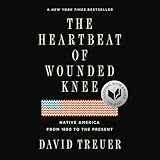
- Audible Audiobook
- David Treuer (Author) - Tanis Parenteau (Narrator)
- English (Publication Language)
- 01/22/2019 (Publication Date) - Penguin Audio (Publisher)
The Heartbeat Of Wounded Knee by David Treuer: A Deeper Dive
David Treuer’s The Heartbeat Of Wounded Knee by David Treuer is not simply another historical account; it is a profound reorientation of how we understand Native American history. Treuer, an Ojibwe author, moves beyond the often-told narrative of perpetual victimhood following catastrophic events like the Wounded Knee Massacre of 1890. Instead, he argues for a history characterized by continuous adaptation, resilience, and a persistent, vital Indigenous presence. This book matters because it actively pushes back against a flattened, often tragic, portrayal of Native peoples, insisting on their ongoing agency and complex engagement with the world. It is a crucial corrective for anyone seeking a more accurate and respectful understanding of Indigenous experiences in America.
Common Myths
- Myth: Native American history ended with the major massacres and land seizures of the 19th century.
- Why it matters: This myth perpetuates a view of Indigenous peoples as relics of the past, ignoring their ongoing existence and contributions.
- Fix: Recognize that events like the Wounded Knee Massacre, while devastating, marked a point of transformation and adaptation, not an endpoint, for Native cultures. Treuer highlights how Indigenous peoples continued to innovate and assert their presence.
- Myth: Indigenous resistance was primarily violent and ultimately futile.
- Why it matters: This simplifies complex political and social struggles, overlooking the diverse strategies employed by Native nations for survival and self-determination.
- Fix: Understand that resistance took many forms, including legal challenges, political organization, cultural preservation, and economic development, as demonstrated by Treuer’s analysis of post-1890 Indigenous efforts.
- Myth: Native Americans are a monolithic group with uniform experiences and beliefs.
- Why it matters: This erases the immense diversity of over 574 federally recognized tribes, each with unique histories, languages, and cultures.
- Fix: Appreciate the distinct identities and varied experiences of different Native nations, as Treuer illustrates through specific tribal examples and their unique paths of resilience.
Expert Tips
- Tip: Actively look for Treuer’s counter-narratives to dominant historical interpretations.
- Action: When reading about a historical event or period, consider what Treuer might be saying differently than conventional accounts.
- Mistake to avoid: Accepting simplified or overtly tragic historical accounts without seeking the nuance of Indigenous agency that Treuer emphasizes.
- Tip: Focus on the concept of “heartbeat” as a metaphor for enduring vitality, not just survival.
- Action: Identify passages where Treuer uses the idea of life force, continuity, or ongoing cultural production.
- Mistake to avoid: Interpreting the book’s focus on resilience as simply enduring hardship, rather than actively living and creating.
- Tip: Consider how Treuer’s personal identity as an Ojibwe author informs his perspective.
- Action: Reflect on how an insider’s viewpoint might shape the selection of evidence and the overall tone.
- Mistake to avoid: Treating the book as a purely objective historical text without acknowledging the author’s lived experience and cultural background, which imbues it with a distinct voice and purpose.
BLOCKQUOTE_0
The Heartbeat Of Wounded Knee by David Treuer: A Decision Criterion
When considering The Heartbeat Of Wounded Knee by David Treuer, a key decision criterion is your willingness to engage with a narrative that challenges prevailing, often simplistic, understandings of Indigenous history. If you are looking for a book that confirms a historical trajectory of victimhood and inevitable decline, this might not be the right fit. However, if you are prepared to have your assumptions questioned and to explore a more complex, dynamic, and ultimately hopeful portrayal of Indigenous resilience and continuous presence, then this book is exceptionally valuable.
Quick Comparison
| Option | Best for | Pros | Watch out |
|---|---|---|---|
| Quick Answer | General use | The Heartbeat Of Wounded Knee by David Treuer offers a critical re-examinatio… | Mistake: Skipping the introduction and missing the foundational argument that… |
| Who This Is For | General use | It provides a nuanced perspective, moving beyond historical trauma to highlig… | Mistake: Assuming the book is solely a recounting of atrocities without exami… |
| What To Check First | General use | This book is essential for readers seeking a deeper, more complex understandi… | Mistake: Focusing only on the oppression described and overlooking the counte… |
| Step-by-Step Plan | General use | Readers interested in a comprehensive and unsentimental history of Native Ame… | Mistake: Accepting historical accounts uncritically without considering Treue… |
Decision Rules
- If reliability is your top priority for The Heartbeat Of Wounded Knee by David Treuer, choose the option with the strongest long-term track record and support.
- If value matters most, compare total ownership cost instead of headline price alone.
- If your use case is specific, prioritize fit-for-purpose features over generic ‘best overall’ claims.
FAQ
- Q: Is this book primarily about the 1890 Wounded Knee Massacre?
- A: While the 1890 Wounded Knee Massacre serves as a significant point of departure and analysis, the book’s scope extends far beyond it, covering Native American history from pre-contact to the present day. Treuer uses the massacre as a lens to re-examine the broader narrative of Indigenous resilience and adaptation.
- Q: Does the book offer solutions or policy recommendations for contemporary Native American issues?
- A: The book is primarily historical and analytical, focusing on reframing the past and understanding present realities through that reframed history. While it illuminates the enduring strengths of Indigenous communities, it does not offer prescriptive policy solutions.
- Q: How does Treuer’s perspective differ from other historians of Native American history?
- A: Treuer’s distinction lies in his identity as an Ojibwe author, which allows him to center Indigenous agency and resilience, challenging the often external, and at times deficit-focused, narratives of non-Native historians. He emphasizes continuity and adaptation over a purely tragic arc.
- Q: What kind of reader would most benefit from “The Heartbeat of Wounded Knee”?
- A: Readers who are curious about a deeper, more nuanced understanding of Native American history, those who want to move beyond common stereotypes, and individuals interested in the ongoing vitality of Indigenous cultures would benefit most.
##