The History Of A Staple: Mark Kurlansky’s ‘Cod
Quick Answer
- Cod by Mark Kurlansky presents a comprehensive historical analysis, arguing that the Atlantic cod was a pivotal force in shaping Western civilization, from exploration and economics to culture and cuisine.
- This book is essential for readers interested in the profound, often overlooked, impact of a single natural resource on human history and environmental sustainability.
- Kurlansky’s strength lies in his ability to weave a grand narrative from a specific subject, though the depth of detail requires focused attention.
Who This Is For
- Individuals curious about the deep historical connections between food resources, global economies, and the development of societies, particularly in the North Atlantic region.
- Readers who appreciate interdisciplinary narratives that integrate history, economics, environmental science, and culinary arts to understand the broader context of human civilization.
What to Check First
- Author’s Signature Style: Mark Kurlansky is known for his detailed explorations of singular subjects, revealing their vast historical reach. Recognize Cod fits this pattern.
- Historical Scope: The narrative spans centuries, from early European maritime activities to modern fishery management. Familiarity with this broad historical period will enhance comprehension.
- Ecological and Economic Interplay: Be prepared for substantial sections dedicated to the rise and fall of cod fisheries, emphasizing the consequences of overexploitation.
- Interdisciplinary Approach: Cod synthesizes historical events, economic principles, ecological science, and cultural practices, offering a holistic view of the fish’s influence.
Step-by-Step Plan: Understanding Cod by Mark Kurlansky
1. Analyze the Foundational Thesis: Begin by thoroughly reading Kurlansky’s introduction and early chapters. What to look for: The explicit argument that cod was not merely a food source but a primary driver of economic expansion, exploration, and societal development. Mistake to avoid: Underestimating the book’s central premise by assuming it’s a simple history of fish consumption.
2. Examine Early Exploitation and its Economic Impact: Focus on the sections detailing the initial discovery and intensive harvesting of cod fisheries. What to look for: Evidence of how cod revenue financed voyages of discovery, supported colonial ventures, and established the economic basis for burgeoning maritime nations. Mistake to avoid: Dismissing the economic significance of cod in the 15th-18th centuries; it was a critical global commodity.
3. Trace Cod’s Role in National Formation: Investigate how cod fisheries contributed to the rise of nations such as Portugal, England, France, and the United States. What to look for: The direct links between cod abundance, naval power, territorial expansion, and the evolution of distinct culinary and economic identities. Mistake to avoid: Viewing these national developments in isolation; Kurlansky stresses their interconnectedness through the cod trade.
4. Evaluate Preservation and Distribution Innovations: Pay close attention to the details regarding salting, drying, and other preservation techniques that facilitated cod’s long-distance trade. What to look for: The technological and logistical advancements that transformed cod into a globally accessible, storable staple. Mistake to avoid: Assuming cod was primarily consumed fresh; its preserved form was essential for its historical dominance and widespread availability.
5. Confront the Ecological and Economic Decline: Delve into the chapters that chronicle the collapse of cod stocks due to overfishing. What to look for: Data and narratives illustrating the ecological ramifications and the severe economic fallout for communities heavily reliant on this resource. Mistake to avoid: Perceiving the environmental warnings as exclusively modern issues; Kurlansky demonstrates a long history of boom-and-bust cycles driven by human activity.
For a deep dive into how a single fish shaped Western civilization, Mark Kurlansky’s ‘Cod’ is an indispensable read. It masterfully argues for the Atlantic cod’s pivotal role in exploration, economics, and culture.
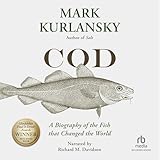
- Audible Audiobook
- Mark Kurlansky (Author) - Richard M. Davidson (Narrator)
- English (Publication Language)
- 08/26/2011 (Publication Date) - Recorded Books (Publisher)
6. Explore Culinary and Cultural Integration: Consider the sections that examine cod’s pervasive presence within various cuisines and cultural practices across different societies. What to look for: Specific examples showcasing cod’s culinary versatility and its symbolic significance in diverse cultural contexts. Mistake to avoid: Concentrating solely on the economic and political aspects, thereby overlooking the book’s celebration of cod’s enduring culinary legacy.
7. Synthesize the Interconnected Threads: After completing the reading, reflect on how Kurlansky integrates economic history, political strategy, environmental science, and food culture. What to look for: The cohesive argument that cod has been a central, often unrecognized, force in shaping human history and global development. Mistake to avoid: Reading the book as a collection of disconnected facts rather than a unified historical argument about cod’s pervasive influence.
Common Mistakes
- Viewing Cod as Merely a Food Source: Many readers might approach Cod expecting a straightforward history of fish consumption or recipes.
- Why it matters: This limited perspective misses Kurlansky’s central thesis that cod acted as a profound geopolitical and economic catalyst, influencing global events far beyond the dinner table.
- Fix: Actively seek out Kurlansky’s explicit connections between cod and state formation, trade routes, and international relations to grasp its broader historical role.
- Underestimating the Scale of Early Maritime Economies: The sheer magnitude and global reach of the historical cod trade can be difficult to fully appreciate.
- Why it matters: It represented one of the earliest truly globalized commodities, directly fueling exploration, the expansion of empires, and the establishment of transatlantic trade networks.
- Fix: Pay close attention to the economic figures, trade volumes, and logistical challenges Kurlansky presents to understand cod’s foundational role in early global commerce.
- Focusing Exclusively on Stock Collapse: The latter sections of the book detail the dramatic decline of cod populations, which can be a significant focus.
- Why it matters: While critically important, this emphasis can inadvertently overshadow the centuries of abundance and the diverse ways cod shaped societies during its peak, potentially leading to an incomplete understanding of its historical impact.
- Fix: Ensure you fully appreciate the historical impact and societal contributions during periods of cod abundance before concentrating solely on the subsequent ecological and economic decline.
- Neglecting the Importance of Preservation Techniques: The methods used to preserve cod, such as salting and drying, are fundamental to understanding its historical significance.
- Why it matters: These techniques enabled cod to be transported over vast distances, making it an economically viable and accessible food source for centuries across continents, supporting exploration and sustaining populations.
- Fix: Note how these specific preservation techniques directly facilitated long-distance trade, supported maritime exploration, and established dietary staples across diverse regions, shaping global diets and economies.
Cod by Mark Kurlansky: A Historical Overview
Mark Kurlansky’s Cod offers a compelling argument for the fish’s outsized role in shaping human history. The book meticulously details how the Atlantic cod transitioned from a vital food source to a cornerstone of economies, a driver of exploration, and a factor in international politics. Kurlansky’s narrative is a broad tapestry woven from threads of human ambition, ecological consequence, and culinary tradition. For readers seeking to understand the deep, often surprising, connections between what we consume and how societies evolve, Cod provides an illuminating and comprehensive journey.
A Counter-Intuitive Insight into Cod’s Influence
A less commonly discussed, yet critical, takeaway from Cod is that the fish’s historical dominance was as much a product of human innovation in preservation and distribution as it was of its sheer abundance. The development of salt cod, a stable and easily transportable foodstuff, was the true catalyst. This innovation enabled lengthy voyages, sustained armies and sailors, and established trade routes that bypassed the limitations of perishable goods. It underscores a vital principle: resource availability is only one component; human ingenuity in logistics and preservation can amplify or diminish a resource’s ultimate impact.
Expert Tips for Engaging with Cod by Mark Kurlansky
- Tip 1: Identify the “Why” Behind Events: When Kurlansky presents a historical event or economic trend linked to cod, actively question its significance and causal role. Common Mistake: Simply noting cod’s presence without understanding its catalytic function in driving decisions, trade, or political outcomes. Action: Look for explicit statements from Kurlansky that detail cod’s influence on historical processes and decision-making.
- Tip 2: Trace the “Cod Route” Geographically: Mentally map the trade networks and journeys described throughout the book, visualizing the flow of this commodity. Common Mistake: Treating the locations and trade connections as isolated facts rather than an integrated global system. Action: Visualize the movement of salt cod from fishing grounds to European markets and colonial settlements, noting how it interconnected disparate regions and economies.
- Tip 3: Connect Historical Patterns to Modern Issues: Recognize that the historical cycles of exploitation and resource decline discussed in Cod are directly relevant to contemporary sustainability debates. Common Mistake: Viewing the environmental issues discussed as solely historical curiosities without contemporary parallels. Action: Draw clear parallels between the historical overfishing of cod and current challenges in fisheries management and global environmental conservation to understand the enduring lessons.
Cod by Mark Kurlansky: A Historical Table
| Aspect | Historical Period | Impact on Human Civilization |
|---|---|---|
| <strong>Economic Engine</strong> | 15th – 18th Centuries | Funded exploration, sustained colonial economies, fueled naval power. |
| <strong>Dietary Foundation</strong> | 17th Century Onward | Provided essential protein for large populations, especially during religious observances. |
| <strong>Geopolitical Lever</strong> | 17th – 19th Centuries | Source of conflict and negotiation over fishing rights and territorial claims. |
| <strong>Ecological Warning</strong> | 20th Century – Present | Led to stock collapse, highlighting critical issues of overfishing and resource management. |
BLOCKQUOTE_0
Decision Rules
- If your primary interest is understanding the deep historical and economic impact of a single commodity, Cod by Mark Kurlansky is an essential read.
- If you are seeking a narrative that connects food, culture, and global development, this book offers a unique and comprehensive perspective