Bill Hayes’ ‘Insomniac City’: A Personal Journey
Bill Hayes’s Insomniac City: A Personal Journey is a memoir that delves into the quiet, often overlooked hours of New York City through the lens of sleeplessness. This review examines its narrative strengths, thematic depth, and suitability for discerning readers.
Who This Is For
- Readers who appreciate introspective, observational memoirs that explore urban environments and the human behavior.
- Individuals interested in narratives that blend personal experience with philosophical musings on solitude, connection, and the nature of perception.
What to Check First
- Narrative Style: Assess your comfort with Hayes’s associative, non-linear prose, which prioritizes thematic resonance over chronological progression.
- Thematic Resonance: Consider your interest in themes of insomnia, urban solitude, fleeting human encounters, and the city as a character.
- Authorial Voice: Determine if Hayes’s reflective, melancholic, and keenly observant tone aligns with your reading preferences.
- Pacing: Be prepared for a deliberate pace, as the book is more about immersion and contemplation than rapid plot development.
Step-by-Step Plan for Engaging with Insomniac City by Bill Hayes
1. Initiate with an Open Mindset: Approach the narrative without the expectation of a conventional, linear plot.
- Action: Read the initial chapters focusing on absorbing the nocturnal atmosphere and Hayes’s distinctive observational style.
- What to look for: The establishment of the nighttime setting and Hayes’s initial explorations of the city after dark.
- Mistake to avoid: Expecting immediate narrative momentum; the book builds its impact through cumulative impressions and thematic resonance.
2. Embrace the Associative Structure: Allow Hayes’s thoughts and observations to guide you through the text organically.
- Action: Do not resist the tangents or the way one idea naturally sparks another within the narrative.
- What to look for: The subtle connections Hayes draws between disparate encounters, memories, and urban details.
- Mistake to avoid: Attempting to force a linear plot where none is intended, which can lead to reader frustration.
3. Prioritize Sensory Details and Atmosphere: Pay close attention to Hayes’s vivid descriptions of New York City at night.
- Action: Highlight or mentally note passages that effectively capture the sights, sounds, and emotional tenor of nocturnal urban life.
- What to look for: The transformation of familiar urban spaces under the cloak of darkness and the unique energy of the city during its quietest hours.
- Mistake to avoid: Skimming descriptive passages; these are fundamental to the book’s immersive quality and thematic development.
4. Engage with the Philosophical Underpinnings: Consider the deeper questions Hayes poses about life, connection, and existence.
- Action: Pause to reflect on moments where Hayes moves beyond mere observation to profound contemplation.
- What to look for: His musings on loneliness, the nature of human encounters, and the search for meaning within urban anonymity.
- Mistake to avoid: Treating the book solely as a travelogue or memoir; its intellectual and emotional depth is central to its impact.
5. Observe the Character Interactions: Note the brief yet impactful encounters Hayes has with various individuals he meets.
- Action: Pay attention to the dynamics of these transient relationships and the insights derived from them.
- What to look for: How these encounters illuminate aspects of the human experience and contribute to Hayes’s own introspective journey.
- Mistake to avoid: Dismissing these encounters as minor; they often serve as crucial catalysts for Hayes’s deeper reflections.
6. Appreciate the Role of Insomnia: Understand how Hayes’s sleeplessness functions as a unique lens for his experiences.
- Action: Recognize how insomnia shapes his perception and grants him access to different facets of the city and his own psyche.
- What to look for: The distinctive perspective insomnia enables, allowing for observations that might otherwise be missed.
- Mistake to avoid: Viewing insomnia merely as a plot device; it is integral to the book’s thematic core and narrative structure.
For those drawn to introspective narratives and the unique atmosphere of urban landscapes, Bill Hayes’s Insomniac City offers a compelling exploration of New York City through the lens of sleeplessness. This memoir is a journey into the quiet hours, perfect for readers who appreciate a reflective and observational style.
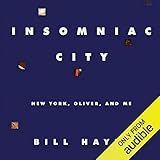
- Audible Audiobook
- Bill Hayes (Author) - Stephen Bel Davies (Narrator)
- English (Publication Language)
- 02/14/2017 (Publication Date) - Audible Studios for Bloomsbury (Publisher)
Insomniac City by Bill Hayes: Strengths and Limitations
Bill Hayes’s Insomniac City offers a distinctive perspective on New York City at night, driven by a deeply personal and introspective voice. The book excels in its evocative portrayal of the urban landscape after dark, transforming mundane streets into stages for existential reflection. Hayes’s prose is often lyrical, skillfully drawing connections between his own sleepless nights and the broader human experience of searching for meaning and connection. The encounters with various individuals, though frequently fleeting, are rendered with a keen eye for detail and a profound sense of empathy, serving as powerful anchors for his meditations. The book’s primary strength lies in its ability to immerse the reader in the quiet hours, allowing them to experience the city’s hidden rhythms and Hayes’s contemplative journey.
However, the very qualities that make Insomniac City compelling can also be perceived as limitations. The non-linear, associative structure, while integral to the book’s reflective nature, may prove challenging for readers who prefer a more straightforward narrative arc. The pacing can feel deliberate, even slow at times, as the book prioritizes atmosphere and introspection over plot progression. For some, the pervasive melancholic tone, while consistent, might become overwhelming without significant variation. Furthermore, the focus is intensely personal; readers seeking external events or a broader social commentary might find it less engaging. The book demands a reader willing to surrender to its unique rhythm and thematic explorations.
Common Myths About Insomniac City by Bill Hayes
- Myth: The book is a random collection of observations about New York City at night.
- Why it matters: This perspective diminishes the author’s deliberate craft and the underlying thematic coherence of the work.
- Fix: Understand that Hayes employs associative leaps to explore interconnected themes of insomnia, solitude, connection, and the urban environment, creating a carefully constructed mosaic rather than a haphazard compilation.
- Myth: Insomniac City is primarily a memoir focused on Bill Hayes’s personal struggles with insomnia.
- Why it matters: This interpretation frames the book too narrowly, overlooking its broader philosophical and observational scope.
- Fix: Recognize that while insomnia is the catalyst and a recurring motif, the book is more broadly about exploring the city, human encounters, and the nature of consciousness during the quiet hours, extending beyond personal affliction.
- Myth: The book’s relevance is limited to insomniacs or residents of New York City.
- Why it matters: This viewpoint restricts the book’s universal appeal and its exploration of human experiences that transcend specific circumstances.
- Fix: Appreciate that Hayes uses his specific context to explore universal themes of loneliness, connection, observation, and the search for meaning, which resonate with a much wider audience.
Expert Tips for Reading Insomniac City
- Tip: Read with an appreciation for atmospheric detail.
- Action: Pay close attention to Hayes’s descriptions of light, sound, and the physical environment of the city at night, allowing them to build a vivid mental landscape.
- Common Mistake to Avoid: Skimming descriptive passages in favor of narrative events; these sensory details are crucial to the book’s immersive quality and thematic development.
- Tip: Embrace the author’s reflective, associative style.
- Action: Allow your own thoughts to wander as you read, consciously connecting Hayes’s observations to your own experiences and ideas.
- Common Mistake to Avoid: Trying to impose a rigid, linear plot structure onto the narrative; the book’s strength lies in its fluid, non-linear exploration of themes and ideas.
- Tip: Consider the book as a meditation rather than a traditional story.
- Action: Approach each chapter as an opportunity for contemplation, exploring the ideas and emotions Hayes presents without demanding immediate resolution or a definitive conclusion.
- Common Mistake to Avoid: Expecting a fast-paced plot or a clear, definitive narrative arc; the book’s value is in its atmospheric exploration and thematic depth.
BLOCKQUOTE_0
Frequently Asked Questions About Insomniac City
- Q: Is Insomniac City a difficult read?
- A: The difficulty is subjective. Readers who prefer straightforward narratives might find its associative structure challenging. However, those who appreciate lyrical prose, introspection, and atmospheric detail will likely find it deeply rewarding.
- Q: What are the main themes explored in the book?
- A: Key themes include insomnia, solitude, urban exploration, the nature of connection, observation, memory, and the philosophical implications of experiencing the city during its quietest hours.
- Q: How does Bill Hayes’s personal experience with insomnia shape the book?
- A: Insomnia serves as both a literal condition and a metaphorical lens. It grants Hayes access to the nocturnal city, alters his perception, and fuels his introspective journey, making him a sensitive observer of both the external world and his internal landscape.
- Q: Who would enjoy Insomniac City the most?
- A: Readers who enjoy literary non-fiction, memoirs, urban studies, and philosophical explorations of everyday life will likely find this book engaging. It appeals to those who appreciate a reflective and observational approach to storytelling.
Comparative Analysis: Insomniac City by Bill Hayes
| Factor | Insomniac City by Bill Hayes | Other Nocturnal City Memoirs | Decision Criterion |
|---|---|---|---|
| Narrative Structure | Associative, non-linear, thematic | Often chronological, plot-driven | Choose based on preference for reflective meandering vs. structured progression. |
| Thematic Depth | Focus on insomnia, solitude, urban observation, human connection | Varies |
Decision Rules
- If reliability is your top priority for Insomniac City by Bill Hayes, choose the option with the strongest long-term track record and support.
- If value matters most, compare total ownership cost instead of headline price alone.
- If your use case is specific, prioritize fit-for-purpose features over generic ‘best overall’ claims.