Arthur Rimbaud’s The Drunken Boat: A Surrealist Poem
Quick Answer
- “The Drunken Boat” is a seminal French poem by Arthur Rimbaud, notable for its experimental language and vivid, disorienting imagery.
- It is best understood as a journey of liberation and disillusionment, prefiguring Surrealism.
- Readers seeking groundbreaking poetic technique and challenging symbolic landscapes will find it rewarding.
Who This Is For
- Readers interested in the development of modern poetry and the roots of Surrealism.
- Those who appreciate dense, symbolic language and a departure from traditional narrative structures.
What to Check First
- Translation: The effectiveness of “The Drunken Boat” is highly dependent on the translation. Different translators capture different nuances of Rimbaud’s complex French. Seek out respected versions.
- Context: Understanding Rimbaud’s life and the Symbolist movement provides crucial context for the poem’s themes of revolt and transcendence.
- Poetic Sensibility: This poem is not for the faint of heart or those seeking straightforward meaning. It requires an openness to abstract imagery and emotional intensity.
Step-by-Step Plan for Engaging with The Drunken Boat by Arthur Rimbaud
1. Read the Poem Aloud: This allows you to experience the sonic texture and rhythm of Rimbaud’s language, which is crucial to its impact.
- What to Look For: Pay attention to the flow, the unexpected juxtapositions of sounds, and the percussive quality of certain phrases.
- Mistake to Avoid: Reading silently without considering the auditory experience can lead to missing a key dimension of the poem’s power.
2. Consult a Reputable Translation: Since Rimbaud wrote in French, your engagement will be mediated by a translator.
- What to Look For: Compare brief passages from different translations if possible. Note how imagery and tone shift.
- Mistake to Avoid: Relying on a single, potentially weak translation without acknowledging its limitations.
3. Identify Key Symbols and Imagery: The poem is rich with potent, often startling, images.
- What to Look For: Note recurring motifs like water, storms, animals, and the ship itself. Consider their potential symbolic weight.
- Mistake to Avoid: Attempting to assign a single, definitive meaning to each symbol. Rimbaud’s power lies in ambiguity and suggestion.
4. Trace the Narrative Arc (or Lack Thereof): While not a conventional story, the poem charts a progression.
- What to Look For: Observe the shift from the boat’s initial liberation and wild journey to its eventual weariness and desire for rest.
- Mistake to Avoid: Expecting a clear plot. The “narrative” is more of an emotional and sensory progression.
5. Consider the Poem’s Emotional Landscape: “The Drunken Boat” is deeply emotional, conveying feelings of exhilaration, terror, and profound exhaustion.
- What to Look For: How does the language evoke these feelings? Where are the moments of intense joy or despair?
- Mistake to Avoid: Focusing solely on intellectual interpretation and neglecting the visceral, emotional response the poem aims to provoke.
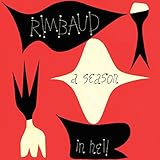
- Audible Audiobook
- Arthur Rimbaud (Author) - Michael C. Gwynne (Narrator)
- English (Publication Language)
- 06/11/2018 (Publication Date) - Spoken Word Inc (Publisher)
6. Research Rimbaud’s Biography and the Symbolist Movement: This provides essential context for the poem’s themes.
- What to Look For: Rimbaud’s early rebellion against societal norms and his pursuit of the poet as a “seer” are key.
- Mistake to Avoid: Treating the poem as an isolated artifact without understanding the historical and personal forces that shaped it.
7. Engage with Critical Interpretations (Selectively): After your initial reading, explore what others have said.
- What to Look For: Diverse critical perspectives can illuminate different facets of the poem, but don’t let them dictate your own experience.
- Mistake to Avoid: Over-reliance on criticism, which can stifle personal interpretation and appreciation.
The Drunken Boat by Arthur Rimbaud: Unpacking the Imagery
The poem’s power stems from its audacious use of imagery, which often defies easy categorization. Rimbaud presents a world where the inanimate is imbued with life and sensation, and where the natural order is subverted.
- Example: The opening lines describe the boat being “unmoored from its haulers.” This immediately establishes a sense of liberation and independent agency for the vessel.
- Takeaway: Recognize that the “drunkenness” is not literal intoxication but a state of wild, untamed freedom, a departure from control.
Common Myths About The Drunken Boat by Arthur Rimbaud
- Myth 1: The poem is simply a literal description of a boat adrift at sea.
- Why it Matters: This interpretation misses the poem’s profound metaphorical weight and its exploration of the human psyche.
- Correction: “The Drunken Boat” uses the image of a ship at sea as a powerful metaphor for the poet’s own journey of artistic and spiritual liberation, his rebellion against convention, and his ultimate disillusionment. The “sea” represents the vast, untamed realm of experience and imagination.
- Myth 2: The poem’s meaning is entirely obscure and unknowable.
- Why it Matters: While challenging, the poem offers consistent thematic throughlines and emotional arcs that can be deciphered with careful reading.
- Correction: While Rimbaud’s language is deliberately experimental and symbolic, the poem follows a discernible trajectory from exhilarating freedom to weary resignation. Key themes of revolt, sensory overload, and the search for the absolute can be identified.
Expert Tips for Reading The Drunken Boat
- Tip 1: Focus on the sensory experience over literal interpretation.
- Actionable Step: When encountering a striking image, try to identify the specific senses it appeals to (sight, sound, touch, smell) and the emotion it evokes.
- Common Mistake to Avoid: Getting bogged down trying to logically connect every image to a real-world object or event, which can obscure the poem’s emotional and psychological impact.
- Tip 2: Understand the concept of the poet as a “seer.”
- Actionable Step: Consider Rimbaud’s belief that the poet must undergo a “derangement of all the senses” to access hidden truths. View the boat’s journey as a manifestation of this process.
- Common Mistake to Avoid: Judging the poem’s wild imagery as simply chaotic or nonsensical without appreciating its foundation in a revolutionary artistic philosophy.
- Tip 3: Appreciate the poem’s linguistic innovation.
- Actionable Step: Note instances of unusual word combinations, neologisms, or unexpected grammatical structures. Consider how these choices contribute to the poem’s disorienting yet powerful effect.
- Common Mistake to Avoid: Dismissing the poem’s language as “difficult” or “unpoetic” without recognizing it as a deliberate attempt to expand the boundaries of poetic expression.
BLOCKQUOTE_0
The Drunken Boat by Arthur Rimbaud: A Table of Thematic Progression
| Stage of Journey | Dominant Imagery/Sensory Experience | Emotional Tone | Thematic Implication |
|---|---|---|---|
| Unmooring | Liberation, wild currents, elemental forces | Exhilaration, freedom | Escape from constraint, embrace of the unknown |
| Adrift | Storms, exotic landscapes, overwhelming sensations | Terror, awe, sensory overload | Confrontation with the sublime and chaotic |
| Weariness | Fading light, exhaustion, longing for home | Resignation, melancholy | The cost of extreme experience, disillusionment |
Decision Rules
- If reliability is your top priority for The Drunken Boat by Arthur Rimbaud, choose the option with the strongest long-term track record and support.
- If value matters most, compare total ownership cost instead of headline price alone.
- If your use case is specific, prioritize fit-for-purpose features over generic ‘best overall’ claims.
FAQ
- Q: Is “The Drunken Boat” a difficult poem to understand?
A: Yes, “The Drunken Boat” is considered a challenging poem due to its experimental language, dense symbolism, and departure from traditional narrative. It requires patience and a willingness to engage with abstract imagery.
- Q: What does the “drunkenness” of the boat symbolize?
A: The “drunkenness” symbolizes a state of unbridled freedom and a loss of control, representing the poet’s escape from societal constraints and his immersion in the raw, untamed forces of imagination and experience.
- Q: Why is Arthur Rimbaud considered a precursor to Surrealism?
A: Rimbaud’s pioneering use of dreamlike imagery, his exploration of the subconscious, and his desire to revolutionize poetic language through “a reasoned derangement of all the senses” directly influenced the Surrealist movement, which emerged decades later.