Artem Chapeye: Ordinary People, Extraordinary Stories
Quick Answer
- Focus: Humanizes the experiences of individuals caught in conflict, particularly in Ukraine, emphasizing resilience and everyday life amidst war.
- Perspective: Offers a ground-level view, prioritizing personal narratives over geopolitical analysis or sensationalism.
- Impact: A compelling, non-sensationalized portrayal of how ordinary lives are shaped by extraordinary circumstances, fostering empathy and understanding.
Who This Is For
- Readers interested in contemporary Ukrainian literature and authentic wartime narratives that prioritize human experience.
- Those seeking to understand the personal cost of conflict through intimate stories, rather than statistical data or grand strategic overviews.
What to Check First
- Author’s Credibility: Artem Chapeye is a Ukrainian writer and a veteran of the Russo-Ukrainian War. This dual perspective offers direct insight and empathy.
- Narrative Approach: The book employs a reportorial style, often allowing subjects’ voices to dominate with minimal authorial intrusion, prioritizing lived experience.
- Thematic Depth: Key themes include resilience, the erosion of normalcy, the persistence of humanity, and adaptation under extreme adversity.
- Emotional Tone: Be prepared for emotionally resonant accounts that depict the stark realities of war and its impact on individuals, though not gratuitously.
Step-by-Step Plan for Understanding Ordinary People Don’t Carry Machine Guns by Artem Chapeye
This structured approach will help you engage deeply with the complexities and nuances of Ordinary People Don’t Carry Machine Guns by Artem Chapeye.
1. Contextualize the Author’s Role: Begin by understanding Chapeye’s position as both a writer and a veteran.
- Action: Read any available author biographies or introductory notes that detail his background in the Russo-Ukrainian War.
- What to Look For: How his personal experience might inform his selection of stories, his empathy towards subjects, and his narrative voice.
- Mistake to Avoid: Treating the author as a purely objective observer; his lived experience is integral to the book’s perspective.
2. Identify the “Ordinary” Individuals: As you encounter each subject, focus on their pre-war or non-combatant lives.
- Action: Note the professions, family roles, and daily routines of the individuals featured before their lives were dramatically altered by conflict.
- What to Look For: The stark contrast between their former normalcy and their current wartime reality.
- Mistake to Avoid: Overlooking the details that establish the “ordinary” nature of these people; this is the foundation of the book’s title and premise.
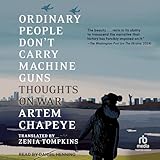
- Audible Audiobook
- Artem Chapeye (Author) - Daniel Henning (Narrator)
- English (Publication Language)
- 04/08/2025 (Publication Date) - Tantor Media (Publisher)
3. Analyze the Impact of Conflict on Daily Life: Observe how the war disrupts fundamental aspects of existence.
- Action: Pay attention to descriptions of food, shelter, work, social interactions, and the constant presence of fear or uncertainty.
- What to Look For: The ways individuals adapt, or struggle to adapt, to these disruptions.
- Mistake to Avoid: Focusing solely on overt acts of violence; the book’s power often lies in the subtle, pervasive effects of war on the mundane.
4. Recognize the Resilience, Not Glorification: Examine how individuals persevere.
- Action: Note instances of small acts of kindness, maintaining traditions, seeking connection, or simply enduring.
- What to Look For: The quiet strength and determination to live, love, and maintain dignity, rather than traditional heroic combat narratives.
- Mistake to Avoid: Expecting or searching for traditional depictions of heroism; the book celebrates a different, more fundamental kind of courage.
5. Evaluate Chapeye’s Narrative Choices: Consider why certain stories are told and how they are presented.
- Action: Reflect on the author’s choices in framing, editing, and selecting the accounts.
- What to Look For: The ethical considerations of representing trauma and the author’s commitment to giving voice to those affected.
- Mistake to Avoid: Assuming the narratives are verbatim transcripts without any authorial shaping; the book is a curated collection of human experiences.
Ordinary People Don’t Carry Machine Guns by Artem Chapeye: Strengths and Thematic Resonance
The profound impact of Ordinary People Don’t Carry Machine Guns by Artem Chapeye stems from its unflinching focus on the human element within conflict. Chapeye, drawing from his own military service, navigates the war-torn landscape of Ukraine not to glorify combat, but to illuminate the lives of those who endure it.
A significant strength is the book’s humanistic lens. It deliberately shifts focus from military objectives or political machinations to the personal realities of individuals. For instance, a narrative might detail a baker continuing to produce bread amidst shelling, not as a strategic act, but as a fundamental human impulse to provide sustenance and maintain a semblance of normalcy. This approach humanizes the abstract concept of war by grounding it in tangible, relatable experiences.
The central theme is resilience in the face of dehumanization. Chapeye masterfully captures how people cling to their identities, relationships, and routines when the external world threatens to strip them away. The book illustrates this through the quiet persistence of everyday actions—sharing scarce resources, comforting family members, or simply finding moments of shared humanity amidst pervasive fear. This showcases a form of courage distinct from battlefield valor, rooted in the will to live and maintain dignity.
BLOCKQUOTE_0
This quote, while not directly from Chapeye’s work, encapsulates the book’s core principle: conflict acts as a crucible, exposing the fundamental human spirit—its vulnerabilities, its strengths, and its enduring capacity for life.
Common Myths About Ordinary People Don’t Carry Machine Guns by Artem Chapeye
Dispelling common misunderstandings is crucial for appreciating the depth of Ordinary People Don’t Carry Machine Guns by Artem Chapeye.
- Myth: The book is solely about soldiers and their combat experiences.
- Why it Matters: This narrow interpretation overlooks the book’s broader scope, which encompasses civilians, displaced persons, and those whose lives are irrevocably altered by proximity to conflict, not just direct combatants.
- Fix: Recognize that while soldiers are present, their stories are framed within their human experiences and the impact of war on their broader lives, aligning with the “ordinary people” aspect.
- Myth: The narratives are objective, detached journalistic reports.
- Why it Matters: While Chapeye aims for authenticity, his role as author involves selection, framing, and the empathetic interpretation of his subjects’ experiences. The emotional impact is carefully curated.
- Fix: Understand that the book is a work of literary non-fiction, blending reportage with a distinct authorial voice and thematic focus, rather than a purely neutral compilation of facts.
- Myth: The book provides a political analysis or solution to the conflict.
- Why it Matters: Chapeye’s primary objective is to document and humanize the lived realities of war. The power of the book lies in its empathy and witness, not in prescriptive political commentary.
- Fix: Approach the book as a testament to the human spirit under duress, focusing on understanding and bearing witness to individual experiences rather than seeking political discourse.
Expert Tips for Engaging with the Text
To gain the most from Ordinary People Don’t Carry Machine Guns by Artem Chapeye, consider these practical recommendations.
1. Focus on Sensory and Mundane Details:
- Action: Actively seek out and note descriptions of everyday sensory experiences—the taste of rationed food, the sound of distant shelling, the feel of damp shelter.
- What to Look For: How these seemingly small details contribute to the overwhelming atmosphere of war and the characters’ resilience.
- Mistake to Avoid: Skimming over descriptive passages; these are often the conduits for deep emotional resonance and the portrayal of disrupted normalcy.
2. Analyze the Language of Resilience:
- Action: Pay close attention to the dialogue and internal monologues of the subjects, noting their concerns, hopes, and fears.
- What to Look For: The persistence of ordinary language and concerns (family, food, safety) as anchors in a chaotic world.
- Mistake to Avoid: Dismissing these as minor points; they are crucial indicators of the human drive to maintain identity and connection.
3. Observe the Author’s Restraint:
- Action: Note where Chapeye deliberately refrains from explicit commentary, allowing the subject’s words or the situation itself to convey the emotional weight.
- What to Look For: Moments of implied emotion, unstated fears, or understated bravery that emerge from the direct presentation of experiences.
- Mistake to Avoid: Over-interpreting or imposing external narratives where the author has intentionally left space for reader inference and empathy.
Decision Criterion: Chronological Context
When evaluating Ordinary People Don’t Carry Machine Guns by Artem Chapeye, consider the specific period of the Russo-Ukrainian War the stories reflect. If your primary interest is understanding the initial shock and rapid adaptation to conflict, stories from earlier phases might be more relevant. However, if you seek insight into the long-term psychological and social impacts of protracted warfare and displacement, narratives from later stages, reflecting enduring resilience and changed realities, would be more illuminating. This book offers a mosaic, but understanding the temporal context of individual accounts can significantly shape your interpretation of the presented experiences.
Comparison Table: Narrative Focus
| Aspect | Ordinary People Don’t Carry Machine Guns by Artem Chapeye | Geopolitical Analysis of Conflict | Action-Oriented War Thriller |
|---|---|---|---|
| Primary Focus | Individual human experience, resilience, normalcy disruption | State-level strategy, troop movements, political stakes | Combat, tactics, protagonist’s mission |
| Narrative Voice | Empathetic, reportorial, personal | Objective |
Decision Rules
- If reliability is your top priority for Ordinary People Don’t Carry Machine Guns by Artem Chapeye, choose the option with the strongest long-term track record and support.
- If value matters most, compare total ownership cost instead of headline price alone.
- If your use case is specific, prioritize fit-for-purpose features over generic ‘best overall’ claims.