Apollonius of Rhodes’s Argonautika: An Epic Journey
Apollonius of Rhodes’s Argonautika retells the famous myth of Jason and the Golden Fleece, but with a distinct Hellenistic sensibility that emphasizes psychological depth and complex characterization over straightforward heroic action. This epic poem offers a nuanced portrayal of its protagonists, particularly Jason and Medea, exploring their motivations, internal conflicts, and the emotional toll of their legendary quest.
Argonautika by Apollonius of Rhodes: Quick Answer
- The Argonautika is notable for its psychologically rich characterizations, especially of Jason and Medea, and its exploration of love, ambition, and the complexities of human agency.
- Readers seeking a fast-paced, action-dominated epic akin to Homer may find Apollonius’s more introspective and character-focused narrative less immediately engaging.
- This work is best suited for those interested in the evolution of epic poetry, Hellenistic literary trends, and detailed studies of ancient character psychology.
Who This Is For
- Students and scholars of classical literature interested in the transition from Archaic to Hellenistic poetic styles.
- Readers who appreciate nuanced character studies and the exploration of human emotions and moral dilemmas within ancient narratives.
What to Check First
- Narrative Pacing and Structure: Apollonius often employs a deliberate, segmented pacing, focusing on character introspection and emotional development, which differs significantly from the relentless action of earlier epics.
- Jason’s Characterization: Examine Jason not as a flawless hero, but as a character grappling with ambition, dependence, and the consequences of his choices. His heroism is often mediated by others, particularly Medea.
- Medea’s Arc: Pay close attention to Medea’s internal struggles, her overwhelming passion, and the moral compromises she makes. Her transformation is a central element of the poem.
- Thematic Focus: Identify the poem’s emphasis on themes such as the power of love, the nature of heroism, divine influence versus human responsibility, and the psychological costs of epic endeavors.
- Hellenistic Context: Understand that this poem was written in an era that valued intellectualism and psychological exploration, leading Apollonius to depart from traditional heroic conventions.
For those eager to dive into this seminal work of Hellenistic literature, the Argonautika by Apollonius of Rhodes is an essential read. It offers a unique perspective on the Jason and the Golden Fleece myth.
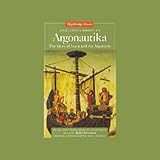
- Audible Audiobook
- Apollonius Rhodius (Author) - Juliet Stevenson (Narrator)
- English (Publication Language)
- 03/16/2000 (Publication Date) - Highbridge Audio (Publisher)
Step-by-Step Plan for Reading the Argonautika
1. Establish Foundational Mythic Knowledge: Briefly familiarize yourself with the core elements of the Jason and the Golden Fleece myth as it was traditionally understood.
- Action: Review common summaries of the myth before reading.
- What to look for: Note how Apollonius’s version might diverge from or elaborate upon these traditional elements, signaling his unique interpretive approach.
- Mistake: Relying solely on pre-existing knowledge and failing to recognize Apollonius’s specific thematic contributions and character nuances.
2. Engage with the Argonautika by Apollonius of Rhodes as a Hellenistic Work: Approach the text with an awareness of its historical and literary context, understanding its relationship to earlier epic traditions.
- Action: Read introductory material that discusses the Hellenistic period and its literary characteristics.
- What to look for: Signs of Apollonius’s individual poetic voice, his innovations in character portrayal, and his thematic concerns that distinguish it from Homeric epics.
- Mistake: Reading it as a direct successor to Homer without appreciating the stylistic and thematic shifts characteristic of the Hellenistic period.
3. Analyze Jason’s Ambivalent Heroism: Dedicate focused attention to Jason’s portrayal, observing his reliance on others, his moments of uncertainty, and the psychological pressures he experiences.
- Action: Annotate passages where Jason demonstrates hesitation, seeks advice, or relies on external aid.
- What to look for: Instances where Jason’s agency is limited, where he seeks external validation, or where his actions are influenced by emotional states rather than pure heroic drive.
- Mistake: Judging Jason solely by modern heroic standards or expecting him to consistently embody a flawless warrior archetype, leading to a misinterpretation of his complex character.
4. Trace Medea’s Psychological Journey: Follow Medea’s development closely, paying particular attention to her internal conflict between duty, divine influence, and her overwhelming passion for Jason.
- Action: Track Medea’s internal monologues and emotional shifts throughout the narrative.
- What to look for: The emotional and moral weight of her decisions, her internal monologues, and the impact of her infatuation on her identity and actions.
- Mistake: Underestimating Medea’s agency or reducing her to a mere sorceress, thereby overlooking her profound emotional and psychological transformation.
5. Evaluate the Gods’ Role: Observe how divine intervention operates in the narrative. The gods are present but often act indirectly, their influence frequently mediated by human emotions and choices.
- Action: Note instances of divine intervention and analyze their immediate and subsequent effects on mortal characters.
- What to look for: How divine actions intersect with mortal decisions, and where human agency appears to supersede or complicate divine plans.
- Mistake: Attributing all narrative outcomes solely to the direct will of the gods, thereby diminishing the significance of human choice and ethical responsibility.
6. Consider the Poem’s Literary Legacy: Reflect on the Argonautika‘s position within the broader landscape of epic poetry and its influence on later literary works.
- Action: Research critical analyses of the poem’s impact on subsequent literature.
- What to look for: Scholarly analyses that highlight Apollonius’s unique contributions to character development, narrative technique, and thematic exploration.
- Mistake: Isolating the poem from its literary lineage and failing to appreciate its role in shaping subsequent epic and romantic traditions.
Common Myths About the Argonautika
- Myth: The Argonautika is a simple adventure story about a hero retrieving a magical item.
- Correction: While the quest for the Golden Fleece provides the plot framework, Apollonius’s primary focus is on the psychological and emotional journeys of his characters. The poem delves deeply into the complexities of love, ambition, and internal conflict, making it a character-driven narrative.
- Myth: Jason is a straightforward, unwavering hero comparable to Homer’s Odysseus or Achilles.
- Correction: Apollonius intentionally presents a more ambivalent Jason. He is often shown as dependent on Medea’s magic and counsel, prone to indecision, and driven by ambition that is not always presented as purely noble. His heroism is a subject of internal debate within the text.
Analyzing the Argonautika by Apollonius of Rhodes
Apollonius of Rhodes’s Argonautika offers a sophisticated, psychologically grounded interpretation of a familiar myth. Its strength lies in its detailed exploration of character, particularly the internal conflicts and emotional transformations of Jason and Medea. This focus on inner life and moral ambiguity distinguishes it from earlier, more action-centric epics. However, this nuanced approach can present a challenge for readers accustomed to more direct heroic narratives, as the poem’s pacing is often deliberate, prioritizing introspection over relentless action. The Argonautika demands an engaged reader willing to delve into complex emotional landscapes and subtle thematic explorations.
The Argonautika serves as a crucial bridge between the Archaic and Hellenistic periods of Greek literature. It signals a significant shift in epic poetry, moving towards a greater emphasis on the individual’s inner world and the intricacies of human relationships. This exploration of psychological realism and thematic subtlety makes it a pivotal work for understanding the evolution of Western literary traditions and their enduring fascination with human behavior.
BLOCKQUOTE_0
This principle highlights Apollonius’s focus on human agency. The internal struggles, loves, ambitions, and failures of his characters are the primary forces shaping the narrative’s unfolding.
Key Thematic Elements and Strengths
| Theme | Description | Strength Example | Reader Takeaway |
|---|---|---|---|
| Love and Desire | Explores love as a powerful, often disruptive, force, with Medea’s overwhelming infatuation for Jason serving as a prime example of its transformative and potentially destructive nature. | Medea’s intense internal struggles, her sleepless nights, and her desperate appeals to Aphrodite vividly illustrate the profound psychological and emotional upheaval caused by her love, showcasing its capacity to override familial loyalty. | Love can be a potent, transformative force that compels individuals to act against their perceived interests or societal expectations, leading to significant personal consequences. |
| Heroism and Ambition | Critically examines traditional notions of heroism, portraying Jason’s ambition as a complex driver that also contributes to his moral and psychological vulnerabilities. | Jason’s frequent reliance on Medea’s magical assistance and his need for external validation, rather than solely his own inherent prowess, underscore a more complex, less conventionally heroic characterization. | True heroism may involve not only martial strength but also the capacity to navigate intricate moral dilemmas and acknowledge personal limitations, rather than embodying an idealized, unblemished figure. |
| Divine vs. Human Agency | Depicts the gods as influential but not entirely deterministic forces, with human characters making critical choices that significantly shape narrative outcomes. | While deities like Aphrodite might initiate events (e.g., by influencing Medea), the subsequent actions and their ethical ramifications are borne by the mortal characters, emphasizing their responsibility for their fates. | While external forces may be present, human decisions, emotional responses, and ethical considerations are often the primary determinants of how events unfold and their ultimate consequences. |
| The Cost of the Journey | Emphasizes the psychological and emotional toll of the |
Decision Rules
- If reliability is your top priority for Argonautika by Apollonius of Rhodes, choose the option with the strongest long-term track record and support.
- If value matters most, compare total ownership cost instead of headline price alone.
- If your use case is specific, prioritize fit-for-purpose features over generic ‘best overall’ claims.