Molière’s Tartuffe: A Timeless Satire on Hypocrisy
Tartuffe by Molière: Quick Answer
- Tartuffe by Molière is a classic French comedy dissecting religious hypocrisy and its impact on family dynamics.
- It remains relevant for its sharp critique of manipulation and the dangers of blind faith, offering lessons on discernment.
- Readers seeking a witty, insightful play that probes human nature and societal follies will find it rewarding.
Who This Is For
- Readers interested in classic literature, particularly 17th-century French theater and Molière’s comedic style.
- Individuals who appreciate satire that critiques societal norms, religious extremism, and manipulative personalities.
What to Check First
Before diving into Tartuffe, consider the following to enhance your reading experience:
- Historical Context: Understanding the religious and political climate of 17th-century France, particularly the Jansenist controversy and the power of religious figures, provides crucial context for Molière’s satire.
- Molière’s Style: Familiarize yourself with Molière’s reputation for biting wit, character-driven comedy, and his use of stock characters to expose societal flaws.
- Translation Choice: Different translations can significantly alter the comedic timing and poetic flow. Consider reading reviews or samples of various translations to find one that best suits your preference for rhythm and language.
Step-by-Step Plan for Understanding Tartuffe
Engaging with Molière’s Tartuffe involves not only reading the lines; it requires active observation of character, theme, and dramatic structure. Follow these steps for a comprehensive understanding:
1. Initial Reading for Plot and Character: Read through the play once to grasp the basic storyline of Orgon’s infatuation with Tartuffe and the family’s attempts to expose him.
- Action: Read the play from beginning to end without pausing for deep analysis.
- What to look for: The central conflict, the primary characters’ motivations (Orgon, Elmire, Dorine, Tartuffe), and the overall trajectory of the plot.
- Mistake: Skipping this initial read and attempting analysis too early, leading to confusion about character allegiances and plot developments.
2. Second Reading for Thematic Exploration: Re-read the play, this time focusing on the underlying themes of hypocrisy, faith, deception, and reason versus emotion.
- Action: Pay close attention to Tartuffe’s dialogue and actions, contrasting them with the pronouncements of piety.
- What to look for: Instances where Tartuffe’s words and deeds diverge, and how other characters react to his apparent devotion.
- Mistake: Focusing solely on the comedic elements without recognizing the serious social and moral commentary Molière is making.
3. Analyze Tartuffe’s Manipulation Tactics: Identify the specific methods Tartuffe employs to deceive Orgon and gain control.
- Action: Note down specific quotes or scenes where Tartuffe exhibits manipulative behavior, such as flattery, feigned humility, or exploiting Orgon’s piety.
- What to look for: The psychological levers Tartuffe pulls, such as appealing to Orgon’s desire for spiritual purity or his fear of divine judgment.
- Mistake: Underestimating Tartuffe’s cunning by viewing him as merely a foolish character, rather than a sophisticated manipulator.
4. Examine Orgon’s Blindness: Understand why Orgon is so susceptible to Tartuffe’s influence and dismisses the concerns of his family.
- Action: Trace Orgon’s dialogue and internal thoughts, observing how he rationalizes Tartuffe’s behavior and rejects evidence to the contrary.
- What to look for: Orgon’s eagerness to believe in Tartuffe’s sanctity, his dismissal of his wife and children’s pleas, and his willingness to disinherit his son.
- Mistake: Blaming Orgon solely for his foolishness without considering the psychological appeal of Tartuffe’s persona and the societal pressures that might encourage such blind devotion.
5. Appreciate the Role of Reason and Wit: Observe how characters like Dorine and Cléante attempt to counter Tartuffe’s influence with logic and common sense.
- Action: Note the moments where characters use wit, reason, or direct confrontation to expose Tartuffe.
- What to look for: The effectiveness (or ineffectiveness) of their arguments and how their appeals to reason are often thwarted by Orgon’s infatuation.
- Mistake: Overlooking the intellectual sparring and the subtle ways Molière champions reason and clear-sightedness through his characters.
For those looking to dive into this classic French comedy, Molière’s own ‘Tartuffe’ is the definitive text to explore its sharp critique of manipulation and the dangers of blind faith.
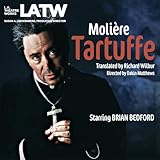
- Audible Audiobook
- Molière (Author) - Brian Bedford, JB Blanc, Daniel Blinkoff (Narrators)
- English (Publication Language)
- 08/26/2010 (Publication Date) - L.A. Theatre Works (Publisher)
6. Analyze the Climax and Resolution: Understand how the play’s conflict is ultimately resolved and what this resolution signifies.
- Action: Pay attention to the final act, particularly the intervention of the King’s officer.
- What to look for: The deus ex machina element and its implications for justice and order.
- Mistake: Dismissing the ending as a simple contrivance without considering its thematic significance regarding the power of authority and the ultimate triumph of order over chaos.
Understanding Tartuffe by Molière: A Critical Examination
Tartuffe by Molière is a cornerstone of comedic theater, a play that has endured for centuries due to its incisive portrayal of religious hypocrisy and its exploration of how deception can infiltrate and dismantle familial structures. Molière, a master satirist, crafts a narrative that is both hilariously absurd and disturbingly prescient, holding a mirror to the human capacity for self-deception and the dangers of misplaced faith. The play’s enduring power lies not just in its witty dialogue and memorable characters, but in its fundamental questions about discernment, authority, and the nature of true piety versus its performative imitation.
The Failure Mode: Overlooking the Nuance of True Piety
A common failure mode readers encounter with Tartuffe by Molière is the tendency to dismiss all forms of religious devotion as potentially suspect, simply because Tartuffe is a hypocrite. This misinterpretation overlooks Molière’s actual target: not piety itself, but the perversion of piety for personal gain. The play is careful to distinguish between Tartuffe’s performative, self-serving “faith” and the genuine, albeit sometimes misguided, devotion of characters like Orgon (before his delusion) or the reasoned faith of Cléante.
How to Detect It Early: Pay close attention to the characters who are not Tartuffe but are portrayed as devout. If their faith is depicted as humble, consistent, and leading to virtuous actions (even if they are occasionally wrong about Tartuffe), Molière is likely offering a contrast, not a condemnation. Conversely, if a character’s “piety” is always accompanied by self-interest, judgment of others, or a demand for unquestioning obedience, that is Tartuffe’s modus operandi.
Common Myths About Tartuffe
- Myth 1: Tartuffe is a play that condemns all religion.
- Why it matters: This is a fundamental misunderstanding of Molière’s intent. He was a devout Catholic and a critic of the Church’s corruption, not religion itself.
- Fix: Recognize that Molière satirizes hypocrisy within religious contexts and the manipulation of faith, not genuine spirituality. The play implicitly praises true virtue and discernment.
- Myth 2: Orgon is simply a foolish old man.
- Why it matters: While Orgon is certainly deluded, his susceptibility stems from a desire for spiritual perfection and a trust that is tragically misplaced.
- Fix: Understand Orgon’s character as a victim of sophisticated psychological manipulation, rather than solely a figure of ridicule. His downfall highlights the dangers of unchecked adoration.
- Myth 3: The play’s ending, with the King’s officer, is a cheap trick.
- Why it matters: This perception dismisses the play’s structural and thematic elements.
- Fix: View the resolution as a commentary on the need for external authority to correct extreme domestic disruption and as a reflection of the divine right of kings, a common trope in 17th-century French theater that restores order.
Expert Tips for Reading Tartuffe
- Tip 1: Track Tartuffe’s Language.
- Actionable Step: Create a running list of Tartuffe’s pronouncements, noting the specific words he uses to describe piety, sin, and divine will.
- Common Mistake to Avoid: Assuming Tartuffe’s words align with his actions. His language is a tool for manipulation, often employing pious jargon to mask his true intentions.
- Tip 2: Observe Dorine’s Role as the Voice of Reason.
- Actionable Step: Pay special attention to the maid Dorine’s dialogue. Note how she uses common sense and sharp wit to cut through the absurdity surrounding Tartuffe.
- Common Mistake to Avoid: Underestimating Dorine as merely a servant character. Molière uses her to represent the grounded perspective of the common person, often more perceptive than the nobility.
- Tip 3: Identify the “False Devotion” Checklist.
- Actionable Step: Develop a mental checklist of behaviors indicative of Tartuffe’s false piety: excessive self-flagellation in public, condemnation of others’ minor faults, demands for absolute obedience disguised as spiritual guidance, and a clear focus on personal gain or control.
- Common Mistake to Avoid: Confusing genuine religious conviction with Tartuffe’s performative piety. Look for the underlying self-interest and manipulative intent.
BLOCKQUOTE_0
Decision Rules
- If reliability is your top priority for Tartuffe by Molière, choose the option with the strongest long-term track record and support.
- If value matters most, compare total ownership cost instead of headline price alone.
- If your use case is specific, prioritize fit-for-purpose features over generic ‘best overall’ claims.
FAQ
- Q1: Who is the protagonist of Tartuffe?
- A1: While Tartuffe is the titular character and the antagonist driving the central conflict, the play can be seen as focusing on the family unit, particularly Orgon, as the object of Tartuffe’s manipulation, and Elmire and Dorine as key figures working to expose him.
- Q2: What is the main message of Tartuffe by Molière?
- A2: The primary message is a warning against religious hypocrisy and blind fanaticism, highlighting how false piety can be used to deceive and manipulate others, leading to the erosion of reason and family bonds.
- Q3: Is Tartuffe considered a comedy or a tragedy?
- A3: Tartuffe is definitively a comedy, specifically a satire. While it deals with serious themes and characters face significant distress, Molière employs wit, irony, and ultimately a resolution that restores order, characteristic of comedy.
- Q4: Why was Tartuffe controversial when it was first performed?
- A4: The play faced significant opposition from religious groups who felt it was an attack on devoutness and the Catholic Church. Its initial performances were delayed and censored due to its perceived impiety and criticism of religious figures.
| Character | Role in the Play | Key Trait | Impact of Tartuffe |
|---|---|---|---|
| Tartuffe | Antagonist | Hypocrisy | Deceives Orgon |
| Orgon | Patriarch | Gullibility | Becomes a victim |
| Elmire | Orgon’s Wife | Pragmatism | Exposes Tartuffe |
| Dorine | Maid | Wit | Voices reason |