André Breton’s Nadja: A Surrealist Exploration of Love and Madness
Nadja by André Breton: A Surrealist Exploration of Love and Madness
Nadja by André Breton is a seminal work of Surrealism that chronicles the author’s intense, albeit brief, encounter with a mysterious woman. It masterfully blends autobiography, fiction, and philosophical inquiry, exploring themes of chance, obsession, and the subjective nature of reality. Its value lies in its experimental structure and its profound engagement with the irrational.
Nadja by André Breton: Who This Is For
- Readers interested in the historical development and core texts of the Surrealist movement.
- Those who appreciate experimental literature that challenges conventional narrative structures and explores themes of consciousness, love, and mental states.
What to Check First
- Surrealist Principles: Familiarize yourself with Surrealism’s emphasis on automatism, the irrational, and the significance of chance encounters. This context is crucial for understanding Breton’s approach.
- Authorial Intent: Recognize that Breton framed Nadja as a factual document, yet its presentation is highly subjective and artistic. This duality is key to interpretation.
- Nadja’s Role: Understand Nadja not as a conventional character, but as a catalyst and symbol within Breton’s exploration of his own psyche and the external world.
- The Role of Photography: Note that the integrated photographs are not mere illustrations but are intended as integral components of the narrative and its meaning.
Step-by-Step Plan for Reading Nadja
1. Engage with the Preface: Begin by reading Breton’s introduction, which articulates his intention to present a “document of psychic automatism.”
- Action: Read the preface carefully, noting Breton’s stated goals and his framing of the work.
- What to look for: The author’s framework for the book and his initial reflections on the events and Nadja.
- Mistake to avoid: Skipping the preface, which provides essential context for the book’s unconventional structure and thematic underpinnings.
2. Follow the Chronology (and its Disruptions): Trace Breton’s narrative of his encounters with Nadja, paying attention to the specific dates and locations mentioned, while acknowledging their associative rather than strictly linear presentation.
- Action: Note the temporal and spatial markers within the text.
- What to look for: The recurring patterns of chance, coincidence, and the uncanny that emerge from these documented meetings.
- Mistake to avoid: Expecting a linear plot; the narrative is deliberately fragmented and associative, reflecting the Surrealist interest in the subconscious.
3. Analyze the Photographic Elements: Examine the photographs integrated throughout the text, which depict Parisian landmarks and objects.
- Action: Study each photograph and its accompanying caption or contextual text.
- What to look for: How these images resonate with Breton’s reflections and Nadja’s presence, often serving as visual metaphors or symbolic connections.
- Mistake to avoid: Treating the photographs as mere illustrations; they are integral components of the book’s meaning and structure, acting as visual anchors for Breton’s thoughts.
4. Consider Breton’s Reflections: Track Breton’s extensive internal monologues and philosophical digressions on art, love, madness, and society.
- Action: Follow Breton’s train of thought and his arguments.
- What to look for: The philosophical underpinnings of Surrealism and Breton’s personal obsessions and interpretations.
- Mistake to avoid: Becoming disoriented by the philosophical tangents without reconnecting them to the central narrative of his relationship with Nadja.
5. Interpret Nadja’s Contributions: Assess Nadja’s dialogue and actions as presented by Breton, recognizing their often enigmatic and unsettling nature.
- Action: Analyze Nadja’s direct contributions to the text.
- What to look for: The ways in which Nadja embodies “madness” and challenges conventional perceptions of reality.
- Mistake to avoid: Attempting a conventional psychological analysis of Nadja; her role is primarily symbolic and catalytic, reflecting Surrealist ideals.
6. Embrace the Ambiguity: Understand that Breton does not offer definitive answers or resolutions regarding Nadja’s fate or the nature of their connection.
- Action: Accept the absence of clear conclusions.
- What to look for: The power derived from unresolved questions and the lingering sense of mystery.
- Mistake to avoid: Demanding a neat resolution or a clear-cut explanation for the events described; the book’s strength lies in its evocation of the ineffable.
7. Reflect on the Conclusion: Consider the abrupt ending and its implications for Breton’s experience and the reader’s comprehension.
- Action: Ponder the final passages and their lasting resonance.
- What to look for: The enduring impact of Nadja on Breton and the unresolved questions the book leaves with the reader.
- Mistake to avoid: Expecting a traditional narrative wrap-up; the ending is as unconventional as the rest of the book.
For those eager to dive into this foundational Surrealist text, acquiring your own copy of Nadja by André Breton is the essential first step. This edition will allow you to fully engage with its experimental structure and profound exploration of the irrational.
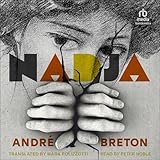
- Audible Audiobook
- André Breton (Author) - Peter Noble (Narrator)
- English (Publication Language)
- 12/16/2025 (Publication Date) - Tantor Media (Publisher)
Common Myths About Nadja
- Myth: Nadja is a straightforward love story.
- Correction: While love and intense emotional connection are present, Nadja is not a conventional romance. It is an exploration of obsession, the uncanny, and the limits of rational understanding, with Nadja serving as a catalyst for Breton’s philosophical and psychological investigations rather than a romantic protagonist in a traditional sense.
- Myth: The photographs are merely decorative elements.
- Correction: The photographs are integral to the Surrealist method employed by Breton. They serve as visual correlatives to his thoughts and experiences, acting as symbolic anchors, points of associative connection, and tangible fragments of the reality he is deconstructing. They are as crucial to the book’s meaning as the text itself.
- Myth: Nadja is a character to be psychologically analyzed.
- Correction: Breton presents Nadja as an enigmatic figure who embodies certain Surrealist ideals, particularly those related to madness and the rejection of bourgeois normalcy. Attempting a standard psychological analysis misses her symbolic function and the book’s exploration of subjective experience and the limits of language.
Expert Tips for Engaging with Nadja
- Tip: Approach the text with an open mind regarding narrative structure.
- Action: Consciously set aside expectations of traditional plot progression and embrace the book’s associative logic.
- Common Mistake to Avoid: Becoming frustrated by the lack of a clear story arc, which can lead to disengagement and a superficial reading.
- Tip: Pay attention to the role of chance and coincidence.
- Action: Highlight or note instances where unexpected events or meetings occur, as these are central to Surrealist theory and the book’s thematic development.
- Common Mistake to Avoid: Overlooking these seemingly random occurrences as mere filler; they are often the narrative’s driving force and symbolic core.
- Tip: Consider the relationship between the text and the photographs as a unified whole.
- Action: View the images not as separate elements but as integral components of Breton’s artistic statement, contributing to the overall meaning.
- Common Mistake to Avoid: Skimming over the photographs or treating them as secondary to the written word, thereby missing key layers of interpretation.
Decision Rules
- If reliable narrative progression is your top priority, Nadja by André Breton may not align with your reading preferences.
- If exploring experimental literary forms and psychological depths is your goal, Nadja offers a rich and rewarding experience.
- If you prefer concrete plot resolution, consider that this work prioritizes thematic exploration and ambiguity over definitive answers.
FAQ
Q: Is Nadja a factual account or a fictionalized story?
A: André Breton presented Nadja as a factual account of his experiences. However, it is heavily filtered through his subjective consciousness and Surrealist principles, blurring the lines between autobiography, reportage, and artistic creation.
Q: What is the significance of the title “Nadja”?
A: “Nadja” is the name given to the enigmatic woman with whom Breton has a brief, intense relationship. The name itself is suggestive and has been interpreted in various ways, often linked to themes of chance, destiny, and the untamed spirit within Surrealist thought.
Q: Why are there so many photographs in the book?
A: The photographs are integral to the Surrealist method employed by Breton. They serve as visual correlatives to his thoughts and experiences, acting as symbolic anchors, points of associative connection, and tangible fragments of the reality he is deconstructing.
Q: Should I read other Surrealist works before reading Nadja?
A: While not strictly necessary, having some familiarity with Surrealist manifestos or other key texts by Breton or his contemporaries can enhance your understanding and appreciation of Nadja‘s themes and methods. However, the book stands as a significant entry point into Surrealist literature.
Q: What is the main takeaway from reading Nadja?
A: The primary takeaway is an immersion into the Surrealist exploration of love, madness, and the nature of reality, emphasizing the power of the irrational, chance encounters, and subjective experience over conventional logic and narrative.
| Aspect | Description | Reader Outcome |
|---|---|---|
| <strong>Narrative Structure</strong> | Fragmented, associative, non-linear, collage-like, incorporating photographs. | Requires active engagement and acceptance of ambiguity; challenges traditional reading habits. |
| <strong>Thematic Focus</strong> | Love, madness, chance, the uncanny, subjective reality, critique of societal norms, the nature of reality. | Provokes reflection on the boundaries of sanity and the nature of human connection. |
| <strong>Authorial Voice</strong> | Subjective, introspective, philosophical, experimental, and deeply personal. | Offers a deep dive into Breton’s mind and Surrealist ideology. |
| <strong>Use of Photography</strong> | Integral to meaning, symbolic, associative, concrete anchors for abstract thought, visual narrative elements. | Enhances the text’s depth and experimental quality, demanding visual and textual synthesis. |
| <strong>Character of Nadja</strong> | Enigmatic, symbolic, catalyst, represents the untamed and the irrational, defies conventional analysis. | Resists conventional character analysis, serving as a focal point for Breton’s ideas and obsessions. |