AN Wilson’s Goethe, His Faustian Life Explored
AN Wilson’s Goethe, His Faustian Life is a biographical study that delves into the complexities of the German polymath, Johann Wolfgang von Goethe. Wilson frames Goethe’s life and extensive body of work through the lens of a “Faustian bargain,” exploring themes of ambition, compromise, and the perceived costs of genius. This approach offers a critical, often contrarian, perspective on a figure widely celebrated in literature and thought.
Goethe, His Faustian Life by AN Wilson: Who This Is For
- Readers who have a foundational understanding of Goethe’s major works and German literature.
- Those interested in biographical criticism that challenges conventional interpretations and explores the psychological and moral dimensions of a historical figure’s life.
What to Check First
- Wilson’s Critical Stance: Be prepared for a biography that is not hagiographic. Wilson critically examines Goethe’s actions and motivations, often highlighting perceived moral ambiguities and self-deceptions.
- The “Faustian” Framework: Understand that the book uses the concept of a “Faustian bargain” as a recurring interpretive lens. This means looking for themes of ambition, compromise, and the potential for spiritual or moral cost throughout Goethe’s life and work.
- Engagement with Primary Texts: Wilson frequently analyzes Goethe’s literary and scientific output. Prior familiarity with works like Faust and The Sorrows of Young Werther will significantly enhance comprehension.
- Authorial Voice and Judgment: Wilson’s prose is erudite and opinionated. His sharp judgments form a significant part of the narrative, shaping the reader’s perception of Goethe.
Step-by-Step Plan for Engaging with Goethe, His Faustian Life
1. Initial Reading of Introduction and Early Chapters:
- Action: Read the introduction and the first few chapters covering Goethe’s early life and the genesis of The Sorrows of Young Werther.
- What to Look For: Identify Wilson’s thesis regarding Goethe’s “Faustian” nature and his initial portrayal of the young genius. Note specific anecdotes or interpretations that establish this critical framework.
- Mistake to Avoid: Assuming this will be a purely chronological, celebratory biography. Wilson’s critical perspective is established early, setting a tone of rigorous examination.
2. Mapping Goethe’s Romantic Period and Scientific Pursuits:
- Action: Focus on sections detailing Goethe’s involvement with Romanticism and his scientific endeavors, such as his work on optics and botany.
- What to Look For: Observe how Wilson connects Goethe’s scientific curiosity and artistic output to his broader “Faustian” quest for knowledge and experience. Note any perceived contradictions or tensions he highlights.
- Mistake to Avoid: Separating Goethe’s scientific and artistic lives too distinctly. Wilson argues for their interconnectedness within his ambitious, all-encompassing worldview, often seeing his scientific drive as an extension of his desire to master all aspects of existence.
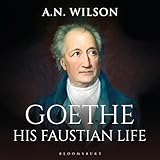
- Audible Audiobook
- A. N. Wilson (Author) - A.N. Wilson (Narrator)
- English (Publication Language)
- 09/26/2024 (Publication Date) - Bloomsbury Continuum (Publisher)
3. Analyzing the Development of Faust:
- Action: Pay close attention to the chapters dedicated to the creation and evolution of Goethe’s masterpiece, Faust.
- What to Look For: Examine Wilson’s interpretation of Mephistopheles and Faust, and how he uses the play to illuminate Goethe’s own life struggles and philosophical outlook.
- Mistake to Avoid: Reading the Faust sections as isolated literary analysis without connecting them back to Wilson’s biographical claims about Goethe’s personal “bargains” and his lifelong wrestling with ambition and mortality.
4. Examining Goethe’s Later Life and Legacy:
- Action: Read the sections covering Goethe’s later years, his administrative duties, and his final reflections.
- What to Look For: Assess Wilson’s final judgment on Goethe’s life. Does he see a resolution to the “Faustian” pact, or a continuation of its complexities? Note how Wilson frames Goethe’s lasting impact and the enduring relevance of his work.
- Mistake to Avoid: Disregarding the nuances of Goethe’s later life as simply a decline; Wilson often finds continued thematic relevance and evidence of his “Faustian” drive even in his less celebrated periods.
5. Cross-Referencing Wilson’s Claims with Goethe’s Works:
- Action: Where specific works are discussed, briefly consult or recall key passages or themes from those Goethean texts.
- What to Look For: Determine if Wilson’s interpretations align with your own understanding of the primary texts, or if his biographical claims add a new, critical dimension to your reading of Goethe.
- Mistake to Avoid: Accepting Wilson’s interpretations without any grounding in the primary literary or scientific works he discusses. Engaging directly with Goethe’s texts provides a crucial counterpoint to Wilson’s critical lens.
Goethe, His Faustian Life by AN Wilson: A Deeper Dive
AN Wilson’s Goethe, His Faustian Life is a biography that interrogates its subject through a specific, critical lens. Rather than a simple chronological account, Wilson posits that the essence of Goethe’s extraordinary life and prolific output can be understood as a continuous, complex engagement with a “Faustian” bargain—a pact with the forces of knowledge, experience, and worldly achievement, with implicit costs.
Wilson’s approach is marked by a distinctive contrarian streak. He does not shy away from highlighting what he perceives as Goethe’s self-serving justifications, his emotional detachment, or the moral ambiguities inherent in his pursuit of universal understanding. This is not a book for those seeking an uncritical hero; rather, it’s an invitation to grapple with the often uncomfortable realities of genius. The author meticulously traces how Goethe’s relentless drive to experience and codify all facets of existence—from art and science to love and politics—can be seen as a lifelong negotiation with the limits of human capacity and morality.
The narrative is rich with references to Goethe’s vast body of work, including his poetry, plays, novels, and scientific treatises. Wilson argues that these diverse endeavors are not disparate achievements but interconnected manifestations of a singular, all-consuming will. The exploration of Faust itself is central, viewed not merely as a literary masterpiece but as a profound autobiographical statement, a dramatization of Goethe’s own internal conflicts and his lifelong quest for meaning and transcendence.
BLOCKQUOTE_0
Strengths and Limitations of Goethe, His Faustian Life
- Strength: Wilson’s thematic coherence is exceptional. By consistently applying the “Faustian” lens, he provides a compelling framework for understanding the interconnectedness of Goethe’s life and work, offering a unified, albeit critical, perspective. For instance, his analysis of Goethe’s scientific theories of color is explicitly linked to his broader desire to master and categorize the world, mirroring Faust’s ambition.
- Limitation: The book’s critical edge and thematic density can be a barrier for readers seeking a more conventional, sympathetic biography. Wilson’s often sharp judgments on Goethe’s personal conduct, such as his relationships or his political stances, may alienate those who prefer to focus solely on the artistic achievements. For example, Wilson’s treatment of Goethe’s affair with Christiane Vulpius is far from romanticized, presenting it as symptomatic of Goethe’s pragmatic approach to personal needs.
Common Myths
- Myth: Goethe, His Faustian Life by AN Wilson is a straightforward, chronological biography of Goethe.
- Correction: This is incorrect. While it covers Goethe’s life chronologically to some extent, its primary mode is thematic analysis. Wilson uses the “Faustian” concept as an interpretive framework to dissect Goethe’s motivations, actions, and creative output, often prioritizing philosophical and psychological exploration over a simple recounting of events.
- Myth: AN Wilson presents Goethe as an unblemished genius whose life was a pure pursuit of art and science.
- Correction: This is a significant misunderstanding of Wilson’s thesis. Wilson is a contrarian in his approach, actively highlighting Goethe’s perceived moral failings, self-deceptions, and the compromises inherent in his ambitious life. He frames Goethe’s genius as deeply intertwined with a “Faustian” bargain, suggesting a complex interplay of achievement and cost.
Comparative Analysis
| Aspect | Goethe, His Faustian Life by AN Wilson | Alternative Biographies (General) |
|---|---|---|
| Primary Focus | Thematic exploration via “Faustian bargain” lens; critical analysis of life and work. | Often chronological retelling; emphasis on achievements, personal life, and historical context. |
| Tone | Contrarian, critical, analytical, erudite. | Varies widely, but often more sympathetic or balanced. |
| Reader Expectation | Deep dive into psychological and moral complexities; challenging interpretations. | Comprehensive overview of life events and major works. |
| Engagement Level | Requires active engagement with Wilson’s arguments and Goethe’s primary texts. | Can be more passive reading; focus on absorbing information. |
Decision Rules for Reading
- If you seek a challenging, critical re-evaluation of Goethe’s life and work: Prioritize Goethe, His Faustian Life by AN Wilson. Its thematic depth and contrarian perspective offer a unique, albeit demanding, reading experience.
- If you prefer a more traditional, chronological biography: Consider other biographies of Goethe that focus on a comprehensive life narrative without a singular, overarching interpretive framework.
- If you are new to Goethe: It is advisable to start with a more introductory biography or a primer on his major works before tackling Wilson’s dense, critical analysis.
FAQ
- Q: Is prior knowledge of Goethe’s works necessary to read this biography?
- A: While not strictly essential, prior familiarity with Goethe’s major works, particularly Faust and *The Sorrows of Young Wer