Alejo Carpentier’s The Lost Steps: A Journey into the Amazon
Alejo Carpentier’s The Lost Steps is a seminal work of 20th-century Latin American literature, offering a profound, albeit challenging, exploration of civilization, primitivism, and the elusive nature of artistic authenticity. This review provides a critical assessment for readers considering this dense, philosophical novel.
Quick Answer
- For the serious literary reader: A deeply intellectual and stylistically demanding novel that interrogates the foundations of Western civilization and the human search for origins.
- Not for the casual reader: Requires sustained attention to its complex prose, abstract philosophical themes, and deliberate, often introspective, pacing.
- A foundational text: Offers a unique perspective on the “marvelous real” and the complexities of identity in a post-colonial world.
Who This Is For
- Readers interested in post-colonial literature, existential philosophy, and the intersection of art and society.
- Individuals who appreciate dense, intricate prose and are willing to engage with challenging thematic material.
What to Check First
- Carpentier’s “Marvelous Real”: Understand Carpentier’s concept of “lo real maravilloso” – the idea that Latin American reality inherently possesses a layer of the extraordinary and mythic, distinct from European surrealism.
- Protagonist’s Discontent: Recognize that the protagonist’s initial dissatisfaction with his urban, artistic life is not merely personal but a symptom of a broader critique of Western modernity and its perceived emptiness.
- Narrative Structure: Be prepared for a novel that prioritizes internal monologue, philosophical rumination, and sensory description over a conventional, action-driven plot.
- Thematic Ambition: The novel is less about a physical journey and more about an intellectual and spiritual descent, questioning the very definition of progress and civilization.
Step-by-Step Plan: Engaging with The Lost Steps by Alejo Carpentier
To fully appreciate the complexities of The Lost Steps, a structured approach to reading is recommended.
1. Initial Immersion in the Protagonist’s Malaise:
- Action: Carefully read the opening chapters, noting the protagonist’s profound disillusionment with his metropolitan existence and his artistic output.
- What to Look For: Specific examples of his creative work (e.g., jingles, film scores) and his internal commentary on their superficiality. This establishes the deep-seated need for escape.
- Mistake: Underestimating the depth of his discontent as mere ennui. It is the novel’s primary catalyst, representing a rejection of a perceived decadent civilization.
2. Analyzing the Journey into the Amazon:
- Action: Pay close attention to the detailed descriptions of the natural environment and the protagonist’s initial sensory and emotional responses.
- What to Look For: The overwhelming scale of nature, the protagonist’s struggle to reconcile his civilized sensibilities with the primal world, and the emergence of “lo real maravilloso.”
- Mistake: Skimming the descriptive passages. These are crucial for understanding Carpentier’s style and the novel’s thematic exploration of humanity’s place within the natural order.
3. Examining Encounters with Indigenous Cultures:
- Action: Scrutinize the protagonist’s interactions with various indigenous groups and his evolving perceptions of their societies.
- What to Look For: Instances of the protagonist’s initial exoticizing gaze, his gradual recognition of their complex social structures, and his own growing sense of alienation.
- Mistake: Viewing the indigenous characters as mere plot devices or symbols of primitivism. Carpentier attempts a more nuanced portrayal, filtered through the protagonist’s biased lens.
4. Deconstructing the Concept of “Lost Steps”:
- Action: Reflect on moments where the protagonist feels a regression or a loss of connection to his former self and the civilized world.
- What to Look For: Periods of profound disorientation, the erosion of his structured habits, and the blurring boundaries between his past and present, civilization and nature.
- Mistake: Interpreting “lost steps” solely as a physical inability to return. It signifies a deeper existential and philosophical unraveling.
5. Evaluating the Protagonist’s Artistic Crisis:
- Action: Track the protagonist’s internal monologues concerning his artistic endeavors and his search for genuine inspiration.
- What to Look For: His dawning realization that authentic art might stem from primal experiences and his struggle to translate these into his own creative medium.
- Mistake: Focusing solely on his external actions. The novel is primarily an internal exploration of his intellectual and artistic quandaries.
6. Interpreting the Novel’s Ambiguous Conclusion:
- Action: Consider the implications of the protagonist’s ultimate decision and the nature of his return journey.
- What to Look For: The unresolved nature of his transformation, the lingering questions about whether he has truly found what he sought, and the lasting impact of his experiences.
- Mistake: Expecting a neat, definitive resolution. Carpentier’s endings are designed to provoke further thought on the novel’s central themes.
For those seeking a profound literary experience, Alejo Carpentier’s The Lost Steps is a seminal work that delves into civilization, primitivism, and artistic authenticity. It’s a challenging but rewarding read for serious literary enthusiasts.
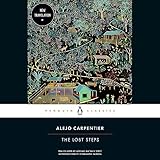
- Audible Audiobook
- Alejo Carpentier (Author) - Caleb Summers (Narrator)
- English (Publication Language)
- 09/12/2023 (Publication Date) - Penguin Audio (Publisher)
The Lost Steps by Alejo Carpentier: A Counterpoint to Modernity’s Illusion
A critical, and often underemphasized, aspect of The Lost Steps is its potent critique of the Western concept of “progress.” While the protagonist’s journey into the jungle is often framed as a descent into the primitive, Carpentier simultaneously indicts the superficiality and potential destructiveness of the modern world he flees. The protagonist’s initial profession as a composer of popular music, churned out for commercial consumption, serves as a potent symbol of this critique. His quest is not merely to discover an authentic past but to escape a present that has commodified and debased both art and human connection. This perspective suggests the jungle functions not only as a place of origin but as a necessary refuge from a decaying modernity.
Common Myths About The Lost Steps
- Myth: The novel is a straightforward adventure story set in the Amazon.
- Why it Matters: This misconception leads readers to expect action-packed sequences and a clear narrative arc, potentially causing disappointment with the novel’s dense prose and philosophical digressions.
- Correction: The Lost Steps is a literary exploration of civilization, art, and identity, using the Amazon as a backdrop for the protagonist’s internal and intellectual journey, rather than a literal adventure narrative.
- Myth: Carpentier offers a romanticized portrayal of indigenous peoples.
- Why it Matters: Believing this can lead to a superficial reading of the text, overlooking the complexities and potential biases inherent in the protagonist’s observations.
- Correction: While the protagonist is drawn to the perceived authenticity of indigenous life, Carpentier uses these encounters to highlight the protagonist’s own alienation and the limitations of his civilized perspective, rather than presenting an idealized vision. The indigenous cultures are depicted with a degree of complexity that resists simple romanticization.
- Myth: The protagonist successfully finds a new, authentic self in the jungle.
- Why it Matters: This misinterprets the novel’s ambiguous ending and its thematic exploration of the impossibility of true escape from one’s own conditioning.
- Correction: The protagonist’s journey is marked by profound disorientation and an inability to fully integrate into the primal world. His return, and the unresolved nature of his quest, suggests that a complete shedding of one’s past or societal imprint is not achievable.
Expert Tips for Reading The Lost Steps
- Tip: Embrace the prose.
- Actionable Step: Read sentences aloud to better appreciate Carpentier’s intricate syntax and rich vocabulary. Do not rush through descriptive passages.
- Common Mistake to Avoid: Trying to skim or speed-read. The density of the language is integral to the novel’s atmosphere and thematic development.
- Tip: Track the protagonist’s evolving perception of “civilization.”
- Actionable Step: Keep a running list of moments where the protagonist reflects on his former life and compares it to his experiences in the jungle.
- Common Mistake to Avoid: Focusing solely on the external journey. The novel’s power lies in the protagonist’s internal philosophical struggle and his re-evaluation of societal norms.
- Tip: Consider the role of music and art.
- Actionable Step: Note instances where music, art, or the creative process are discussed, particularly in relation to authenticity and primal expression.
- Common Mistake to Avoid: Overlooking the thematic significance of the protagonist’s artistic background. His quest for genuine art is a central driving force of the narrative.
Decision Rules
- If literary depth is your priority for The Lost Steps by Alejo Carpentier, select this novel for its profound thematic exploration and stylistic mastery.
- If you seek a straightforward narrative, consider other works. This novel demands significant intellectual engagement.
- If you are interested in precursors to magical realism, this book offers crucial insights into the development of the genre.
FAQ
- Q: Is The Lost Steps a difficult book to read?
A: Yes, The Lost Steps is considered a challenging read due to its elaborate prose, philosophical depth, and deliberate pacing. It requires significant reader engagement.
- Q: What is the primary theme of The Lost Steps?
A: The novel explores the tension between civilization and nature, the search for authenticity, the critique of Western modernity, and the nature of artistic creation.
- Q: Should I read The Lost Steps before or after other Latin American Boom novels?
A: Reading The Lost Steps before more contemporary magical realist works can provide valuable historical context for the development of the style and themes within Latin American literature.
- Q: What does the title, The Lost Steps, refer to?
A: The title refers to the protagonist’s literal and metaphorical journey backward in time and away from civilization, as he feels increasingly disoriented and detached from his former life and identity.
- Q: How does The Lost Steps relate to magical realism?
A: While predating the peak of the magical realist movement, The Lost Steps is often seen as a precursor. Carpentier himself coined the term “lo real maravilloso” (the marvelous real) to describe the unique reality of Latin America, which blends the ordinary with the extraordinary.
- Q: What is the protagonist’s profession at the beginning of the novel?
A: The protagonist is a composer of popular music, creating jingles and scores for commercial purposes, which he finds increasingly dissatisfying.
| Aspect | Strength | Limitation | Reader Takeaway |
|---|---|---|---|
| <strong>Prose Style</strong> | Rich, evocative, and philosophically dense. | Can be overly verbose and challenging for some readers. | Demands slow, deliberate reading to fully appreciate its texture. |
| <strong>Thematic Depth</strong> | Explores profound questions of civilization, art, and identity. | Themes are abstract and may not resonate with all readers. | Offers a complex critique of modernity and a search for primal origins. |
| <strong>Narrative Pacing</strong> | Deliberate, allowing for deep reflection. | Can feel slow and meandering for readers seeking plot-driven stories. | Best approached as a philosophical journey rather than a fast-paced adventure. |
| <strong>Character Arc</strong> | Protagonist’s internal transformation is central. | Protagonist can be detached and unsympathetic. | Focus on his intellectual and existential crisis rather than emotional connection. |
| <strong>Setting Integration</strong> | The Amazon is vividly rendered and thematically crucial. | The environment can sometimes overwhelm the human element. | The jungle serves as a powerful symbol of primal forces and human origins. |