N. Scott Momaday’s ‘House Made of Dawn
N. Scott Momaday’s House Made of Dawn, a landmark of Native American literature, invites readers into a profound exploration of identity, cultural displacement, and spiritual healing. Published in 1968 and a recipient of the Pulitzer Prize, the novel chronicles the journey of Abel, a young Native American man grappling with his post-World War II experiences. This guide offers a precise approach for engaging with its complex narrative and thematic depth.
House Made of Dawn by N. Scott Momaday: Quick Answer
- The novel follows Abel, a World War II veteran navigating alienation on his reservation and in urban settings as he seeks a sense of belonging.
- Momaday employs a lyrical, fragmented, and symbolic narrative style that requires active reader participation to fully grasp its meaning.
- This book is best suited for readers who value thematic depth and experimental literary techniques over conventional plot structures.
Who This Is For
- Readers seeking foundational works in Native American literature that delve into themes of heritage, assimilation, and the search for self.
- Individuals who appreciate literary fiction that utilizes rich symbolism and a non-linear narrative to explore complex psychological and spiritual landscapes.
What to Check First
Before immersing yourself in House Made of Dawn, consider these critical aspects:
- Narrative Structure: Be prepared for a non-linear, often fragmented narrative. The story shifts in time, perspective, and sensory experience, mirroring the protagonist’s internal state.
- Thematic Focus: The novel centers on themes of identity, alienation, the clash between traditional Native American ways and Western culture, and the process of spiritual healing.
- Symbolic Language: Momaday’s prose is dense with symbolism, particularly concerning nature, ritual, and the titular “house made of dawn.” Understanding these symbols is crucial for comprehension.
- Cultural Context: Familiarity with the post-World War II experiences of Native Americans, including the pressures of assimilation and the impact of war, will enhance your understanding of Abel’s struggles.
To fully appreciate the depth of this Pulitzer Prize-winning novel, consider starting with a physical or digital copy of ‘House Made of Dawn’ by N. Scott Momaday.
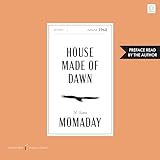
- Audible Audiobook
- N. Scott Momaday (Author) - N. Scott Momaday, Darrell Dennis (Narrators)
- English (Publication Language)
- 03/10/2020 (Publication Date) - Caedmon (Publisher)
Step-by-Step Plan for Engaging with House Made of Dawn
Approaching House Made of Dawn with a methodical mindset can unlock its deeper layers.
1. Engage with the Prose: Begin by reading the opening passages, focusing on Momaday’s evocative and sensory language.
- Action: Pay close attention to the descriptions of the natural world and the recurring imagery.
- What to Look For: The establishment of the novel’s lyrical tone and initial symbolic elements.
- Mistake to Avoid: Prioritizing plot over poetic qualities; the language itself carries significant narrative weight.
2. Trace Abel’s Dislocation: Follow the protagonist, Abel, from his return from war through his experiences on the reservation and in urban environments.
- Action: Note the contrasts between these settings and Abel’s internal emotional state.
- What to Look For: The sources of his alienation and his fragmented attempts to find a sense of belonging.
- Mistake to Avoid: Expecting clear, linear motivations for Abel’s actions; his behavior is complex and often rooted in trauma.
3. Identify Ritualistic and Mythic Underpinnings: Recognize the integration of traditional Native American ceremonies and beliefs.
- Action: Observe how these elements inform characters’ understanding of themselves and their place in the world.
- What to Look For: The connection between ritual, healing, and the restoration of identity.
- Mistake to Avoid: Dismissing these practices as mere cultural decoration; they are integral to the novel’s spiritual and thematic core.
4. Analyze the Fragmented Structure: Understand that the non-linear narrative is a deliberate artistic choice designed to reflect the protagonist’s experience.
- Action: Be prepared to piece together events and character development from scattered fragments and shifts in time.
- What to Look For: How the fragmentation mirrors Abel’s fractured psyche and his struggle to integrate his experiences.
- Mistake to Avoid: Becoming frustrated by the lack of conventional plot progression; the narrative structure is essential to the novel’s meaning.
5. Contextualize Historically: Briefly research the post-WWII era and its impact on Native American communities.
- Action: Consider how societal changes, assimilation policies, and the experiences of returning soldiers shaped the lives of characters like Abel.
- What to Look For: The historical backdrop informing themes of cultural loss and the search for identity.
- Mistake to Avoid: Reading the novel as purely an internal, personal story without acknowledging the significant external socio-political forces at play.
6. Reflect on the Conclusion: Engage with the novel’s resolution and its implications for Abel’s journey.
- Action: Consider what Abel’s final journey signifies in terms of healing and spiritual renewal.
- What to Look For: The cyclical nature of the narrative and the possibility of finding wholeness through tradition.
- Mistake to Avoid: Seeking a definitive, conventional resolution; the novel’s conclusion is more spiritual and symbolic than plot-driven.
Understanding House Made of Dawn by N. Scott Momaday
N. Scott Momaday’s House Made of Dawn is a profound exploration of identity and belonging for Native Americans navigating a complex post-war world. The novel centers on Abel, a young man returning from World War II to his ancestral lands, only to find himself adrift. He struggles to reconcile his experiences with the traditions he once knew, leading to alienation in both reservation life and the alienating landscape of urban Los Angeles.
The novel’s power lies not in a straightforward plot but in its evocative, lyrical prose and its masterful weaving of myth, ritual, and personal narrative. Momaday employs a fragmented structure, shifting perspectives, and a dreamlike quality that mirrors Abel’s own fractured sense of self and his disorienting journey. This deliberate approach invites the reader to actively participate in constructing meaning, piecing together Abel’s experiences and internal struggles. The recurring motif of the “house made of dawn” serves as a potent symbol of spiritual renewal and the possibility of finding wholeness amidst displacement. This makes House Made of Dawn by N. Scott Momaday a text that rewards deep contemplation and repeated engagement.
Common Myths About House Made of Dawn
- Myth: The novel’s fragmented structure is a sign of disorganization or authorial weakness.
- Why it Matters: This misperception can lead readers to dismiss the novel as simply “difficult” without appreciating the intentionality behind its form.
- Fix: Understand that the fragmented narrative is a deliberate artistic choice, mirroring the protagonist Abel’s own fractured identity, his disorientation, and the breakdown of traditional narrative forms in the face of cultural disruption. It is integral to the novel’s thematic expression.
- Myth: House Made of Dawn is a purely pessimistic account of Native American life.
- Why it Matters: This view overlooks the novel’s underlying spiritual quest and its exploration of resilience and the potential for healing through tradition.
- Fix: Recognize that while the novel unflinchingly portrays alienation, violence, and loss, it also points towards a path of renewal and integration, particularly through engagement with ancestral rituals and beliefs. The concept of the “house made of dawn” itself offers a vision of hope.
- Myth: The protagonist, Abel, is a passive character with no agency.
- Why it Matters: This interpretation can diminish the depth of Abel’s internal struggle and his eventual, albeit complex, steps toward reclaiming his identity.
- Fix: Observe Abel’s internal reactions, his moments of reflection, and his eventual participation in ritual. While he is a victim of many external forces, his journey is also an active, albeit difficult, quest for self-understanding and spiritual restoration.
Expert Tips for Reading House Made of Dawn
- Tip 1: Embrace the Rhythm of the Prose. Momaday’s language is highly musical and symbolic.
- Action: Read passages aloud to better appreciate the cadence and sonic qualities of the prose.
- Mistake to Avoid: Focusing solely on the literal meaning of words; the emotional and symbolic resonance is paramount.
- Tip 2: Connect with the Natural World. The descriptions of the landscape are integral to the novel’s spiritual dimension.
- Action: Visualize the settings and consider how they reflect or contrast with Abel’s internal state.
- Mistake to Avoid: Skimming over descriptive passages, as they often carry significant thematic weight and symbolic meaning.
- Tip 3: Understand the Role of Ritual. Rituals are not mere plot devices but pathways to healing and identity.
- Action: Pay close attention to descriptions of ceremonies, noting their purpose and their effect on the characters.
- Mistake to Avoid: Viewing rituals as primitive or exotic; they are presented as essential components of spiritual and cultural restoration.
Decision Criterion: Narrative Structure Tolerance
When considering House Made of Dawn by N. Scott Momaday, your tolerance for non-linear and fragmented narrative structures is a critical decision criterion.
- High Tolerance: If you are comfortable with experimental literary techniques, enjoy piecing together narratives, and appreciate how form can enhance thematic exploration, then House Made of Dawn is likely to be a deeply rewarding experience. Its structure is a feature, not a bug, designed to immerse you in the protagonist’s subjective reality.
- Low Tolerance: If you prefer straightforward, chronological storytelling with clear plot progression, you may find the novel challenging and potentially frustrating. While the themes are profound, the unconventional structure may act as a barrier to engagement. In such cases, exploring other works that offer a more direct narrative might be advisable.
Comparative Overview
| Novel Title | Primary Theme(s) | Narrative Style | Audience Recommendation |
|---|---|---|---|
| <em>House Made of Dawn by N. Scott Momaday</em> | Identity, Displacement, |
Decision Rules
- If reliability is your top priority for House Made of Dawn by N. Scott Momaday, choose the option with the strongest long-term track record and support.
- If value matters most, compare total ownership cost instead of headline price alone.
- If your use case is specific, prioritize fit-for-purpose features over generic ‘best overall’ claims.