A Look at William Shakespeare’s The Winter’s Tale
The Winter’s Tale by William Shakespeare: Quick Answer
- The Winter’s Tale by William Shakespeare is a late romance by Shakespeare, notable for its dramatic shift from intense tragedy to pastoral comedy, exploring themes of jealousy, repentance, and miraculous reconciliation.
- This play is recommended for readers who appreciate complex character arcs, thematic depth, and are comfortable with unconventional narrative structures that span significant time jumps.
- Readers seeking a straightforward plot or those new to Shakespeare may find the play’s dramatic shifts and sixteen-year temporal leap disorienting.
Who This Is For
- Readers interested in exploring the full spectrum of human emotion, from the destructive grip of unfounded jealousy to the transformative power of forgiveness.
- Individuals who appreciate the late romances of Shakespeare, characterized by their blend of sorrow and eventual joy, often incorporating elements of the supernatural or the improbable.
For those looking to dive directly into Shakespeare’s masterpiece, this edition of The Winter’s Tale is an excellent starting point. It provides the full text of this complex and rewarding play.
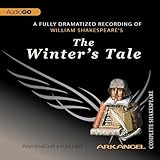
- Audible Audiobook
- William Shakespeare (Author) - Sinead Cusack, Ciaran Hinda, Eileen Atkins (Narrators)
- English (Publication Language)
- 05/09/2014 (Publication Date) - Arkangel (Publisher)
What to Check First
- Structural Duality: Be prepared for two distinct halves. The first is a devastating tragedy set in Sicilia, driven by King Leontes’s paranoia. The second is a pastoral comedy set in Bohemia, featuring new characters and a significantly lighter tone.
- Temporal Leap: A sixteen-year gap occurs between Act III and Act IV. This is a deliberate narrative device, not a flaw, intended to signify the passage of time required for healing and renewal.
- Character Transformation: The play hinges on the profound, albeit slow, transformation of Leontes from a tyrannical, jealous king to a remorseful figure seeking atonement. His arc is central to the play’s redemptive themes.
- Thematic Richness: Consider your engagement with themes such as the destructive nature of suspicion, the consequences of rash actions, the resilience of the human spirit, and the potential for art to preserve memory and facilitate reunion.
Step-by-Step Plan for Understanding The Winter’s Tale
1. Analyze the Genesis of Tragedy (Act I).
- Action: Read Act I, focusing on the interactions between Leontes, Hermione, and Polixenes.
- What to look for: Observe the rapid, seemingly irrational onset of Leontes’s jealousy. Note the complete absence of objective evidence for his accusations, highlighting its internal, psychological origin.
- Mistake to avoid: Rationalizing Leontes’s jealousy as a logical response to perceived infidelity; the play presents it as a sudden, overwhelming affliction.
2. Witness the Devastation (Acts I-III).
- Action: Trace the swift escalation of Leontes’s paranoia and its catastrophic consequences.
- What to look for: The pronouncements of the oracle, the death of Mamillius, and Hermione’s presumed death are critical plot points that underscore the tragedy.
- Mistake to avoid: Underestimating the depth of Leontes’s suffering and remorse in the latter half; while self-inflicted, his subsequent agony and desire for atonement are the driving forces of the play’s resolution.
3. Navigate the Sixteen-Year Interval.
- Action: Acknowledge the explicit stage direction marking the passage of sixteen years and the introduction of entirely new characters.
- What to look for: The stark contrast between the grief-stricken, static Sicilian court and the vibrant, pastoral life in Bohemia.
- Mistake to avoid: Attempting to invent or detail the missing years; the play intentionally omits this period to emphasize the impact of time on character and circumstance.
4. Engage with the Pastoral Renewal (Acts IV-V).
- Action: Read Acts IV and V, focusing on the introduction of Florizel and Perdita and the significant shift in tone and thematic focus.
- What to look for: The emergence of themes of renewal, mistaken identity, pastoral innocence, and the eventual, improbable reunions.
- Mistake to avoid: Dismissing this section as mere comic relief; it is integral to the play’s exploration of redemption, the cyclical nature of life, and the possibility of second chances.
5. Examine the Arc of Redemption and Forgiveness.
- Action: Follow Leontes’s journey from his initial tyrannical rage to his arduous path toward seeking forgiveness and making amends.
- What to look for: The crucial role of Paulina as a moral arbiter and the means by which Leontes attempts to achieve genuine atonement.
- Mistake to avoid: Assuming that forgiveness and reconciliation are easily attained; the play emphasizes that these are hard-won states requiring significant time, suffering, and sincere repentance.
6. Appreciate the Final Tableau of Reconciliation.
- Action: Pay close attention to the play’s conclusion, particularly the seemingly miraculous reunion of Leontes and Hermione.
- What to look for: The symbolic weight of Hermione’s statue coming to life and the overall sense of resolution, tempered by the memory of past suffering.
- Mistake to avoid: Expecting a simple, unblemished happy ending; the play’s conclusion carries the profound weight of the tragedy that preceded it, making the reconciliation more meaningful.
The Winter’s Tale by William Shakespeare: A Thematic Examination
The Winter’s Tale by William Shakespeare stands as a testament to the playwright’s late-career mastery, offering a profound exploration of how deep-seated jealousy can shatter lives, only to be countered by the arduous but ultimately miraculous possibility of redemption and forgiveness. The play is structured in two dramatically distinct parts. The first half plunges the audience into the suffocating atmosphere of King Leontes’s court in Sicilia, where his irrational suspicion of his wife, Hermione, and his childhood friend, Polixenes, ignites a catastrophic chain of events. This intense, tragic beginning is deliberately juxtaposed with the pastoral, almost idyllic setting of Bohemia in the play’s latter half, a shift bridged by a significant sixteen-year time jump. This structural choice is not accidental; it highlights Shakespeare’s interest in the transformative power of time and experience, suggesting that cycles of destruction can indeed give way to renewal.
The narrative structure itself challenges conventional expectations. The abrupt transition in Acts IV and V, introducing new characters and a markedly lighter tone, can initially disorient. However, this deliberate structural choice is crucial to the play’s thematic development. It posits that life, much like the seasons, undergoes cycles of death and rebirth, destruction and eventual growth. The suffering endured in the first half becomes the necessary, albeit painful, soil from which later joy and reconciliation can emerge. This is particularly evident in Leontes’s arduous journey toward atonement, a path heavily influenced by the steadfast Paulina, who acts as both a stern accuser and a facilitator of his eventual peace. Ultimately, the play argues for the profound resilience of the human spirit and the enduring possibility of finding grace, even after profound loss and devastating error.
Common Myths About The Winter’s Tale
- Myth: The Winter’s Tale is a straightforward tragedy with a bleak conclusion.
- Evidence-based Rebuttal: This misconception arises from focusing solely on the play’s devastating first half. However, The Winter’s Tale by William Shakespeare is classified as a romance, a genre that characteristically blends tragic elements with eventual resolution and joy. The sixteen-year time jump and the introduction of new characters in Acts IV and V fundamentally shift the play’s tone towards pastoral comedy and eventual reconciliation.
- Myth: Leontes’s jealousy is a minor character flaw or a justifiable reaction.
- Evidence-based Rebuttal: The play presents Leontes’s jealousy not as a reasoned response, but as a consuming, irrational affliction that strikes suddenly and without credible cause. His rapid descent into tyranny and his baseless accusations against Hermione and Polixenes highlight the destructive potential of unfounded suspicion, underscoring its role as a central, tragic flaw rather than a minor issue.
- Myth: The sixteen-year time jump between Acts III and IV represents a narrative weakness or oversight.
- Evidence-based Rebuttal: This temporal leap is a deliberate artistic choice by Shakespeare. It serves as a crucial narrative device to allow for significant character development, the emergence of new generations, and to emphasize the passage of time necessary for healing and the possibility of redemption. The play intentionally skips over the intervening years to focus on the long-term consequences of actions and the eventual restoration of order.
Expert Tips for Reading The Winter’s Tale
- Tip: Recognize Paulina as a pivotal moral and spiritual force.
- Actionable Step: Track Paulina’s interactions with Leontes throughout the play. Note her consistent defiance of his tyranny, her unwavering defense of Hermione, and her instrumental role in guiding Leontes toward repentance and eventual reconciliation.
- Common Mistake to Avoid: Underestimating Paulina’s agency. She is not a passive observer but an active catalyst for the play’s resolution, serving as the conscience of the court and the architect of Leontes’s path to atonement.
- Tip: Embrace the play’s stark tonal and atmospheric shifts.
- Actionable Step: Consciously identify and appreciate the distinct moods and thematic concerns of the Sicilian court in the first half versus the Bohemian countryside in the second.
- Common Mistake to Avoid: Attempting to impose a consistent tone across the entire play. The juxtaposition of intense tragedy and pastoral comedy is intentional, serving to highlight the contrast between despair and hope, and the cyclical nature of life.
- Tip: Analyze the significance of art, illusion, and reality in the play’s conclusion.
- Actionable Step: Pay close attention to the final scene involving Hermione’s statue. Consider how this artistic representation blurs the lines between illusion and reality, serving as both a symbol of Leontes’s enduring guilt and the miraculous instrument of his wife’s return.
- Common Mistake to Avoid: Viewing the statue simply as a plot device. It is a powerful symbolic element that encapsulates the play’s themes of memory, loss, the power of art, and the potential for profound emotional truth to manifest through seemingly artificial means.
Quick Comparison
| Aspect | Focus | Strengths | Potential Challenges |
|---|---|---|---|
| <strong>Thematic Depth</strong> | Jealousy, redemption, forgiveness | Explores complex human emotions and moral growth | Requires careful attention to character motivations |
| <strong>Narrative Structure</strong> | Two distinct halves, significant time jump | Innovative and thematically resonant | Can be disorienting for readers accustomed to linear plots |
| <strong>Character Arcs</strong> | Leontes’s transformation, Paulina’s influence | Profound and believable character development | Leontes’s initial actions can be difficult to reconcile with his later remorse |
| <strong>Genre Blending</strong> | Tragedy transitioning to pastoral comedy | Offers a unique and ultimately hopeful experience | The abrupt shift in tone may not appeal to all readers |
Decision Rules
- If your primary constraint is thematic resonance and complex character development in The Winter’s Tale by William Shakespeare, prioritize works that delve deeply into psychological states and moral journeys.
- If you require a consistent narrative tone and linear progression, The Winter’s Tale by William Shakespeare may not be the optimal choice, as its structural duality presents a significant divergence from conventional dramatic forms.
- If your goal is to understand Shakespeare’s evolution in his later plays, The Winter’s Tale by William Shakespeare offers a prime example of his experimentation with genre and structure.
FAQ
- Q: Is The Winter’s Tale considered a comedy or a tragedy?
- A: It is best understood as a romance, a genre that typically begins with tragic elements but concludes with reconciliation and joy. The play is distinctly divided into a tragic first half and a comedic, restorative second half.
- Q: Why does the play include such a significant time jump?
- A: The sixteen-year gap is a deliberate narrative technique by Shakespeare. It allows for the maturation of characters, the emergence of new relationships, and crucially, signifies the passage of time necessary for healing, atonement, and the possibility of redemption after the initial devastating events.
- Q: What is the significance of Hermione’s statue in the final act?
- A: The statue of Hermione is a pivotal symbolic element. It represents Leontes’s enduring guilt and the haunting presence of his loss. It also functions as the miraculous catalyst for his wife’s return, blurring the lines between art, illusion, and reality, and facilitating the play’s ultimate theme of reunion and forgiveness.
- Q: Is The Winter’s Tale suitable for readers new to Shakespeare?
- A: While accessible, it can be challenging for absolute beginners due to its structural shifts and thematic complexity. Readers who have some prior exposure to Shakespeare or are prepared for a more mature and nuanced work might find it more rewarding than some of his earlier, more straightforward plays.