A Look at A. A. Milne’s Winnie the Pooh Adventures
A. A. Milne’s Winnie the Pooh stands as a foundational text in children’s literature, renowned for its distinct characters and deceptively simple prose. First published in 1926, the book transports readers to the Hundred Acre Wood, a setting populated by a bear of very little brain, a timid Piglet, a perpetually gloomy Eeyore, and their companions. While primarily categorized as a children’s book, its enduring relevance lies in its sophisticated exploration of friendship, imagination, and the subtle shifts of childhood, offering layers of meaning that resonate with adult readers.
Winnie the Pooh by A. A. Milne: Quick Answer
- Literary Significance: Presents a nuanced, witty, and deceptively simple exploration of childhood, friendship, and imagination, executed with sophisticated prose.
- Target Audience: Primarily for adults appreciating classic children’s literature and its thematic depth, and for parents introducing thoughtful storytelling to young readers.
- Core Takeaway: The book’s lasting appeal stems from its authentic capture of childlike wonder, complemented by poignant reflections on memory and the passage of time for adult readers.
Who This Is For
- Readers interested in classic children’s literature who want to understand its foundational impact, particularly its subtle narrative subversions and character studies.
- Adults seeking a gentle, reflective reading experience that explores themes of friendship, memory, and simple joys, often finding parallels in the characters’ interactions and the framing narrative.
What to Check First
Before delving into the Hundred Acre Wood, consider these critical elements:
- Milne’s Narrative Layering: Milne employs a sophisticated narrative voice, often framing the stories as recollections by Christopher Robin’s father. Understanding this meta-narrative is key to appreciating the book’s dual appeal.
- Thematic Depth Beyond Whimsy: Beneath the surface-level lightheartedness, the book subtly explores themes of loss, loyalty, and the bittersweet nature of growing up, contributing to its emotional resonance.
- Integral Illustrations: E.H. Shepard’s iconic line drawings are intrinsically linked to the characters and the whimsical atmosphere, forming an essential part of the book’s identity.
- Pacing and Tone: Winnie the Pooh operates at a deliberate pace, prioritizing character introspection and gentle humor over rapid plot progression, a distinct characteristic from many contemporary children’s books.
Step-by-Step Plan for Appreciating Winnie the Pooh Adventures
To fully engage with the world of Winnie the Pooh by A. A. Milne, consider this methodical approach:
1. Engage with the Introduction:
- Action: Read the opening chapter, “In Which We Are Introduced to Winnie-the-Pooh and Some Bees, and the Stories Begin,” paying close attention to the narrator’s tone and perspective.
- What to Look For: Observe how Milne establishes Christopher Robin’s father as the narrator, setting a reflective, almost nostalgic tone that signals the book’s layered approach.
- Mistake: Skimming the introduction, thereby missing the crucial meta-narrative that informs the entire collection and its appeal to adult readers.
A. A. Milne’s classic tale, Winnie the Pooh, is a cornerstone of children’s literature that continues to enchant readers of all ages. If you’re looking to experience the original magic of the Hundred Acre Wood, this is the perfect edition to start with.
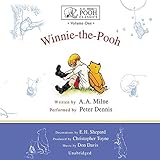
- Audible Audiobook
- A. A. Milne (Author) - Peter Dennis (Narrator)
- English (Publication Language)
- 01/01/2004 (Publication Date) - Bother! LA Production (Publisher)
2. Analyze Character Introductions:
- Action: Focus on how each character is introduced and the specific traits that define them.
- What to Look For: The nuances in Pooh’s simplicity, Piglet’s timidity, Eeyore’s melancholy, and Rabbit’s practicality. Note how their distinct personalities are revealed through speech and action, forming the basis of their enduring relevance.
- Mistake: Treating characters as one-dimensional archetypes, overlooking the subtle details Milne uses to imbue them with recognizable qualities.
3. Deconstruct the Dialogue:
- Action: Read conversations between characters, paying close attention to their speech patterns and subtext.
- What to Look For: The gentle humor derived from misunderstandings, Pooh’s literal interpretations, and the characters’ unique ways of expressing themselves. Dialogue is a primary tool for character development and revealing relationships.
- Mistake: Rushing through dialogue, thereby missing the wit and the subtle ways characters reveal their inner thoughts and motivations, a hallmark of Milne’s writing.
4. Identify Problem-Solution Dynamics:
- Action: In each chapter, identify the central dilemma or quest the characters face.
- What to Look For: The often circuitous, imaginative, and charmingly imperfect methods the characters employ to resolve their problems. Solutions frequently arise from earnest effort rather than logical deduction, mirroring childhood problem-solving.
- Mistake: Expecting efficient or strictly logical problem-solving; the charm and narrative strength lie in the characters’ well-intentioned, if often flawed, approaches.
5. Appreciate the Meta-Narrative Commentary:
- Action: Revisit moments where the narrator (Christopher Robin’s father) directly addresses the reader or comments on the storytelling process.
- What to Look For: The author’s playful manipulation of narrative, his observations on the nature of stories, and his commentary on childhood imagination. This layer is vital for adult readers’ engagement.
- Mistake: Overlooking the authorial intrusions, which are a key element of the book’s sophisticated appeal to adult readers and add a layer of literary commentary.
6. Integrate Shepard’s Illustrations:
- Action: Observe how E.H. Shepard’s drawings complement the text in each scene.
- What to Look For: The visual cues that enhance characterization, atmosphere, and gentle humor. Note how the simplicity of the style amplifies imagination, making the visual and textual elements inseparable.
- Mistake: Viewing illustrations as mere decoration rather than an intrinsic part of the storytelling experience; they are fundamental to the book’s identity and emotional resonance.
7. Reflect on the Concluding Chapters:
- Action: Pay close attention to the final chapters and the overall sense of resolution.
- What to Look For: The subtle acknowledgments of Christopher Robin’s growth and the poignant awareness of childhood’s impermanence. This provides a bittersweet yet deeply resonant conclusion.
- Mistake: Interpreting the ending as solely a happy conclusion without recognizing the underlying themes of transition and the bittersweet nature of time, which adds significant emotional weight.
Common Myths About Winnie the Pooh by A. A. Milne
- Myth: Winnie the Pooh is solely for very young children and lacks literary substance.
- Why it Matters: This perspective dismisses the sophisticated literary craft, witty prose, and layered thematic explorations that appeal to readers of all ages, particularly adults who appreciate nuanced storytelling.
- Fix: Recognize Milne’s masterful use of irony, understatement, and the framing narrative. The stories function on multiple levels, offering comfort and humor to young readers while providing astute observations on human nature, imagination, and the author’s craft for adults.
- Myth: The characters in the Hundred Acre Wood are static and unchanging.
- Why it Matters: This view overlooks the subtle character development and the exploration of enduring human traits that remain relevant to readers across generations. The book captures consistent personality types rather than linear arcs, a deliberate stylistic choice.
- Fix: Observe how characters like Eeyore, despite his persistent pessimism, find moments of connection and validation, and how Pooh, despite his simple nature, demonstrates profound loyalty and a unique form of wisdom. These consistent traits are central to their lasting appeal.
- Myth: The stories are purely whimsical and lack any serious or emotional undertones.
- Why it Matters: This ignores the subtle exploration of themes like loss, the inevitability of growing up, and the bittersweet passage of time, all of which contribute significantly to the book’s enduring emotional impact and literary depth.
- Fix: Pay attention to the framing narrative and the eventual departure of Christopher Robin from the Hundred Acre Wood. Milne subtly acknowledges the inevitable transition from childhood, adding a layer of poignant depth to the otherwise lighthearted adventures, particularly evident in the final chapters.
Decision Rules
- If your primary constraint is immediate engagement for a very young child, consider reading aloud. The deliberate pacing and subtle humor might require adult guidance to maintain attention.
- If you prioritize literary depth, nuanced characterization, and sophisticated prose that rewards rereading, Winnie the Pooh by A. A. Milne is an exceptional choice.
- If your goal is a gentle, reflective reading experience that taps into nostalgia and universal themes of friendship and imagination, this work is highly suitable and offers significant emotional resonance.
Expert Tips
- Tip: Pay close attention to the narrator’s role.
- Action: Notice when the narrator, Christopher Robin’s father, directly addresses the reader or comments on the storytelling process.
- Common Mistake to Avoid: Treating the narrator as a simple storyteller; recognizing their function as a meta-commentator enriches the reading experience, revealing Milne’s self-aware approach to narrative construction and the nature of childhood.
- Tip: Appreciate the understated humor.
- Action: Look for moments of irony, understatement, and gentle wordplay in the dialogue and descriptions.
- Common Mistake to Avoid: Expecting overt jokes or slapstick; Milne’s humor is often more subtle, arising from the characters’ personalities and their interactions, requiring a more attentive reading to fully appreciate.
- Tip: Understand the significance of “not doing anything.”
- Action: Recognize Pooh’s moments of quiet contemplation or simply sitting and thinking as valuable narrative elements.
- Common Mistake to Avoid: Viewing these moments as unproductive or boring; Milne presents these as essential aspects of childhood and imaginative thought, offering a counterpoint to a world that often prioritizes constant activity.
FAQ
- Q: Is Winnie the Pooh suitable for a child who has never read before?
- A: Yes, it can be, especially when read aloud. The language is accessible, and the narrative structure, while sophisticated, is engaging. However, some of the subtler humor and meta-narrative elements will be appreciated more by an adult reader.
- Q: How does Winnie the Pooh compare to The House at Pooh Corner?
- A: The House at Pooh Corner continues the adventures of the characters from Winnie the Pooh but is generally considered to have a more mature and poignant tone. It notably introduces Tigger and explores Christopher Robin’s eventual departure from the Hundred Acre Wood, offering a more explicit commentary on growing up.
- Q: What is the significance of the characters’ names?
- A: The names are generally descriptive or indicative of the characters’ personalities. “Winnie-the-Pooh” itself is a portmanteau, referencing both a real bear and a swan. Eeyore’s name evokes a mournful sound, fitting his disposition.
- Q: Can Winnie the Pooh be considered a form of literary critique?
- A: Yes, in a subtle way. Milne uses the child’s world to comment on adult concerns, the nature of storytelling, and the ways we construct meaning through imagination. The framing narrative, in particular, highlights the author’s awareness of the artifice of fiction.
- Q: What makes A. A. Milne’s writing style so distinctive?
- A: Milne’s style is characterized by its gentle rhythm, precise yet playful vocabulary, and a unique blend of childlike innocence and adult wit. He masterfully uses understatement and irony, creating humor that operates on multiple levels.
- Q: Should I read Winnie the Pooh in chronological order of publication?
- A: The stories within Winnie the Pooh are largely episodic and can be read in any order. However, reading the book as presented by Milne, chapter by chapter, allows for the full appreciation of his narrative construction and character introductions. The House at Pooh Corner is best read after Winnie the Pooh.
- Q: What is the “decision criterion” for recommending Winnie the Pooh by A. A. Milne based on reader constraints?
- A: The primary decision criterion is the reader’s tolerance for deliberate pacing and a focus on character and atmosphere over plot-driven action. Readers who prioritize fast-paced narratives or overt moral lessons may find Milne’s work less engaging. Conversely, those who value nuanced prose, gentle humor, and explorations of friendship and imagination will find it exceptionally rewarding.
| Character | Defining Trait | Core Interaction Example | Thematic Resonance |
|---|---|---|---|
| Winnie-the-Pooh | Simple-minded but loyal | Seeking honey from bees | The pursuit of simple desires; the comfort of routine |
| Piglet | Timid but brave when needed | Helping Pooh on an adventure | The nature of courage; the importance of friendship |
| Eeyore | Gloomy and pessimistic | Losing his tail | The acceptance of melancholy; finding connection despite hardship |
| Rabbit | Practical and organized | Trying to keep order in the wood | The limitations of rigid thinking; the disruption of the unexpected |
| Owl | Perceived wisdom | Offering advice (often convoluted) | The difference between knowledge and wisdom; self-deception |
| Kanga & Roo | Maternal care and playfulness | Kanga looking after Roo and others | Nurturing relationships; the balance of care and independence |
| Christopher Robin | The central human figure | Interacting with his animal friends, bridging worlds | Imagination’s power; the inevitable transition of childhood |