Valmiki’s Ramayana: An Ancient Indian Epic of Duty and Devotion
Ramayana by Valmiki: Quick Answer
Valmiki’s Ramayana is a foundational Sanskrit epic detailing Prince Rama’s righteous journey, his exile, and his battle against the demon king Ravana. It explores themes of dharma (duty), loyalty, and sacrifice, offering clear insights into human conduct and societal order. This version is ideal for readers seeking a deep dive into Indian philosophy and mythology, but may be challenging for those new to epic poetry due to its length and cultural context.
Who This Is For
- Readers interested in foundational epics of world literature and comparative mythology.
- Individuals seeking to understand the cultural and religious underpinnings of Hinduism and Indian society.
What to Check First
Before diving into Valmiki’s Ramayana, consider the following:
- Translation Choice: The Ramayana exists in numerous translations. For accessibility, look for scholarly yet readable versions, such as those by William Buck or C. Rajagopalachari. The original Sanskrit is complex and requires significant linguistic and cultural understanding.
- Scope of the Epic: The Ramayana is an extensive work, often divided into seven books (Kandas). Understanding its narrative arc—Rama’s birth and early life, his exile, the abduction of Sita, the war in Lanka, and his return—provides a helpful framework.
- Cultural Context: Familiarity with basic concepts of Hindu cosmology, the caste system (as it was understood in ancient India), and the roles of gods and demons can enhance comprehension.
- Thematic Focus: Decide whether your primary interest lies in the philosophical exploration of dharma, the narrative adventure, or the mythological and religious aspects. This will shape your reading experience.
Step-by-Step Plan for Reading Valmiki’s Ramayana
Engaging with Valmiki’s Ramayana requires a structured approach to appreciate its depth and complexity.
1. Select a Reputable Translation:
- Action: Choose a translation known for its accuracy and readability.
- What to Look For: Scholarly introductions, footnotes explaining cultural nuances, and clear prose. Avoid abridged versions if a comprehensive understanding is desired.
- Mistake to Avoid: Opting for a translation that sacrifices accuracy for brevity, leading to a distorted understanding of the original text.
For those eager to delve into the original narrative, Valmiki’s Ramayana is the definitive source. This foundational epic offers a profound exploration of duty, loyalty, and sacrifice.
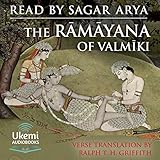
- Audible Audiobook
- ValmĪki (Author) - Sagar Arya (Narrator)
- English (Publication Language)
- 10/28/2019 (Publication Date) - Ukemi Audiobooks from W. F. Howes Ltd (Publisher)
2. Familiarize Yourself with the Core Narrative:
- Action: Read a concise synopsis or overview of the Ramayana‘s main plot points.
- What to Look For: Key characters (Rama, Sita, Lakshmana, Hanuman, Ravana), major events (exile, abduction, war), and the overarching conflict.
- Mistake to Avoid: Plunging into the epic without a basic understanding of the story, making it difficult to follow the intricate plot threads.
3. Begin with the Early Books (Bala Kanda, Ayodhya Kanda):
- Action: Start reading from the beginning to establish the characters and their initial circumstances.
- What to Look For: Rama’s upbringing, his marriage to Sita, and the events leading to his fourteen-year exile.
- Mistake to Avoid: Skipping the initial books, which provide essential context for Rama’s character and the motivations behind the subsequent conflicts.
4. Focus on the Concept of Dharma:
- Action: Pay close attention to how characters act according to their prescribed duties (dharma).
- What to Look For: Examples of righteous behavior, ethical dilemmas, and the consequences of adhering to or deviating from dharma.
- Mistake to Avoid: Reading the Ramayana solely as an adventure story, neglecting its profound philosophical exploration of duty and morality.
5. Analyze Character Motivations and Relationships:
- Action: Consider why characters behave as they do and how their interactions shape the narrative.
- What to Look For: The loyalty of Lakshmana, the devotion of Hanuman, the perceived injustice towards Sita, and Ravana’s arrogance.
- Mistake to Avoid: Viewing characters as one-dimensional heroes or villains, rather than complex individuals facing difficult choices.
6. Engage with the War in Lanka (Yuddha Kanda):
- Action: Read the climactic battles and their resolutions with an understanding of the stakes involved.
- What to Look For: The strategic brilliance of the monkey army, the divine intervention, and the ultimate defeat of Ravana.
- Mistake to Avoid: Becoming overwhelmed by the sheer scale of the battles and losing sight of the underlying themes of good versus evil.
7. Reflect on the Post-War Events and Sita’s Ordeal:
- Action: Consider the complex issues surrounding Sita’s return and the subsequent events.
- What to Look For: The societal pressures and kingly duties that lead to Sita’s second exile, and the exploration of justice and purity.
- Mistake to Avoid: Judging Sita’s trials solely by modern standards, without acknowledging the ancient societal norms and expectations depicted in the epic.
8. Consider the Epic’s Enduring Significance:
- Action: Reflect on the Ramayana‘s impact on Indian culture, religion, and art.
- What to Look For: The ideals of kingship, ideal womanhood, and devotion that have been perpetuated through centuries.
- Mistake to Avoid: Concluding the reading without contemplating the epic’s lasting legacy and its relevance today.
Understanding the Ramayana by Valmiki
Valmiki’s Ramayana stands as one of the most significant Sanskrit epics in Indian literature. Composed over two millennia ago, it chronicles the life of Prince Rama, an avatar of the god Vishnu, and his struggle to uphold dharma (righteousness) in the face of adversity. The epic is not merely a tale of adventure and warfare; it is a profound exploration of duty, loyalty, sacrifice, and the complexities of human relationships within a divinely ordained cosmic order.
The narrative begins with Rama’s idyllic childhood and his marriage to the princess Sita. However, a conspiracy by his stepmother leads to Rama’s fourteen-year exile to the forest, accompanied by Sita and his devoted brother Lakshmana. This period is marked by their encounters with ascetics, demons, and the eventual abduction of Sita by the powerful demon king Ravana. The subsequent books detail Rama’s alliance with the monkey kingdom, led by the valiant Hanuman, and the epic war waged in Lanka to rescue Sita and defeat Ravana. The Ramayana concludes with Rama’s triumphant return to Ayodhya, his coronation as king, and his just rule, which ushers in an era of peace and prosperity.
The epic’s long-term relevance lies in its multifaceted themes. Rama embodies the ideal king and son, always prioritizing his father’s command and the welfare of his kingdom. Sita represents wifely devotion and purity, enduring immense hardship with unwavering resolve. Lakshmana’s loyalty is absolute, and Hanuman’s selfless service and devotion to Rama are unparalleled. Ravana, while a formidable antagonist, is also depicted with a complex character, driven by ego and ambition. Through these characters and their actions, Valmiki offers timeless lessons on ethics, governance, and the pursuit of spiritual truth.
The Ramayana by Valmiki: A Study in Dharma
The central pillar of Valmiki’s Ramayana is the concept of dharma. Dharma, a complex Sanskrit term, encompasses righteousness, duty, moral law, and cosmic order. Throughout the epic, characters are constantly tested on their adherence to their respective dharmas. Rama’s exile, for instance, is a testament to his adherence to his father’s word, even when it means sacrificing his rightful claim to the throne. Sita’s unwavering commitment to Rama, even in captivity, exemplifies wifely dharma. Lakshmana’s decision to accompany Rama into exile, forsaking his own comfort and position, showcases fraternal dharma.
The epic presents a world where the actions of individuals have profound consequences, not only for themselves but for society and the cosmos. The conflict between Rama and Ravana is framed as a cosmic battle between good and evil, righteousness and unrighteousness. Ravana’s actions, driven by ego and lust, disrupt the natural order, necessitating Rama’s intervention. The Ramayana thus serves as a moral compass, illustrating the importance of righteous conduct and the devastating effects of adharma. The narrative provides concrete examples of ethical decision-making, offering readers a framework for understanding moral complexities.
BLOCKQUOTE_0
Common Myths About Valmiki’s Ramayana
Several misconceptions surround this ancient epic, often stemming from simplified retellings or cultural interpretations. Addressing these myths can lead to a more nuanced appreciation of Valmiki’s work.
- Myth: Sita was solely a passive victim who needed rescuing.
- Correction: While Sita is abducted and suffers greatly, Valmiki’s portrayal emphasizes her strength, resilience, and unwavering purity. Her inner resolve and refusal to succumb to Ravana’s advances are central to her character. Her later trials, particularly the Agni Pariksha (fire ordeal) and her subsequent exile, highlight her dignity and commitment to dharma, even when facing societal judgment. Her character is a powerful representation of feminine strength and virtue within the constraints of her time.
- Myth: The epic is simply a religious text about the god Rama.
- Correction: While Rama is an avatar of Vishnu, the Ramayana functions as much more than a theological treatise. It is a richly woven narrative that explores universal human experiences: duty, love, loss, betrayal, and the pursuit of justice. Its literary merit, character development, and philosophical underpinnings make it a significant work of world literature, relevant to readers regardless of their religious beliefs. The focus on Rama’s human struggles and ethical dilemmas grounds the epic in relatable experiences.
- Myth: The story is a straightforward good vs. evil narrative with no moral ambiguity.
- Correction: While the central conflict pits Rama against Ravana, the epic contains layers of moral complexity. Characters like Ravana are depicted with traits that evoke a sense of grandeur and power, even as their actions are condemned. Furthermore, Rama himself faces difficult ethical choices, such as the necessity of Sita’s second exile, which has been a subject of much debate and interpretation, illustrating that even righteous paths can involve painful decisions.
Expert Tips for Reading the Ramayana
Approaching Valmiki’s Ramayana with specific strategies can significantly enhance comprehension and appreciation of its profound themes and intricate narrative.
- Tip: Maintain a character and event log.
- Actionable Step: Create a simple notebook or digital document to jot down key characters, their relationships, and significant plot points as they occur.
- Common Mistake to Avoid: Trying to memorize every detail of the extensive cast and their interwoven storylines, leading to confusion and disengagement.
- Tip: Focus on the Sanskrit terms and their contextual meaning.
- Actionable Step: When encountering terms like “dharma,” “karma,” “moksha,” or “asura,” pause to understand their specific usage within the narrative, often clarified by footnotes in good translations.
- Common Mistake to Avoid: Translating these terms too literally or applying modern Western philosophical concepts, which can obscure their intended meaning within the epic’s cultural framework.
- Tip: Understand the allegorical layers.
- Actionable Step: Consider how characters and events can be interpreted allegorically, such as Rama representing the individual soul seeking liberation, Sita representing devotion, and Ravana representing ego or ignorance.
- Common Mistake to Avoid: Reading the epic solely on a literal, historical, or factual level, thereby missing its deeper spiritual and philosophical dimensions that have resonated for centuries.
Quick Comparison
| Option | Best for | Pros | Watch out |
|---|---|---|---|
| Quick Answer | General use | Readers interested in foundational epics of world literature and comparative… | Mistake to Avoid: Opting for a translation that sacrifices accuracy for brevi… |
| Who This Is For | General use | Individuals seeking to understand the cultural and religious underpinnings of… | Mistake to Avoid: Plunging into the epic without a basic understanding of the… |
| What to Check First | General use | Translation Choice: The <em>Ramayana</em> exists in numerous translations. For acces… | Mistake to Avoid: Skipping the initial books, which provide essential context… |
| Step-by-Step Plan for Reading Valmikis Ramayana | General use | Scope of the Epic: The <em>Ramayana</em> is an extensive work, often divided into se… | Mistake to Avoid: Reading the <em>Ramayana</em> solely as an adventure story, neglec… |
Decision Rules
- If reliability is your top priority for Ramayana by Valmiki, choose the option with the strongest long-term track record and support.
- If value matters most, compare total ownership cost instead of headline price alone.
- If your use case is specific, prioritize fit-for-purpose features over generic ‘best overall’ claims.
FAQ
- Q: Is Valmiki’s Ramayana the only version of the story?
- A: No, Valmiki’s Ramayana is considered the original Sanskrit epic. However, countless retellings and adaptations exist across India and Southeast Asia in various languages, each with its own interpretations and emphasis.
- Q: How long does it typically take to read Valmiki’s Ramayana?
- A: The length varies significantly depending on the translation and reading pace. A comprehensive scholarly translation can be over 2,000 pages, potentially taking several weeks or months of dedicated reading. More accessible or abridged versions can be read in a shorter period.
- Q: What is the significance of Hanuman in the Ramayana?
- A: Hanuman is a central figure, renowned for his immense strength, unwavering devotion to Rama, intelligence, and role in facilitating Sita’s rescue. He is often depicted as the ideal devotee, embodying selfless service and loyalty. His exploits, such as leaping across the ocean to Lanka and finding Sita, are pivotal to the narrative.
- Q: Why was Sita exiled after Rama became king?
- A: This is one of the most debated aspects of the epic. The common explanation is that Rama, as a just king, felt compelled to address public gossip and doubt about Sita’s purity after her captivity in Ravana’s palace, thus upholding his dharma as a ruler. This decision highlights the conflict between personal affection and kingly duty in ancient societal contexts.
- Q: What are the main differences between the Ramayana and the Mahabharata?
- A: While both are major Sanskrit epics, the Ramayana focuses on the singular journey of Prince Rama and the triumph of dharma, often seen as more straightforward. The Mahabharata, in contrast, is a sprawling epic detailing a dynastic war with a vast cast of characters and intricate moral ambiguities, exploring a wider range of philosophical and ethical dilemmas.
- Q: Can I read a modern adaptation first?
- A: Yes, reading a modern adaptation or a simplified version can be a good entry point if you are new to the epic. It can provide a foundational understanding of the plot and characters, making the transition to a more scholarly translation of Valmiki’s original work smoother and more rewarding.