Winifred Holtby’s Insightful Novel, South Riding
South Riding by Winifred Holtby: Quick Answer
- South Riding by Winifred Holtby is a complex, character-driven novel offering a nuanced portrayal of social and educational reform in 1930s England.
- Its strengths lie in its detailed social commentary, compelling character arcs, and exploration of progressive ideals clashing with tradition.
- Readers seeking fast-paced plots may find its deliberate pacing and extensive character development challenging.
Who This Is For
- Readers interested in historical fiction that delves into social issues, particularly education and women’s rights in the interwar period.
- Those who appreciate character-driven narratives with a focus on the intricacies of community life and institutional reform.
For those eager to dive into Winifred Holtby’s acclaimed novel, you can find ‘South Riding’ readily available. It’s a powerful read that offers a deep look into 1930s England.
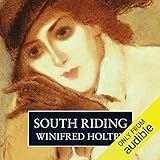
- Audible Audiobook
- Winifred Holtby (Author) - Carole Boyd (Narrator)
- English (Publication Language)
- 10/14/2009 (Publication Date) - Audible Studios (Publisher)
What to Check First
- Author’s Context: Winifred Holtby was an active feminist and social reformer, and this novel directly reflects her concerns and observations. Understanding her background enriches the reading experience.
- Setting and Era: The novel is set in the fictional Yorkshire riding of South Riding during the 1930s. Familiarity with the social and political climate of this period is beneficial.
- Thematic Depth: Be prepared for a novel that tackles significant themes: the challenges of progressive education, class structures, gender roles, and the complexities of public service.
- Pacing: This is not a plot-driven thriller. Its power lies in its detailed character studies and the slow unfolding of societal dynamics.
Step-by-Step Plan for Understanding South Riding
1. Engage with the Protagonist’s Vision: Focus on Sarah Burton, the new headmistress of the girls’ secondary school. What to look for: Her progressive educational ideals and her struggles to implement them against ingrained traditions and limited resources. Mistake to avoid: Dismissing her efforts as naive without acknowledging the systemic opposition she faces.
2. Analyze Community Dynamics: Observe the interactions within the fictional South Riding community, particularly the local council and its impact on the school. What to look for: The interplay of personal ambition, class prejudice, and genuine desire for improvement. Mistake to avoid: Viewing the council members as monolithic; recognize the spectrum of motivations and compromises.
3. Trace Character Arcs: Follow the development of key characters beyond Sarah, such as the influential Alderman Godstone and his family. What to look for: How their personal lives and beliefs intersect with public policy and societal change. Mistake to avoid: Focusing solely on Sarah and overlooking the nuanced journeys of supporting characters who represent different facets of the community.
4. Examine Social Commentary: Pay attention to Holtby’s critique of educational systems, social inequalities, and the limitations placed upon women. What to look for: Specific instances where policies or attitudes hinder progress or perpetuate injustice. Mistake to avoid: Treating the social commentary as mere background; it is central to the novel’s purpose.
5. Consider the Novel’s Resolution: Reflect on the outcomes of the characters’ struggles and the state of the school and community at the end. What to look for: Whether progress is achieved, at what cost, and what compromises were made. Mistake to avoid: Expecting a simple, triumphant victory; Holtby presents a more realistic, often bittersweet, outcome.
6. Appreciate Holtby’s Style: Note the detailed descriptions, the thoughtful prose, and the author’s ability to inhabit multiple perspectives. What to look for: How the writing style contributes to the novel’s immersive quality and its exploration of complex human motivations. Mistake to avoid: Rushing through descriptive passages, which often contain subtle insights into character and setting.
South Riding by Winifred Holtby: A Literary Examination
This novel stands as a significant work of social realism, offering a profound look into the challenges of modernization and reform in a specific English context. South Riding by Winifred Holtby is less about a singular dramatic event and more about the persistent, often arduous, process of societal change. Holtby masterfully crafts a microcosm of England grappling with its own inertia, where progressive ideas, embodied by Sarah Burton, collide with entrenched conservatism. The novel’s enduring power lies in its detailed depiction of institutional life and the personal sacrifices demanded by public service.
The narrative’s strength is its intricate characterization. Holtby excels at presenting a diverse cast, each with their own motivations, flaws, and virtues. Alderman Godstone, for instance, is not a simple villain but a complex figure whose own life experiences shape his often-regressive views. The novel invites readers to understand, if not always agree with, the perspectives of those who resist change. This nuanced approach is crucial for appreciating the novel’s central conflict: the struggle between an idealistic vision for the future and the practical, often messy, realities of the present.
One decision criterion that significantly impacts a reader’s engagement with South Riding is their tolerance for detailed exposition and character introspection. If a reader prioritizes rapid plot progression and clear-cut heroes and villains, this novel may feel slow. However, for those who find satisfaction in deeply developed characters and a thorough exploration of social dynamics, South Riding offers immense rewards. The novel’s thematic resonance, particularly concerning the ongoing debates about education and social justice, makes it relevant even today, prompting reflection on how far we have come and how far we still have to go.
BLOCKQUOTE_0
This quote, while not directly from South Riding, encapsulates a sentiment that permeates the novel: the tension between contemplation and action, and the importance of embodying one’s ideals. Holtby’s characters often grapple with this, striving to translate their beliefs into tangible improvements for their community.
Common Myths About South Riding
- Myth: The novel is solely a critique of educational systems.
- Why it matters: This limits the scope of the novel to a single issue.
- Fix: Recognize that while education is a central theme, South Riding also deeply explores class, gender, local politics, and the personal lives that intersect with public duty.
- Myth: Sarah Burton is a flawless, heroic figure.
- Why it matters: This oversimplifies her character and the challenges she faces.
- Fix: Understand Sarah as a determined but fallible individual whose idealism is tested by real-world obstacles and her own emotional responses. Her strength lies in her persistence, not her perfection.
- Myth: The novel offers a simple solution to social problems.
- Why it matters: This misrepresents Holtby’s realistic portrayal of complex issues.
- Fix: Appreciate that Holtby presents the complexities and compromises inherent in social reform. The novel’s impact comes from its honest depiction of the struggle, not a neat resolution.
Expert Tips for Engaging with South Riding
- Tip: Pay close attention to the author’s descriptions of setting and atmosphere.
- Actionable Step: Before reading a new chapter, take a moment to visualize the described locations—the school, the council chambers, the countryside.
- Common Mistake to Avoid: Skimming descriptive passages, which often reveal subtle clues about the characters’ social standing, emotional states, and the prevailing mood of the community.
- Tip: Consider the influence of social class on character interactions and decisions.
- Actionable Step: When characters interact, note their perceived social strata and how this might shape their dialogue, assumptions, and actions.
- Common Mistake to Avoid: Assuming all characters operate on a level playing field; the novel explicitly details the rigid class structures of the time and their impact.
- Tip: Read with an awareness of the historical context of the 1930s.
- Actionable Step: Briefly research key social and political issues of Britain in the 1930s, such as the rise of progressive education, women’s suffrage aftermath, and economic conditions.
- Common Mistake to Avoid: Judging characters’ actions and beliefs solely by contemporary standards, which can lead to anachronistic interpretations of their motivations and the societal constraints they faced.
Decision Rules
- If reliability is your top priority for South Riding by Winifred Holtby, choose the option with the strongest long-term track record and support.
- If value matters most, compare total ownership cost instead of headline price alone.
- If your use case is specific, prioritize fit-for-purpose features over generic ‘best overall’ claims.
FAQ
- Q: Is South Riding a difficult book to read?
- A: Its difficulty lies not in complex prose, but in its detailed exploration of social issues and character psychology. Readers who appreciate nuanced narratives will find it rewarding, while those seeking fast-paced action might find it challenging.
- Q: What makes South Riding by Winifred Holtby stand out from other novels of its time?
- A: Holtby’s novel distinguishes itself through its unsentimental portrayal of social reform, its deep dive into the internal workings of institutions, and its balanced depiction of characters on all sides of societal debates. It avoids easy answers and moralizing.
- Q: How relevant is South Riding to contemporary readers?
- A: The novel remains relevant due to its exploration of enduring themes like the importance of education, the challenges of social progress, gender equality, and the impact of community on individual lives. Many of the debates it addresses continue today.
- Q: Who is the primary antagonist in South Riding?
- A: There isn’t a single, clear antagonist. The primary opposition Sarah Burton faces comes from the inertia of tradition, ingrained social hierarchies, and the collective resistance to change within the community, rather than a singular villain.
| Character Group | Key Traits | Influence on Plot |
|---|---|---|
| School Staff | Idealistic, pragmatic, divided | Drive educational initiatives, represent internal school conflicts |
| Local Council Members | Traditional, ambitious, varied motives | Control funding and policy, represent external opposition |
| Community Residents | Diverse social strata, observant, resistant | Provide context, reflect societal attitudes and impact |
| Holtby’s Social Circle | Progressive thinkers, activists | Inform author’s perspective, highlight reformist ideals |