Willa Cather’s ‘One of Ours’ Themes
One of Ours by Willa Cather: Core Themes
- One of Ours by Willa Cather critically examines the disillusionment with the American Dream, the search for spiritual purpose, and the complex, often tragic, role of war in providing meaning.
- The novel follows Claude Wheeler, a Nebraska farmer, whose internal void and dissatisfaction with materialism lead him to find a profound, albeit fatal, sense of belonging in World War I.
- This work is essential for readers interested in Cather’s nuanced portrayal of early 20th-century American life and the psychological impact of historical events on individual identity.
Who This Is For
- Readers interested in Willa Cather’s later, more somber works that explore the complexities of American identity beyond the frontier.
- Individuals seeking a character-driven narrative that delves into existential themes and the search for spiritual fulfillment in a rapidly changing world.
What to Check First
- Claude Wheeler’s Spiritual Discontent: Assess Claude’s deep dissatisfaction with the materialistic values of his family and community, and his yearning for a more profound intellectual and emotional existence. This internal conflict is the novel’s driving force.
- Thematic Contrast: Nebraska vs. War: Examine how Cather juxtaposes the perceived spiritual emptiness of rural American life with the sense of purpose and belonging Claude finds in the brutal clarity of World War I.
- Cather’s Evolving Style: Note that One of Ours represents a shift from Cather’s earlier, more optimistic depictions of the West. The tone is more introspective and critical, reflecting a national and personal reckoning with modernity.
- War as a Catalyst for Meaning: Understand that the novel does not simply condemn war but explores how, for individuals like Claude, it can offer a sense of transcendent purpose and communal identity that is absent in their civilian lives.
Step-by-Step Plan to Understanding ‘One of Ours’
1. Analyze Claude’s Early Life and Yearnings: Observe Claude’s upbringing on the Nebraska farm, noting his intellectual and spiritual aspirations that clash with his family’s pragmatism and material focus.
- Action: Identify specific instances of Claude’s intellectual pursuits (reading philosophy, poetry) and his expressed feelings of alienation from his surroundings.
- What to look for: Passages detailing Claude’s solitary reading or his quiet observations of his family’s preoccupations.
- Mistake to avoid: Dismissing Claude’s discontent as mere adolescent ennui; Cather establishes it as a fundamental aspect of his character and a genuine spiritual quest.
2. Examine the Influence of Enid Royce: Consider Claude’s idealized infatuation with Enid, a woman who embodies the spiritual and intellectual refinement he craves, and how her perceived distance fuels his isolation.
- Action: Trace Claude’s interactions with Enid and his internal monologues about her.
- What to look for: The almost mythic quality of Claude’s perception of Enid and how her character serves as a symbol of the unattainable ideal he seeks.
- Mistake to avoid: Attributing Claude’s unhappiness solely to romantic disappointment; Enid represents a broader, unattainable spiritual or intellectual fulfillment.
3. Trace Claude’s Search for Purpose in Domesticity: Follow Claude’s attempts to find meaning through marriage and his subsequent disillusionment with his wife, Myra, which further underscores his internal void.
- Action: Observe the dynamics of Claude’s marriage and his interactions with Myra.
- What to look for: The strained dynamic of his marriage and how it reflects his ongoing, unfulfilled search for something more profound than conventional life offers.
- Mistake to avoid: Believing Claude’s marital difficulties are the primary focus; they are symptomatic of his deeper existential unease and his inability to connect with the tangible world.
4. Understand the Appeal of World War I: Observe how the outbreak of World War I presents itself to Claude as a powerful opportunity to escape his perceived provincialism and find a grand, heroic purpose.
- Action: Note Claude’s reaction to news of the war and his decision to enlist.
- What to look for: Claude’s enthusiastic enlistment and his perception of the war as a purifying, noble endeavor that will give his life meaning.
- Mistake to avoid: Interpreting Cather’s portrayal of Claude’s war enthusiasm as a simple endorsement of militarism; it is intricately tied to his individual psychological need for purpose.
For a comprehensive understanding of Willa Cather’s exploration of disillusionment, spiritual quests, and the impact of war, this edition of ‘One of Ours’ is essential.
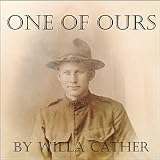
- Audible Audiobook
- Willa Cather (Author) - Flo Gibson (Narrator)
- English (Publication Language)
- 02/01/2022 (Publication Date) - Audio Book Contractors, LLC (Publisher)
5. Evaluate Claude’s Wartime Experience: Assess Claude’s time in the trenches and how, for him, it provides a sense of camaraderie and a clear, albeit brutal, mission that his civilian life lacked.
- Action: Examine passages describing Claude’s experiences with his fellow soldiers and his engagement in combat.
- What to look for: Moments of deep connection with fellow soldiers and the stark contrast between the war’s unambiguous demands and the ambiguity of his former existence.
- Mistake to avoid: Imposing contemporary anti-war sentiments onto the novel; Cather is depicting a specific historical and psychological context where war could be perceived as a source of meaning.
6. Comprehend the Tragic Climax: Understand the significance of Claude’s death in combat, which, from his perspective, represents the ultimate fulfillment of his lifelong search for a meaningful existence, however tragically achieved.
- Action: Analyze the circumstances surrounding Claude’s death.
- What to look for: The circumstances of his death and how they align with his internal narrative of seeking sacrifice and belonging.
- Mistake to avoid: Viewing Claude’s death as solely a senseless tragedy without acknowledging the novel’s exploration of his internal journey toward finding purpose through sacrifice.
One of Ours by Willa Cather: Themes and Context
Willa Cather’s One of Ours, published in 1922, delves into profound thematic territory, reflecting a nation grappling with the aftermath of World War I and the anxieties of a rapidly industrializing society. The novel moves beyond the agrarian idylls of Cather’s earlier works, offering a more complex and somber examination of the American experience. Through the journey of Claude Wheeler, a Nebraska farmer, Cather explores the disillusionment with the American Dream, the persistent human search for spiritual fulfillment, and the complex, often devastating, allure of war.
The central theme is the disillusionment with materialism and the relentless search for spiritual meaning. Claude is depicted as an anomaly in his pragmatic, wealth-focused family, yearning for something beyond the tangible. He seeks a deeper intellectual and emotional connection that his environment fails to provide. This quest for transcendence is a hallmark of Cather’s oeuvre, but in One of Ours, it is framed against a backdrop of societal change that amplifies individual alienation. The novel suggests that the very prosperity the American Dream promised could leave individuals spiritually impoverished.
Another significant theme is the transformative and paradoxical nature of war. For Claude, World War I becomes a spiritual opportunity, a means to escape the perceived emptiness of his civilian life and to find a sense of belonging and purpose. Cather’s portrayal is nuanced; while acknowledging the horror, she also depicts how the shared experience of combat can forge profound bonds and provide a clarity of mission that eludes many in peacetime. This perspective was controversial, reflecting a post-war sentiment among some who saw in the conflict a noble sacrifice and a test of character.
BLOCKQUOTE_0
This quote, capturing the essence of Claude’s wartime experience, highlights how the novel positions war as a crucible for finding identity and meaning, a stark counterpoint to his earlier existential drift.
Common Myths About ‘One of Ours’
- Myth: One of Ours is a straightforward patriotic novel celebrating American entry into World War I.
- Why it matters: This interpretation oversimplifies Cather’s complex psychological portrait of Claude Wheeler. His enlistment is driven by personal spiritual yearning and a desire to escape internal dissatisfaction, not necessarily by overt nationalism.
- Fix: Read the novel as an exploration of individual disillusionment and the search for meaning, where war becomes a perceived, albeit tragic, solution for the protagonist’s existential void.
- Myth: Claude Wheeler is an ineffectual character whose only escape is death.
- Why it matters: This perspective overlooks the depth of Claude’s internal life and his persistent, albeit often misguided, quest for something more profound. His perceived “weakness” is his sensitivity to spiritual and intellectual poverty, which Cather portrays as a form of strength in a materialistic world.
- Fix: Focus on Claude’s internal journey and his intellectual and spiritual aspirations, recognizing his quest as a central narrative element rather than solely a passive response to external circumstances.
- Myth: The novel’s somber tone signifies Cather’s personal despair.
- Why it matters: While One of Ours is undoubtedly darker than some of Cather’s earlier works, its tone reflects a broader societal introspection following World War I and Cather’s own evolving artistic vision, rather than solely personal gloom.
- Fix: Consider the novel within its historical context and Cather’s literary trajectory, understanding its themes as a response to specific cultural and personal shifts.
Expert Tips for Reading ‘One of Ours’
- Tip: Pay close attention to Cather’s use of imagery to contrast the spiritual void of Claude’s Nebraska life with the perceived clarity of his wartime experience.
- Actionable Step: Note descriptions of the Nebraska landscape and farm life and contrast them with Cather’s descriptions of the battlefields and the camaraderie of soldiers.
- Common Mistake to Avoid: Focusing only on plot events without appreciating how Cather uses sensory details to underscore thematic contrasts
Quick Comparison
| Option | Best for | Pros | Watch out |
|---|---|---|---|
| One of Ours by Willa Cather Core Themes | General use | One of Ours by Willa Cather critically examines the disillusionment with the… | Mistake to avoid: Dismissing Claude’s discontent as mere adolescent ennui; Ca… |
| Who This Is For | General use | The novel follows Claude Wheeler, a Nebraska farmer, whose internal void and… | Mistake to avoid: Attributing Claude’s unhappiness solely to romantic disappo… |
| What to Check First | General use | This work is essential for readers interested in Cather’s nuanced portrayal o… | Mistake to avoid: Believing Claude’s marital difficulties are the primary foc… |
| Step-by-Step Plan to Understanding One of Ours | General use | Readers interested in Willa Cather’s later, more somber works that explore th… | Mistake to avoid: Interpreting Cather’s portrayal of Claude’s war enthusiasm… |
Decision Rules
- If reliability is your top priority for One of Ours by Willa Cather, choose the option with the strongest long-term track record and support.
- If value matters most, compare total ownership cost instead of headline price alone.
- If your use case is specific, prioritize fit-for-purpose features over generic ‘best overall’ claims.