Wally Lamb’s She’s Come Undone: A Psychological Drama
Quick Answer
- She’s Come Undone by Wally Lamb is a coming-of-age novel exploring themes of trauma, identity, and the complexities of female relationships through the eyes of Dolores Price.
- It is a raw and unflinching narrative, suitable for readers who appreciate character-driven stories that delve into difficult psychological territory.
- Those seeking lighthearted or plot-heavy fiction may find its introspective and often bleak tone challenging.
Who This Is For
- Readers interested in in-depth psychological character studies, particularly those examining the impact of childhood trauma on adult life.
- Individuals who appreciate literary fiction with a strong narrative voice and a focus on emotional realism, even when uncomfortable.
What to Check First
- Narrative Voice: The novel is told from the first-person perspective of Dolores “Lommy” Price. Assess if this intimate, often unfiltered, voice resonates with your reading preferences.
- Thematic Depth: Themes of abuse, mental illness, body image, and the search for self are central. Consider if you are prepared for a potentially heavy and emotionally demanding exploration of these topics.
- Pacing and Plot: The story is largely character-driven and introspective, with plot developments often unfolding slowly. If you prioritize fast-paced action, this may not be the ideal fit.
- Author’s Style: Wally Lamb’s writing is known for its honesty and frankness. His approach in She’s Come Undone is consistent with this, offering a visceral reading experience.
Step-by-Step Plan for Engaging with She’s Come Undone by Wally Lamb
1. Establish Context: Begin by understanding that Dolores Price’s narrative is a retrospective account of her life, marked by significant childhood and adolescent trauma.
- What to look for: Early chapters detailing Dolores’s childhood home life and her mother’s volatile personality.
- Mistake: Assuming Dolores’s early life is typical or that her reactions are disproportionate to her experiences.
2. Track Dolores’s Coping Mechanisms: Observe how Dolores develops and employs various strategies, both healthy and unhealthy, to cope with her trauma.
- What to look for: Instances of dissociation, self-harm, or the formation of intense, sometimes problematic, relationships.
- Mistake: Judging Dolores’s actions without considering the extreme psychological pressures she faces.
3. Analyze Key Relationships: Pay close attention to the dynamics between Dolores and the significant women in her life, particularly her mother, Agnes, and her grandmother, Momma.
- What to look for: The complex interplay of love, resentment, dependency, and control that defines these relationships.
- Mistake: Overlooking the subtle ways these relationships shape Dolores’s self-perception and future choices.
4. Identify Turning Points: Recognize moments in Dolores’s life that serve as catalysts for change or further descent.
- What to look for: Significant events such as her mother’s actions, her own perceived failures, and encounters with other characters.
- Mistake: Dismissing seemingly minor events as inconsequential to Dolores’s overall psychological arc.
5. Consider the Role of Therapy: Note how formal therapy is introduced and its impact on Dolores’s journey toward understanding and healing.
- What to look for: The therapist’s questions, Dolores’s responses, and the gradual unfolding of suppressed memories.
- Mistake: Expecting therapy to be a quick fix; recognize it as a challenging process within the narrative.
6. Evaluate the Resolution: Assess the degree of closure and healing Dolores achieves by the novel’s end.
- What to look for: Evidence of self-acceptance and a more integrated sense of self, even if scars remain.
- Mistake: Demanding a perfectly happy or complete ending; understand that healing is often an ongoing process.
If you’re looking for a powerful and introspective read, Wally Lamb’s ‘She’s Come Undone’ is a critically acclaimed novel that delves deep into the complexities of trauma and identity. It’s a perfect choice for readers who appreciate character-driven narratives.
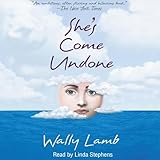
- Audible Audiobook
- Wally Lamb (Author) - Linda Stephens (Narrator)
- English (Publication Language)
- 04/08/2011 (Publication Date) - Simon & Schuster Audio (Publisher)
She’s Come Undone by Wally Lamb: Themes and Counterpoints
Wally Lamb’s She’s Come Undone offers a profound, albeit harrowing, exploration of a young woman’s struggle with profound trauma. The novel centers on Dolores Price, whose life is a testament to the enduring impact of childhood abuse and mental illness. Lamb’s strength lies in his unflinching portrayal of Dolores’s internal world, showcasing her often desperate attempts to make sense of a chaotic and often cruel existence.
One of the primary thematic threads is the concept of identity formation under duress. Dolores, often referred to as “Lommy,” grapples with a fractured sense of self, a direct consequence of her mother’s erratic behavior and her own overwhelming experiences. The narrative vividly illustrates how external forces can profoundly distort an individual’s perception of their own worth and place in the world. The novel doesn’t shy away from depicting the physical and emotional toll this takes, presenting a raw and often disturbing picture of a psyche under siege.
However, the novel’s intensity can also be a point of contention. Some readers might find the relentless nature of Dolores’s suffering overwhelming, questioning whether the narrative offers sufficient respite or hope. While Lamb is undoubtedly skilled at depicting psychological distress, the sheer volume of hardship can, at times, feel suffocating. This is a deliberate choice, reflecting the reality of deep-seated trauma, but it necessitates a reader prepared for an emotionally taxing journey.
Common Myths About She’s Come Undone
- Myth: The novel is simply a story of victimhood with no agency.
- Why it matters: This perspective overlooks Dolores’s internal resilience and her active, albeit often misguided, attempts to survive and understand her circumstances.
- Correction: While Dolores is a victim of immense trauma, the narrative emphasizes her internal struggles and her attempts to assert control, however flawed. Her journey is one of seeking agency, even when she falters.
- Myth: The mother, Agnes, is purely a villain with no redeeming qualities.
- Why it matters: This simplifies a complex character and ignores the potential roots of her own trauma and mental instability, which Lamb hints at.
- Correction: Agnes is portrayed as a deeply troubled individual whose own psychological issues contribute to her destructive behavior. The novel suggests a cycle of trauma, rather than simple malice.
Expert Tips for Reading She’s Come Undone
BLOCKQUOTE_0
- Tip 1: Embrace the Unreliable Narrator. Dolores’s perspective is inherently biased and colored by her experiences.
- Actionable Step: Read with an awareness that Dolores’s interpretations of events may not be objective truth, but rather her subjective reality.
- Common Mistake to Avoid: Taking every statement at face value without considering the narrator’s emotional state or potential memory gaps.
- Tip 2: Focus on Emotional Arcs, Not Just Plot Points. The novel’s power comes from its exploration of psychological development and healing.
- Actionable Step: Track Dolores’s emotional journey, noting shifts in her self-perception and her understanding of relationships.
- Common Mistake to Avoid: Getting bogged down in the chronological order of events and missing the underlying emotional progression.
- Tip 3: Be Prepared for Difficult Content. The novel deals with sensitive and potentially triggering themes.
- Actionable Step: Ensure you are in a mental space where you can engage with mature and challenging subject matter.
- Common Mistake to Avoid: Starting the book without understanding its mature themes, leading to unexpected distress or disengagement.
Decision Rules
- If reliability is your top priority for She’s Come Undone by Wally Lamb, choose the option with the strongest long-term track record and support.
- If value matters most, compare total ownership cost instead of headline price alone.
- If your use case is specific, prioritize fit-for-purpose features over generic ‘best overall’ claims.
FAQ
- Q: Is She’s Come Undone a true story?
- A: While Wally Lamb has stated that Dolores Price is a composite character and draws on elements of his own experiences and those of people he knows, the novel is a work of fiction.
- Q: What is the primary audience for this book?
- A: Readers who enjoy character-driven literary fiction, psychological dramas, and coming-of-age stories that tackle difficult themes are the primary audience.
- Q: How does She’s Come Undone compare to Wally Lamb’s other works, like I Know This Much Is True?
- A: Both novels share Lamb’s characteristic in-depth psychological exploration and focus on complex family dynamics. She’s Come Undone is often considered more intensely focused on the female coming-of-age experience and trauma from a young girl’s perspective.
- Q: What are the main themes explored in the novel?
- A: Key themes include childhood trauma, identity formation, mental illness, dysfunctional family relationships, body image, and the search for self-acceptance.
| Character | Role in Dolores’s Life | Key Dynamic | Impact on Dolores |
|---|---|---|---|
| Agnes Price | Mother | Volatile, controlling, emotionally abusive | Profoundly damaging, shaping self-worth and fear |
| Dolores “Lommy” Price | Protagonist | Internal struggle, search for identity | Central figure of narrative, experiencing and processing trauma |
| Momma (Grandmother) | Maternal Grandmother | Supportive yet enabling | Provides a sense of stability but also complicity |